

You no longer require a subscription to test out Google’s Dreambeans app.
Initially restricted to Google AI Ultra subscribers, Dreambeans is now accessible for free to any US Google Account user on Android and iOS.
Google has officially lifted the paywall on one of its intriguing Labs experiments. Dreambeans, the AI application that curates a personalized daily feed of stories, is now available for any Google Account holder in the US to explore (according to 9to5Google).
How the Dreambeans AI app curates your daily feed
Consider it a very individualized version of Google Discover. With your consent, Dreambeans utilizes data from Gmail, Google Photos, Calendar, Search history, and YouTube to understand your interests, and here’s how each element contributes: Workspace provides context through real-world details like receipts or upcoming flights. Photos highlights the people and places important to you. YouTube follows your active interests. Search identifies new interests you may be developing.
Each morning, it combines these data points into a fresh selection of story suggestions, such as a recommended hike, a new restaurant, or a nearby event. Instead of standard photos, each story features custom illustrations created by the Nano Banana image generator, often depicting you and your acquaintances in a stylized format.
Dreambeans debuted in June exclusively for Google AI Ultra subscribers, later extending to AI Pro, and is now available to everyone. The initial setup takes around a day to generate your first stories, and the app can be downloaded on both Android and iOS.
Other intriguing Google Labs experiments to check out
Dreambeans isn’t the only exciting project emerging from Google Labs recently. For small business owners, Pomelli can now create an entire brand identity from scratch, handling everything from your color scheme to a fully operational website. For music enthusiasts, ProducerAI allows you to describe a song idea and receive actual beats, album art, and even a corresponding music video.
If you’re a student interested in exploring additional tools for free, Google is providing a complimentary year of AI Pro via a new Gemini student hub, which is worth considering before subscribing elsewhere.
Manisha Priyadarshini is a tech and entertainment writer with over nine years of editorial experience.
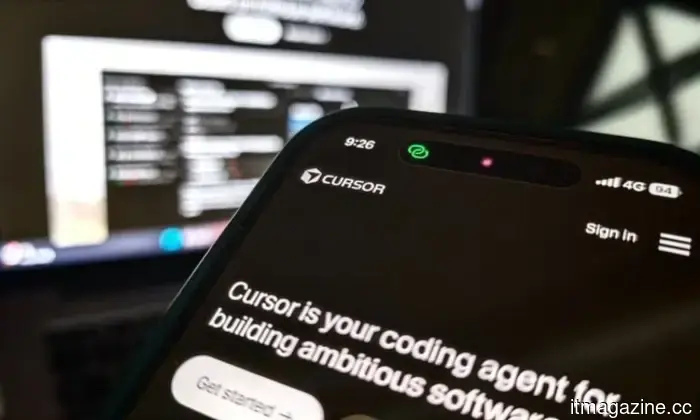
Affected by OpenAI's withdrawal of GPT models from Cursor? Anthropic provides a timely alternative with improved Claude limits.
OpenAI is moving away from Cursor, and Anthropic has stepped in with a convenient option.
For Cursor users suddenly caught in the midst of an AI industry dispute, the timing could not be worse. Reports indicate that OpenAI is cutting off Cursor’s direct access to its models, but Anthropic is providing a timely alternative. SpaceX has informed Cursor of its intent to terminate its contract for supplying OpenAI models, with the shutdown aimed for November 12, 2026, as stated by OpenAI. Cursor co-founder and CEO Michael Truell confirmed this development, noting that OpenAI models contribute to about 5% of Cursor's user traffic, and the company is in discussions with OpenAI to resolve the matter.
The automated pizza chef dream faces challenges.
The concept of fully automated pizza was expected to look like this: enter a restaurant, place an order, and watch a robot craft your pizza with mechanical precision. However, many companies that promised to automate pizza-making are struggling to turn this vision into a viable business model. A recent case is Picnic, whose robotic pizza-making system was implemented at a Moto Pizza restaurant in Seattle. But in May, its supplier abruptly stopped operations, leaving the restaurant with costly equipment and no technical support. Lee Kindell, who invested approximately $160,000 in this cabinet-like machinery, began questioning the viability of robotic pizza-making.
Anthropic recently showcased an early iteration of self-improving AI.
Anthropic is examining the extent to which AI development can be delegated to AI itself.
Anthropic has been discussing the potential for AI systems to eventually assist in creating improved versions of themselves. Their latest research illustrates what the preliminary stages of this process might look like. The company tasked Claude Sonnet 5 with upgrading the performance of an early version of the more advanced Claude Opus 4.8, and over approximately 60 hours, Sonnet explored over 50 different concepts before devising a training method using around 2,400 examples.






Other articles
 Anthropic has just demonstrated a preliminary version of self-enhancing AI.
Anthropic is investigating self-enhancing AI by allowing Claude to research, evaluate, and improve training techniques for a more robust Claude model, achieving measurable improvements in various behavioral issues.
Anthropic has just demonstrated a preliminary version of self-enhancing AI.
Anthropic is investigating self-enhancing AI by allowing Claude to research, evaluate, and improve training techniques for a more robust Claude model, achieving measurable improvements in various behavioral issues.
 Apple reportedly experimented with a stylus for the foldable iPhone but ultimately decided against it.
Apple has experimented with a compact, magnetic Apple Pencil designed for the foldable iPhone, but Mark Gurman from Bloomberg is skeptical that it will be released next month.
Apple reportedly experimented with a stylus for the foldable iPhone but ultimately decided against it.
Apple has experimented with a compact, magnetic Apple Pencil designed for the foldable iPhone, but Mark Gurman from Bloomberg is skeptical that it will be released next month.
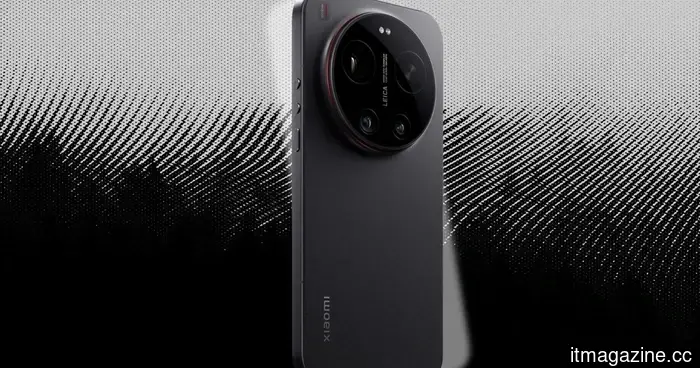 A Chinese DRAM manufacturer is incorporating its newest LPDDR6 memory into Xiaomi's upcoming foldable smartphone.
CXMT is set to provide its newest LPDDR6 memory for Xiaomi's forthcoming foldable device, a development that may indicate a significant change in the international DRAM supply chain.
A Chinese DRAM manufacturer is incorporating its newest LPDDR6 memory into Xiaomi's upcoming foldable smartphone.
CXMT is set to provide its newest LPDDR6 memory for Xiaomi's forthcoming foldable device, a development that may indicate a significant change in the international DRAM supply chain.
 Google Maps has renamed Lake Ontario to Lake America for users in the United States.
Google Maps has recently started designating Lake Ontario as Lake America for users in the United States, following an update to a federal database. Meanwhile, users in Europe can view both names for the same body of water.
Google Maps has renamed Lake Ontario to Lake America for users in the United States.
Google Maps has recently started designating Lake Ontario as Lake America for users in the United States, following an update to a federal database. Meanwhile, users in Europe can view both names for the same body of water.
 Proton discovered tracking tools in the majority of VPN applications downloaded in the US.
Proton reports that 85% of the VPN applications analyzed in the U.S. include trackers, with many of them also capable of accessing users' physical locations.
Proton discovered tracking tools in the majority of VPN applications downloaded in the US.
Proton reports that 85% of the VPN applications analyzed in the U.S. include trackers, with many of them also capable of accessing users' physical locations.
 Microsoft suggests that its upcoming Xbox may consist of multiple consoles.
Xbox CEO Asha Sharma has suggested that Project Helix will consist of a “family of devices,” indicating that Microsoft may introduce several next-generation Xbox products.
Microsoft suggests that its upcoming Xbox may consist of multiple consoles.
Xbox CEO Asha Sharma has suggested that Project Helix will consist of a “family of devices,” indicating that Microsoft may introduce several next-generation Xbox products.
You no longer require a subscription to test out Google’s Dreambeans app.
Previously limited to Google AI Ultra subscribers, Dreambeans is now available for free to all US Google Account users on Android and iOS.