

Proton discovered tracking tools in the majority of VPN applications downloaded in the US.
Some of these VPN applications may also have access to your physical location and device information.
When you install a VPN, you are placing your trust in another company to manage a significant portion of your internet traffic. The primary motivation for most individuals is to enhance their privacy, which makes the recent findings from Proton VPN rather alarming.
Proton analyzed over 7,000 mobile VPN applications globally, revealing that 85% of the VPNs evaluated in the US have trackers intended for analytics, advertising, or profiling. Some of these applications can access details like your device ID, phone model, network type, mobile carrier, and even your geographic location.
What kind of data does your VPN gather?
For their analysis, Proton utilized Exodus Privacy, an open-source tool that scans Android applications for known tracker codes. Detecting one of these trackers does not necessarily clarify what specific information a particular VPN is collecting or how it utilizes that data.
Nonetheless, heavily incorporating tracking features into a VPN is hard to justify. Privacy is a primary reason users turn to these applications, and adding analytics, advertising, or profiling tools directly contradicts user expectations.
The ability to access physical location is particularly troubling. Proton identified 64 VPN applications capable of accessing GPS and other location data. These applications accounted for over 3 million downloads in the US in June alone.
Proton’s alert is not the first indication of potential issues. Earlier this year, researchers assessing 281 free Android VPN applications found that 76 were transmitting device identifiers like Android's Advertising ID to third parties, while another 29 exposed browser or DNS traffic outside their encrypted pathways.
Do you know who controls your VPN?
Proton also investigated the companies behind these applications. They discovered that 64 out of the 390 VPNs downloaded from US app stores were owned by Chinese firms, with 31 allegedly disguising their ownership through companies registered elsewhere.
Applications containing trackers that transmitted data to companies in China accounted for 1.5 million downloads in the US in June. Additionally, apps with trackers sending data to Russia garnered another 1.4 million downloads, according to Proton.
This does not imply that every VPN is secretly monitoring its users. The previously mentioned Android study concentrated specifically on free VPNs, and Proton’s findings raise concerns regarding dubious services with ambiguous ownership and intrusive tracking practices.
Just seeing “VPN” in an app’s name shouldn't lead to an automatic download; it’s crucial to investigate who developed it and what data it gathers. Neglecting this could result in an application meant to enhance your privacy doing quite the opposite.
I have roughly four years of experience, primarily in gaming, PC hardware, and smartphones. In my leisure time, I enjoy…
Stung by OpenAI withdrawing GPT models from Cursor? Anthropic has stepped in with a timely alternative.
OpenAI is cutting ties with Cursor, and Anthropic has conveniently stepped in.
For Cursor users who suddenly find themselves at the center of an AI industry conflict, the situation couldn't be more unfortunate. OpenAI is reportedly planning to sever Cursor’s direct access to its models—however, Anthropic is providing a timely alternative.
SpaceX has informed Cursor of its intention to end the contract for supplying OpenAI models, with the proposed shutdown set for November 12, 2026, as stated by OpenAI. Cursor co-founder and CEO Michael Truell verified this information, noting that OpenAI models represent about 5% of Cursor’s user traffic, and the company is in discussions with OpenAI to resolve the matter.
The dream of fully automated pizza is facing several real challenges.
The vision of fast food was meant to be this: walk into a restaurant, place an order, and observe a robot expertly assembling your pizza. Instead, many companies that vowed to automate pizza-making have struggled to transform that dream into a viable business.
A recent example is Picnic, which implemented its robotic pizza-making system at a Moto Pizza restaurant in Seattle. However, in May, its supplier suddenly shut down, leaving the restaurant with costly machinery and no technical support. Lee Kindell, who invested around $160,000 in the cabinet-like equipment, is now reconsidering whether robotic pizza-making was a wise investment.
Anthropic has revealed an early version of self-improving AI.
Anthropic is exploring the extent to which AI development can be delegated to AI itself.
Anthropic has been discussing the possibility of AI systems eventually assisting in creating enhanced versions of themselves. Their latest research illustrates what the initial stages of this process might resemble.
The company provided Claude Sonnet 5 with an early version of the more advanced Claude Opus 4.8 and asked it to enhance the model’s functionality. Over approximately 60 hours, Sonnet experimented with more than 50 different ideas before devising a training method utilizing about 2,400 examples.






Other articles
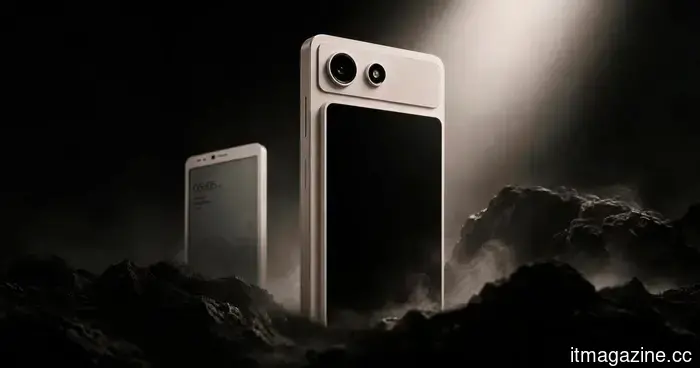 Hisense created a phone featuring a detachable second screen.
The Hisense A10 Ultra merges a standard color display with a detachable E Ink screen, offering users both a smartphone and a specialized reading display within a single unique device.
Hisense created a phone featuring a detachable second screen.
The Hisense A10 Ultra merges a standard color display with a detachable E Ink screen, offering users both a smartphone and a specialized reading display within a single unique device.
.jpg) Three overlooked films on HBO Max that you should check out this weekend (August 29-30).
Three underrated HBO Max films to check out this weekend, featuring a Swedish coming-of-age classic and a gripping thriller by Soderbergh.
Three overlooked films on HBO Max that you should check out this weekend (August 29-30).
Three underrated HBO Max films to check out this weekend, featuring a Swedish coming-of-age classic and a gripping thriller by Soderbergh.
 Microsoft suggests that its upcoming Xbox may consist of multiple consoles.
Xbox CEO Asha Sharma has suggested that Project Helix will consist of a “family of devices,” indicating that Microsoft may introduce several next-generation Xbox products.
Microsoft suggests that its upcoming Xbox may consist of multiple consoles.
Xbox CEO Asha Sharma has suggested that Project Helix will consist of a “family of devices,” indicating that Microsoft may introduce several next-generation Xbox products.
 You no longer require a subscription to test out Google’s Dreambeans app.
Previously limited to Google AI Ultra subscribers, Dreambeans is now available for free to all US Google Account users on Android and iOS.
You no longer require a subscription to test out Google’s Dreambeans app.
Previously limited to Google AI Ultra subscribers, Dreambeans is now available for free to all US Google Account users on Android and iOS.
 A Chinese DRAM manufacturer is incorporating its newest LPDDR6 memory into Xiaomi's upcoming foldable smartphone.
CXMT is set to provide its newest LPDDR6 memory for Xiaomi's forthcoming foldable device, a development that may indicate a significant change in the international DRAM supply chain.
A Chinese DRAM manufacturer is incorporating its newest LPDDR6 memory into Xiaomi's upcoming foldable smartphone.
CXMT is set to provide its newest LPDDR6 memory for Xiaomi's forthcoming foldable device, a development that may indicate a significant change in the international DRAM supply chain.
 Google Maps has renamed Lake Ontario to Lake America for users in the United States.
Google Maps has recently started designating Lake Ontario as Lake America for users in the United States, following an update to a federal database. Meanwhile, users in Europe can view both names for the same body of water.
Google Maps has renamed Lake Ontario to Lake America for users in the United States.
Google Maps has recently started designating Lake Ontario as Lake America for users in the United States, following an update to a federal database. Meanwhile, users in Europe can view both names for the same body of water.
Proton discovered tracking tools in the majority of VPN applications downloaded in the US.
Proton reports that 85% of the VPN applications analyzed in the U.S. include trackers, with many of them also capable of accessing users' physical locations.