

Opposition to Flock surveillance cameras has led to the emergence of a vigilante movement in the United States.
As public confidence in automated license plate readers declines, Americans are taking action to obstruct police surveillance technology.
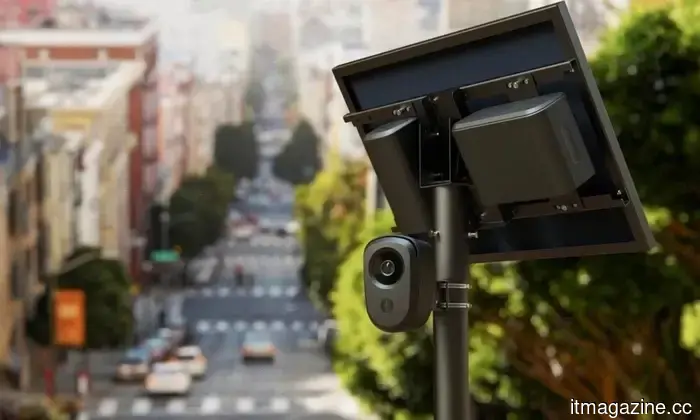
Drive down nearly any main street in the U.S., and it's likely that an AI-enabled camera is monitoring the area. In recent years, law enforcement agencies across the nation have discreetly installed thousands of automated license plate readers to keep track of daily traffic. Although these measures were marketed by police as straightforward upgrades for fighting crime, rising concerns over continuous location tracking and improper use by police have led to significant pushback.
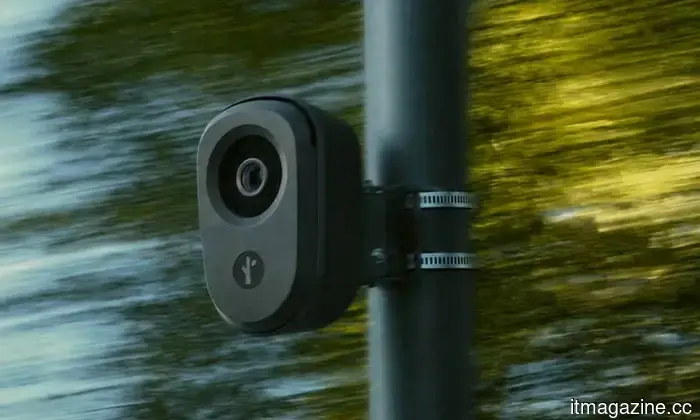
At the center of this controversy is Flock Safety, an Atlanta-based company that uses roadside units to scan and record billions of vehicle details monthly. Law enforcement claims these automatic license plate readers are essential for tracking stolen vehicles and locating missing persons. Conversely, privacy advocates argue that recording routine travel creates a vast government database susceptible to misuse, violating fundamental Fourth Amendment rights.
A significant decline in public trust
The public's backing for continuous road tracking has plummeted in the past year. A recent YouGov survey reported by The Washington Post reveals that 46% of Americans now oppose law enforcement's use of license plate readers in their neighborhoods. This marks a considerable change from the previous year, which saw 45% in support and only 33% against.
Flock Safety
Concerns about privacy are rising across the political spectrum. Civil liberties proponents caution that location logs grant law enforcement unchecked surveillance capabilities, while legislators highlight the formation of an invasive government monitoring network. These fears are rooted in actual instances of misuse; The Post has uncovered that numerous police officials have faced charges or disciplinary actions for using license plate databases to stalk former partners or conduct unauthorized inquiries.
Citizens are stepping up to take action
As discontent mounts, public dissent is manifesting in two primary ways. Administratively, over 100 cities have terminated contracts or deactivated their Flock cameras in response to public protests, according to data shared by NPR.
In areas where local authorities have not responded, residents have resorted to more extreme measures. An NPR investigation found that Flock cameras have faced vandalism or outright destruction in at least 36 states.
Remember, if you witness someone removing a Flock camera, just remember you never saw it happen. Thanks for attending my TED Talk pic.twitter.com/tmFj3quTys— Phoenix 🇺🇸 (@Phoenix2A_1980s) August 21, 2026
While organized groups like DeFlock hold rallies advocating for legal changes, independent individuals have opted for direct action, employing long poles with signs to obstruct cameras, spray-painting the sensors, cutting down mounting posts, and disabling the units entirely.
As public trust rapidly diminishes, the conflict between roadside AI cameras and the drivers they capture is only beginning.
Pranob is an experienced tech journalist with over eight years of experience in consumer technology reporting. His work has been…
Volkswagen’s new $20,000 electric SUV highlights what U.S. buyers may be missing.
Volkswagen has initiated pre-sales for the ID. Aura T6 in China, priced at $20,225, prompting American EV shoppers to question what exactly they are paying for domestically. This five-seat electric crossover starts at 135,900 yuan and is not simply a basic city vehicle; it is a midsize electric SUV featuring two battery options, a large central display, driver-assistance technology, and a claimed range of up to 660 km based on China’s CLTC testing cycle. The pressing question remains whether such an affordable vehicle could eventually be available in the U.S.
Parents can now monitor their teen’s Uber ride in real time.
Sending your teenager in an Uber alone can be anxiety-inducing, even when you can track their entire ride on a map. To alleviate this anxiety, Uber is introducing live video streaming for teen rides in the U.S., letting parents and guardians observe their child's journey from their own Uber accounts. This feature is currently available in nine markets, including Atlanta, Cleveland, and Rhode Island, with plans for nationwide expansion in the coming weeks. Instead of adding another camera inside the vehicle, Uber utilizes the driver’s phone to provide the video feed.
Volkswagen introduces the $13,400 ID. Era 5S with a 99-mile electric range.
Volkswagen has unveiled an economical sedan in China that may surprise with its offerings and price. The ID. Era 5S starts at just 89,900 yuan, roughly $13,400, and combines a plug-in hybrid system with up to 99 miles of electric-only range. Officially revealed at the 2026 Chengdu Auto Show, this is the second sedan in Volkswagen's China-exclusive ID. Era series. Manufactured through the SAIC-Volkswagen joint venture, the 5S is positioned to compete in China's growing market for affordable new-energy vehicles.




Opposition to Flock surveillance cameras has led to the emergence of a vigilante movement in the United States.
In the United States, increasing privacy worries regarding Flock's AI-driven license plate readers have sparked a significant backlash, as residents and city councils oppose roadside surveillance.