

Chinese memory manufacturer CXMT is taking legal action against the Pentagon to remove itself from a U.S. blacklist.
CXMT has filed a lawsuit against the US Department of Defense in Washington, aiming to have its name removed from the list that classifies it as a Chinese military company. This classification prevents the company from obtaining defense contracts but does not limit its commercial sales. CXMT, known as the world's fourth-largest DRAM producer, surpassed Tencent this month to become the most valuable publicly traded company in China.
The lawsuit was reported by Bloomberg and mentions Defense Secretary Pete Hegseth as a defendant. In a statement, the Hefei-based chip manufacturer asserted, “CXMT is not a military company and has no ties to the Chinese military,” emphasizing that it develops chips for civilian and commercial applications.
The designation first occurred in January 2025. CXMT was briefly removed from one version of the list in February but was reinstated in June. While being on the list does not prevent customers from purchasing products from CXMT, the 1260H classification restricts defense contracts and signals caution to investors, as previously reported by TNW, without hindering private commercial sales.
The motivation behind the lawsuit is significant; the designation is often interpreted as a precursor to being added to the Entity List, which imposes trade restrictions and raises concerns among investors.
CXMT is not a small player in the market; it is the world's fourth-largest DRAM manufacturer and went public in Shanghai on July 27, with shares opening at RMB 8.66. The stock surged by 471%, and seventeen days later, CXMT surpassed Tencent to become China's most valuable publicly traded company, valued at approximately RMB 3.54 trillion.
For Europe, the primary concern lies not with the list itself but with memory prices and the remaining manufacturers in the industry. Prices have surged fourfold over three quarters as companies like Samsung, SK Hynix, and Micron shifted their capacity toward AI data centers. Apple has been evaluating CXMT chips for devices distributed in China.
Europe lacks comparable DRAM production facilities, meaning every memory chip in a European product is imported. Furthermore, there is no European equivalent of the Pentagon’s list. American regulations affect European supply chains, as TNW discovered when China warned that the equipment supply line could disrupt everyone.
Consequently, a European manufacturer that purchases memory from CXMT faces American risks, despite the absence of any European regulations. There has been no indication from Brussels regarding the acceptability of this situation, nor has anyone asked the question.
This highlights the nuanced aspect of a lawsuit concerning a list: it originates from America, the memory is sourced from China, and payment is made in euros.
Other articles
 Bluesky has introduced a feature that prevents you from unintentionally going viral. I desire it to be available everywhere.
Bluesky introduced a feature that allows users to choose not to participate in its algorithmic Discover feed, preventing posts from being shown to individuals who do not follow them.
Bluesky has introduced a feature that prevents you from unintentionally going viral. I desire it to be available everywhere.
Bluesky introduced a feature that allows users to choose not to participate in its algorithmic Discover feed, preventing posts from being shown to individuals who do not follow them.
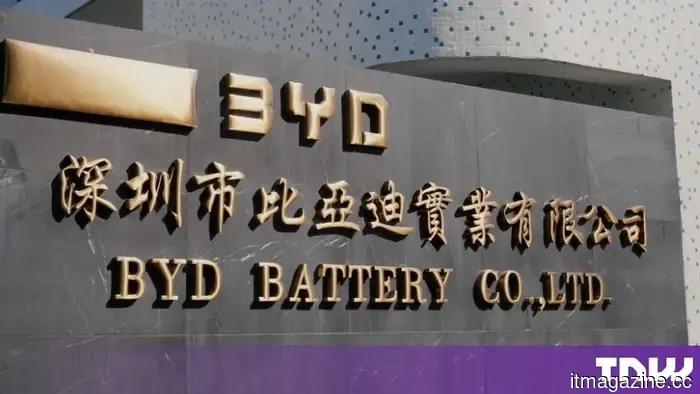 BYD increased its 1,500kW charging network twofold within five months and aims to replicate this growth by December.
BYD inaugurated its 10,000th 1,500kW Flash Charging station, which has resulted in the network doubling within five months, and has intentions to establish 300 stations in the UK. The AFIR requires locations to have 600kW by 2027.
BYD increased its 1,500kW charging network twofold within five months and aims to replicate this growth by December.
BYD inaugurated its 10,000th 1,500kW Flash Charging station, which has resulted in the network doubling within five months, and has intentions to establish 300 stations in the UK. The AFIR requires locations to have 600kW by 2027.
.jpg) Three underrated treasures on HBO Max that you should check out this weekend (August 28-30)
Here are three overlooked HBO Max series that are worth watching this weekend, featuring a yakuza thriller, a finance drama, and a dark comedy focused on faith and greed.
Three underrated treasures on HBO Max that you should check out this weekend (August 28-30)
Here are three overlooked HBO Max series that are worth watching this weekend, featuring a yakuza thriller, a finance drama, and a dark comedy focused on faith and greed.
 Brave's new Email Alias feature helps protect your actual inbox address from websites.
Brave's new Email Aliases feature helps reduce email tracking while still directing messages to a user's main inbox.
Brave's new Email Alias feature helps protect your actual inbox address from websites.
Brave's new Email Aliases feature helps reduce email tracking while still directing messages to a user's main inbox.
 Smart rings concentrate on heart health. I envisioned the future, and it resembles a sweat-detecting laboratory right on your finger.
Researchers at the University of California, San Diego have created a smart ring capable of measuring several biomarkers at once by passively collecting sweat from your fingers.
Smart rings concentrate on heart health. I envisioned the future, and it resembles a sweat-detecting laboratory right on your finger.
Researchers at the University of California, San Diego have created a smart ring capable of measuring several biomarkers at once by passively collecting sweat from your fingers.
 Brave's latest Email Alias feature helps protect your actual inbox address from websites.
Brave's new Email Aliases feature can reduce email tracking while continuing to forward messages to the user's main inbox.
Brave's latest Email Alias feature helps protect your actual inbox address from websites.
Brave's new Email Aliases feature can reduce email tracking while continuing to forward messages to the user's main inbox.
Chinese memory manufacturer CXMT is taking legal action against the Pentagon to remove itself from a U.S. blacklist.
CXMT has filed a lawsuit against the US Defense Department due to its classification as a Chinese military company. Europe purchases the memory, lacks a DRAM fabrication facility, and has no similar designation list.