
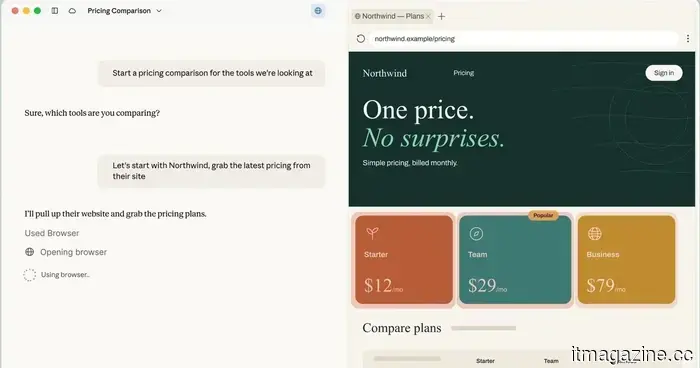
Claude Cowork has introduced its own browser that doesn’t interfere with your tabs, bookmarks, or saved passwords.
Anthropic has introduced a built-in browser for Claude, distinct from your personal browser.
Claude Cowork now features its own browser integrated directly into the desktop application. Previously, allowing Claude web access within Cowork meant granting it access to your Chrome browser via the Claude in Chrome extension.
Now, there's an alternative. Claude can utilize a separate browser within the Cowork side panel to manage web tasks independently while you continue working on other tasks.
What distinguishes it from Claude in Chrome?
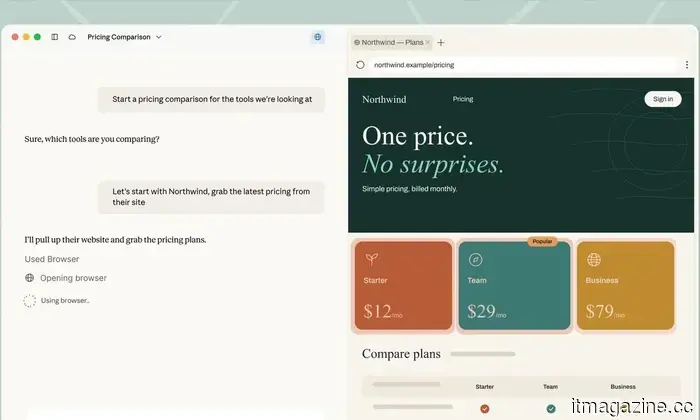
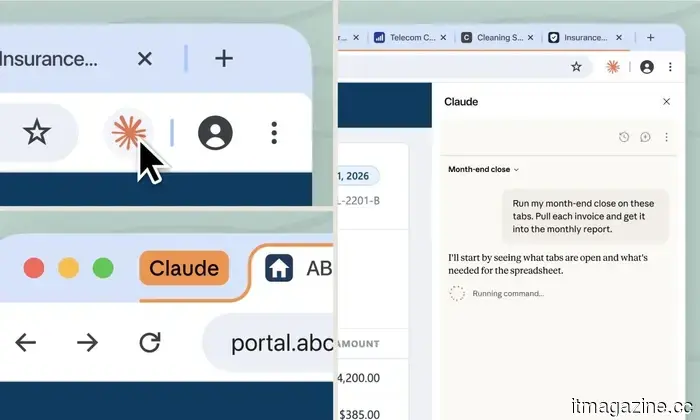
Claude in Chrome operates using your browser, tabs, logins, and the pages you have already opened. This approach is convenient when you're actively engaged in a task and need Claude to assist. However, many web tasks do not actually require your personal browser; they simply need a way to access the internet.
This is where Claude’s new built-in browser comes into play. It operates independently from your personal browser, and Claude does not access your tabs, bookmarks, or passwords. This makes it ideal for tasks that don't need your personal session, such as researching for reports or retrieving invoices from a vendor portal.
If you want Claude to sign into specific websites, you can opt to share logins from Chrome, Edge, or Firefox. Sensitive accounts, such as banking, email, or single sign-on services, are excluded by default unless you specifically allow them.
Safety considerations to be aware of
If you are currently using Claude in Chrome, it remains your default option. If not, Claude will automatically utilize its own browser, but you can change this preference at any time in the Settings. This feature is rolling out this week to Pro, Max, and Team plans on the desktop app, supporting macOS, Windows, and a Linux beta.
Anthropic acknowledges that this functionality carries the same prompt injection risks as any AI agent using a browser, meaning harmful instructions hidden in a webpage could attempt to manipulate Claude's actions. The same safeguards applied to Claude in Chrome also apply here, and Anthropic suggests starting with sites you trust before allowing Claude to interact with them.
Manisha Priyadarshini is a tech and entertainment writer with over nine years of editorial experience.
Lenovo is reportedly developing a competitor to the Mac Mini along with the slimmest ThinkBook yet.
Leaked images have unveiled two significant Lenovo products set to debut in September. As Lenovo Innovation World 2026 approaches, Windows Latest has received exclusive images that showcase what's upcoming. Among the leaked products, one is a compact mini PC resembling Lenovo's response to the Mac Mini, and the other is an incredibly thin ThinkBook that may break records.
Introducing the ThinkCentre X Ultra, Lenovo's version of a compact desktop.
Read more
The US is considering tariffs that may increase prices for laptops, phones, and gaming consoles.
The proposed tariffs aim to boost US chip manufacturing, but laptops, consoles, and other electronics could also be impacted.
The Trump administration is reportedly contemplating a new round of semiconductor tariffs that extend beyond individual chips to include the electronics that incorporate them. One potential approach under discussion includes imposing duties on products containing semiconductors, which would affect devices like laptops and gaming consoles.
Read more
Personal conversations with ChatGPT are increasingly being referenced in legal proceedings; caution is advised.
ChatGPT might seem like a private diary, but it can also serve as evidence in court.
People are increasingly sharing sensitive personal information with AI chatbots like ChatGPT. Some utilize it to navigate relationships, while others discuss delicate messages or work documents, and some even seek medical advice. However, this intimacy poses a new challenge: a private conversation with ChatGPT is not necessarily protected by law.
The Washington Post has examined public records and local news, finding chatbot conversations cited in 12 civil and criminal court cases over the past two years; the actual number may be much higher since investigators and litigants aren’t required to present every piece of evidence collected in court.
Read more



Other articles
 Forget the leaks; Grand Theft Auto VI is elevating Red Dead Redemption 2's commitment to realism to a new level.
New details about GTA 6 disclose dynamic body transformations, noticeable fatigue, responsive NPCs, more profound relationships, and a Leonida that is designed to recall your lifestyle within it.
Forget the leaks; Grand Theft Auto VI is elevating Red Dead Redemption 2's commitment to realism to a new level.
New details about GTA 6 disclose dynamic body transformations, noticeable fatigue, responsive NPCs, more profound relationships, and a Leonida that is designed to recall your lifestyle within it.
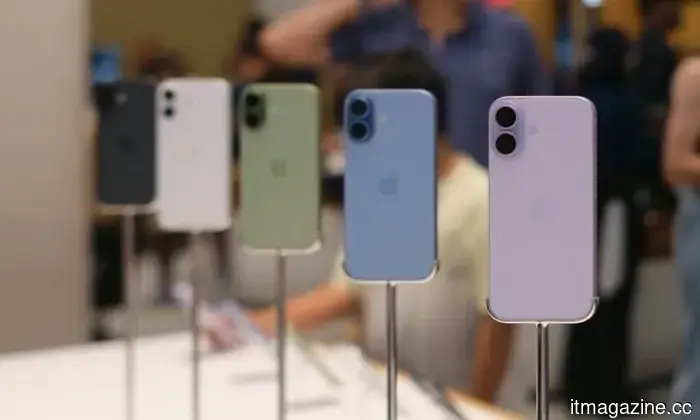
 Apple and Samsung are the top contenders in the market for the best-selling smartphones, with the iPhone 17 at the forefront.
In the second quarter of 2026, the iPhone 17 led global smartphone sales with a market share of 6%, while Samsung's Galaxy S26 Ultra emerged as the top-selling Android phone.
Apple and Samsung are the top contenders in the market for the best-selling smartphones, with the iPhone 17 at the forefront.
In the second quarter of 2026, the iPhone 17 led global smartphone sales with a market share of 6%, while Samsung's Galaxy S26 Ultra emerged as the top-selling Android phone.
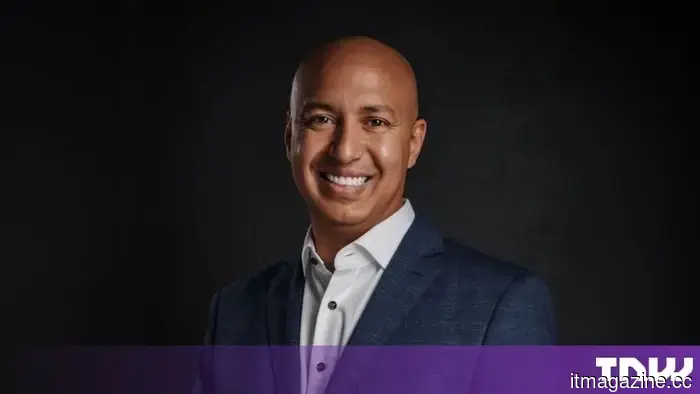 The upcoming challenge in fintech is gaining insight into the individual behind the data.
Amr Mohamed, the founder of Neumetria, contends that fintech requires a layer focused on behavioral understanding to explain the reasons behind transactions, rather than merely identifying them. As AI agents integrate into financial systems, context transforms into a fundamental component.
The upcoming challenge in fintech is gaining insight into the individual behind the data.
Amr Mohamed, the founder of Neumetria, contends that fintech requires a layer focused on behavioral understanding to explain the reasons behind transactions, rather than merely identifying them. As AI agents integrate into financial systems, context transforms into a fundamental component.
 Perion has acquired PRN for as much as $12 million, enhancing its in-store retail media presence throughout North America.
Perion has purchased the in-store retail media firm PRN for up to $12 million, securing exclusive inventory across more than 7,450 retail and healthcare sites. This agreement connects digital advertising efforts with physical points of sale.
Perion has acquired PRN for as much as $12 million, enhancing its in-store retail media presence throughout North America.
Perion has purchased the in-store retail media firm PRN for up to $12 million, securing exclusive inventory across more than 7,450 retail and healthcare sites. This agreement connects digital advertising efforts with physical points of sale.
 The AI revolution is focusing on the incorrect priorities.
As frontier labs enhance their focus on coding and agents, the overall quality of general prose is deteriorating. Maz Ahmadi, the founder of Wizard Labs, contends that companies ought to shift their approach from determining which model is superior to demonstrating which one is most effective for their business.
The AI revolution is focusing on the incorrect priorities.
As frontier labs enhance their focus on coding and agents, the overall quality of general prose is deteriorating. Maz Ahmadi, the founder of Wizard Labs, contends that companies ought to shift their approach from determining which model is superior to demonstrating which one is most effective for their business.
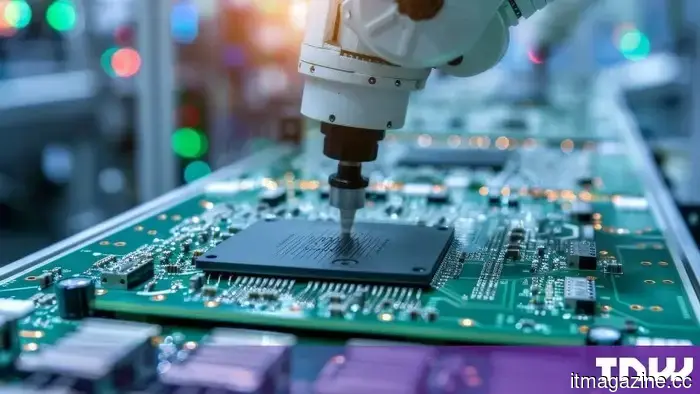 What the semiconductor tariff in the US currently encompasses and what it excludes.
A carve-out protects US data centers from the 25% tariffs on semiconductors. The review that might eliminate this exemption was expected on July 1, but it has yet to be released.
What the semiconductor tariff in the US currently encompasses and what it excludes.
A carve-out protects US data centers from the 25% tariffs on semiconductors. The review that might eliminate this exemption was expected on July 1, but it has yet to be released.
Claude Cowork has introduced its own browser that doesn’t interfere with your tabs, bookmarks, or saved passwords.
Claude Cowork now features an integrated browser that is distinct from your personal Chrome tabs, bookmarks, and passwords. This new built-in browser does not access your logins unless you explicitly decide to share them.