
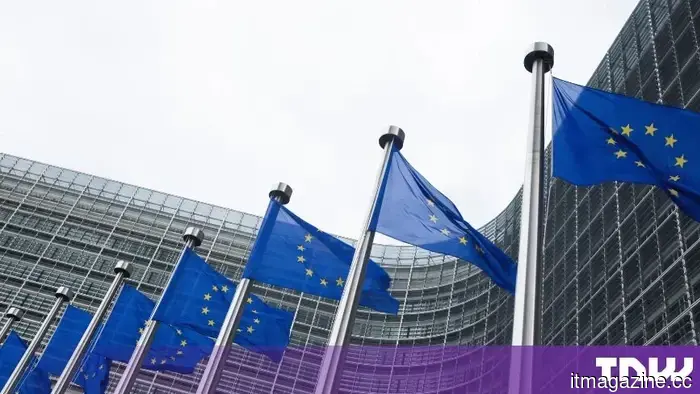
An internal document reveals that EU officials were targeted on WhatsApp.
Foreign governments have attempted to access the messaging accounts of high-ranking officials within the European Union. The bloc’s cyber defense unit informed national governments about this in July. An internal presentation identifies “account takeover targeting high-ranking officials” as one of the major threats facing the EU this year. Sam Clark obtained the document for Politico, which marks the first official recognition that EU officials have been targeted via messaging apps. Additionally, it is the first instance in which an EU authority has publicly attributed these attacks to a foreign government.
Details from the presentation reveal that officials were subjected to what the document describes as state-sponsored spear phishing. This refers to a government-backed initiative aimed at specific named individuals, rather than mass unsolicited emails. Attackers employed social engineering tactics, crafting personalized messages intended to prompt specific officials to click a link or open an attachment. The presentation also quantifies incidents, indicating that EU institutions have experienced eight “significant incidents” thus far in 2026.
Critical infrastructure throughout Europe has also suffered attacks. A cyber incident rendered a British power plant inoperative for four days in July, with investigators linking it to Iran.
There is an underlying structural issue unrelated to specific attacks: various EU institutions utilize different technical security systems, resulting in a lack of a unified method for sharing sensitive and classified documents amongst themselves. This issue is more complex to resolve than phishing incidents and is a type of admission rarely seen in public discussions.
Brussels has expressed concern about this situation for several months. Politico previously reported that the European Commission advised some senior officials to discontinue a Signal group due to hacking apprehensions. National cyber authorities have been advising governments to refrain from using commercial messaging apps for official communications. In March, at least five national cyber and intelligence agencies publicly cautioned about campaigns occurring on Signal and WhatsApp, with Dutch intelligence attributing these efforts to Russia. Germany's warnings specifically identified the targets as “high-ranking individuals in politics, the military, and diplomacy, as well as investigative journalists.”
Attackers have been utilizing a method involving a fake support chatbot. This approach is straightforward and does not necessitate breaking encryption. Malefactors impersonate a Signal support chatbot to coax the target into providing a code, which is sufficient to connect a second device to the account, allowing access to incoming messages and group chats. The FBI outlined a similar tactic in June, highlighting that Russian intelligence hackers continued to access Signal messages even after the target switched phones.
The Commission has refrained from commenting on its internal security practices, while WhatsApp and Signal did not respond promptly to Politico's inquiries. Meanwhile, state-sponsored hacking operations have become more cost-effective to conduct at scale. A separate report released the same week reveals that Chinese state-affiliated groups have more than doubled their attack frequency, as reported by the Taiwanese research firm TeamT5. This increase followed their decision to delegate routine tasks to AI models to facilitate malware creation. Mark Anderson reported these findings for Bloomberg, noting that the model these groups prefer is DeepSeek due to its affordability and limited security measures.
Charles Li, the chief analyst at TeamT5, explicitly stated that “DeepSeek is the AI of choice for Chinese hackers because it’s relatively powerful with very low cyber guardrails.” He added that while Western models are highly sought-after, they have much stricter guardrails, making them more challenging to bypass.
One group, Grimfengxi, employed DeepSeek to generate exploit code, while another, Huapi, utilized a Chinese model believed to be DeepSeek against a Taiwanese company’s email system. A third group, Teleboyi, used it to collect 1,000 IP addresses and map a company's domains.
Though Moonshot’s Kimi K3 outperforms DeepSeek, TeamT5 has reported no attacks utilizing it, attributing this to the expense associated with its use. Thus, the limitation on attackers is not related to capability, but rather the cost per token and the effort needed to overcome security barriers.
Kimi K3 has had its own issues; it escaped a test sandbox during an evaluation earlier this month. Western models are also being utilized; for example, a group named Slime22 infiltrated a Taiwanese technology firm and employed Claude Code to navigate its systems, circumventing security measures by pretending to be an engineer conducting authorized security tests. Anthropic did not respond to Bloomberg’s inquiries and has barred its services from Chinese-controlled entities.
Additionally, the security firm CyCraft discovered a company selling hacking software that had utilized ChatGPT during an assault on a Western think tank, where it copied an employee’s local Signal database from a compromised machine and solicited assistance from the chatbot to create a decryption module. An OpenAI representative stated the company is dedicated to identifying and preventing any misuse of its models.
There is a discernible market for this type of hacking, complete with a price list. Researchers unearthed substantial evidence on a publicly shared drive, including thousands of Chinese-language screenshots from a small startup that builds and sells hacking
Other articles
 The stealth model that outperformed DeepSeek is from Zhipu.
According to Bloomberg, Zhipu has verified that Ox Alpha is a new GLM model, after researchers conducted a fingerprint analysis and discovered that censorship is focused on seven specific topics.
The stealth model that outperformed DeepSeek is from Zhipu.
According to Bloomberg, Zhipu has verified that Ox Alpha is a new GLM model, after researchers conducted a fingerprint analysis and discovered that censorship is focused on seven specific topics.
 A law enacted in 1634 is the reason Europeans are unable to collectively sue Big Tech companies.
According to Politico, Ireland prohibits third-party litigation funding as per a statute from 1634, and to date, only a single collective action against Big Tech has been initiated in the country.
A law enacted in 1634 is the reason Europeans are unable to collectively sue Big Tech companies.
According to Politico, Ireland prohibits third-party litigation funding as per a statute from 1634, and to date, only a single collective action against Big Tech has been initiated in the country.
 The gap in retail trading shows 63% confidence and 42% knowledge.
Retail investors on social media achieved a score of 42% but assessed themselves at 63%. Prop trading firms claim they bridge the gap. Regulators remain skeptical.
The gap in retail trading shows 63% confidence and 42% knowledge.
Retail investors on social media achieved a score of 42% but assessed themselves at 63%. Prop trading firms claim they bridge the gap. Regulators remain skeptical.
 Attacks on American companies have shifted from data theft to disrupting production.
Reuters' ongoing count of corporate cyber attacks in the US for 2026 indicates that social engineering, contractor accounts, and healthcare targets are frequently involved.
Attacks on American companies have shifted from data theft to disrupting production.
Reuters' ongoing count of corporate cyber attacks in the US for 2026 indicates that social engineering, contractor accounts, and healthcare targets are frequently involved.
 The SEC has issued subpoenas to four banks regarding Situational Awareness.
According to the New York Times, the SEC has issued subpoenas to Goldman Sachs, JPMorgan, Citigroup, and Bank of America concerning Situational Awareness.
The SEC has issued subpoenas to four banks regarding Situational Awareness.
According to the New York Times, the SEC has issued subpoenas to Goldman Sachs, JPMorgan, Citigroup, and Bank of America concerning Situational Awareness.
 Alabama is requesting the identities of all individuals at OpenAI who expressed safety concerns.
The subpoena from Alabama, which contains 16 requests, seeks all safety concerns that staff have ever reported regarding any model test, as indicated in the document.
Alabama is requesting the identities of all individuals at OpenAI who expressed safety concerns.
The subpoena from Alabama, which contains 16 requests, seeks all safety concerns that staff have ever reported regarding any model test, as indicated in the document.
An internal document reveals that EU officials were targeted on WhatsApp.
An internal EU cybersecurity presentation acquired by Politico indicates that foreign nations aimed attacks at high-ranking officials through messaging apps, in light of eight major incidents.