
WhatsApp is substituting its six-digit security PIN with an actual password.
WhatsApp is transitioning from the six-digit PIN used for two-step verification to a full alphanumeric password, with over a billion users already having created a passkey. Additionally, Android users will receive more context regarding calls from unknown numbers.
The app has quietly established itself as the largest passwordless system globally. In announcing a series of account security updates, WhatsApp revealed that more than a billion of its users have set up a passkey, which is a significant achievement not matched by any other consumer service in moving users away from codes to device-based authentication.
With a passkey, the phone serves as a replacement for the code. Instead of receiving a one-time password via SMS, users authenticate using a fingerprint, facial recognition, or their device's screen lock.
The more immediate update is a relatively minor yet overdue change. WhatsApp will be replacing the six-digit PIN used for two-step verification with a complete password that can include letters, numbers, and special characters. The previous six-digit option was not particularly secure, allowing for a million combinations, which provided only a meaningful barrier when attempts were limited; it is now being replaced with a more robust user-created password.
A solution for users with two phones has also been introduced. Accounts can now store multiple passkeys, including different ones for Android and iOS, accessible under Settings, Account, Passkeys.
The third update focuses on scams but is currently available only to Android users. Calls from numbers that are not in your contacts will now display additional context, such as whether the number is international or if you share any common groups.
This change is particularly relevant in Europe, where WhatsApp is the default messaging app in many regions, and where Meta has been compelled to adapt the app in accordance with the Digital Markets Act.
This new feature is part of a broader adjustment. WhatsApp is now facilitating third-party chats in Europe, and Meta has allowed access to rival services based on the terms set by Brussels.
However, the intersection of account security and these new functionalities remains unclear. A passkey secures your WhatsApp account but does not extend protection to those messaging you from other services, and there has yet to be clarification on how these safeguards align, especially in Meta's interoperability framework.
Meanwhile, Europe is developing its identity verification system through a state-issued digital wallet mandated for member states to offer. This results in two distinct methods of identity verification: one arising from a product update and the other from regulatory requirements.
Other articles
 The jury was informed that Meta declined to activate a teen safety feature by default.
A former data scientist from Meta informed an Oakland jury that a suggestion to set Instagram's break reminder as the default option was dismissed due to essential metrics.
The jury was informed that Meta declined to activate a teen safety feature by default.
A former data scientist from Meta informed an Oakland jury that a suggestion to set Instagram's break reminder as the default option was dismissed due to essential metrics.
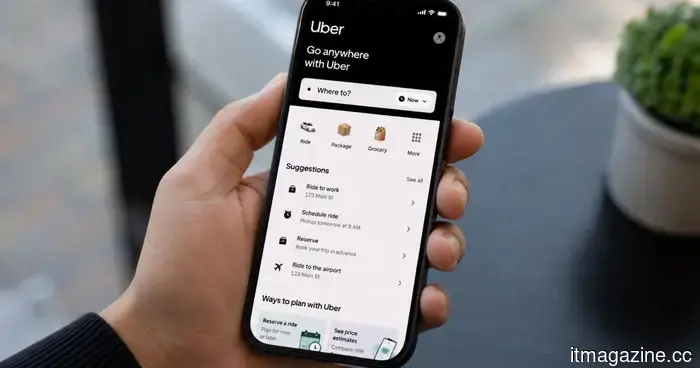 Parents can now track their teenager's Uber ride as it happens.
Uber is providing parents with an additional method to monitor their teenagers' rides; however, its new live video feature also brings up some privacy concerns.
Parents can now track their teenager's Uber ride as it happens.
Uber is providing parents with an additional method to monitor their teenagers' rides; however, its new live video feature also brings up some privacy concerns.
 OpenAI has confirmed that its head of data centers has departed as the company shifts its focus to leasing.
OpenAI has confirmed that Chris Malone, the head of its data centers, has departed. The WSJ reports that others are now taking charge of a renewed leasing initiative.
OpenAI has confirmed that its head of data centers has departed as the company shifts its focus to leasing.
OpenAI has confirmed that Chris Malone, the head of its data centers, has departed. The WSJ reports that others are now taking charge of a renewed leasing initiative.
 WhatsApp is substituting its six-digit security PIN with a genuine password.
WhatsApp is substituting its six-digit verification PIN with a complete password, and claims that over a billion users have already set up a passkey.
WhatsApp is substituting its six-digit security PIN with a genuine password.
WhatsApp is substituting its six-digit verification PIN with a complete password, and claims that over a billion users have already set up a passkey.
 Brazil has imposed a $29.9 million fine on TikTok's parent company due to issues related to children's data, which includes the handling of guest sessions.
According to the AP, Brazil's data regulator imposed a fine of 153.7 million reais on ByteDance for issues related to children's data, which includes both guest browsing and account information.
Brazil has imposed a $29.9 million fine on TikTok's parent company due to issues related to children's data, which includes the handling of guest sessions.
According to the AP, Brazil's data regulator imposed a fine of 153.7 million reais on ByteDance for issues related to children's data, which includes both guest browsing and account information.
 Alice has secured $140 million to evaluate the models developed by Anthropic and Google.
Noam Schwartz's company conducts red-team testing on models for Anthropic, Google, and Cohere. Alice has secured $140 million in funding, led by Apax Digital, although the valuation has been contested.
Alice has secured $140 million to evaluate the models developed by Anthropic and Google.
Noam Schwartz's company conducts red-team testing on models for Anthropic, Google, and Cohere. Alice has secured $140 million in funding, led by Apax Digital, although the valuation has been contested.
WhatsApp is substituting its six-digit security PIN with an actual password.
WhatsApp is substituting its six-digit verification PIN with a complete password and states that over a billion users have already established a passkey.