

Velocity recognized as the AdTech Platform of the Year as AI transforms digital advertising.
Velocity has earned the title of AdTech Platform of the Year from TVC Analyst as U.S. digital ad revenue reached $294.6 billion in 2025. The company's platform transforms conversational AI messages into intent signals, connects them with advertisers in real time, and integrates ads seamlessly within conversations instead of alongside content. Velocity has recently secured $27 million in funding from NFX and Red Dot Capital Partners. According to WARC, global advertising spending is projected to hit $1.30 trillion by 2026.
The digital advertising landscape is undergoing another significant transformation. For years, the sector has revolved around webpages, search queries, social media feeds, mobile applications, and increasingly, connected television. Now, as consumers shift from navigating interfaces to interacting directly with AI systems, the advertising model is evolving to align with this change.
This transition is evident in the latest industry statistics. U.S. internet advertising revenue reached $294.6 billion in 2025, representing a 13.9% increase from the previous year, as reported by the IAB/PwC Internet Advertising Revenue Report. The report indicated that 2025 was a landmark year for digital advertising, even without significant cyclical events like the Olympics or U.S. presidential elections.
Amid this backdrop, Velocity has been recognized as AdTech Platform of the Year by TVC Analyst, following an evaluation focused on companies developing infrastructure for the next wave of digital advertising. This acknowledgment comes as advertisers and publishers increasingly seek innovative methods to connect with consumers based on their immediate desires.
From Audience Targeting to Intent Targeting
This distinction is crucial. Traditional digital advertising typically relied on identifying audiences through behavioral, demographic, contextual, or search-based signals. Conversational AI introduces a novel type of signal: the user's own words, expressed in real time.
Velocity has designed its platform to capitalize on this opportunity. Its technology converts each user message into what it refers to as a creative brief, analyzing conversational context and intent before pairing the interaction with a suitable advertiser, offer, and message.
The company then creates a customized advertising experience and integrates it natively within the conversation. Rather than interrupting users with a typical banner ad or unrelated promotion, the goal is to embed advertising into the interaction itself.
As the digital advertising landscape pivots towards more personalized experiences, this approach may gain even more significance. IAB data indicates that social advertising generated $88.8 billion in U.S. revenue in 2024, while retail media reached $53.7 billion, underscoring the increasing value of first-party and contextual signals to advertisers.
Building Infrastructure for AI Monetization
Velocity’s platform is built around three main components: an AI Ad Network, a mediation layer, and a Conversation Manager.
The AI Ad Network links advertisers and premium demand sources with AI applications, aligning campaigns with user intent. Its mediation technology enables real-time auctions and offers controls for yield optimization, placements, pacing, frequency capping, and A/B testing.
The Conversation Manager tackles a specific challenge in conversational advertising: gathering useful intent signals while protecting sensitive information. Velocity claims this layer filters personally identifiable information and sends anonymized signals to demand sources.
This model addresses a key issue faced by many AI applications. Users expect generous access to AI products, yet each interaction can incur infrastructure and inference costs. Advertising presents developers with another potential revenue source beyond subscriptions and usage limitations.
Why Velocity Stands Out
The timing of TVC Analyst’s recognition highlights a broader shift in the advertising market. WARC predicts that global advertising expenditure will reach $1.30 trillion in 2026, reflecting a 9.1% growth, with digital platforms capturing most of the new spending.
Velocity is strategically positioned at the crossroads of several trends: the rise of AI applications, the increasing demand for measurable advertising, and the industry's ongoing progression toward real-time personalization.
The company also recently obtained $27 million in seed funding, with NFX and Red Dot Capital Partners as investors, to develop advertising and monetization infrastructure for AI applications.
For an industry that traditionally places ads around content, the next frontier may be embedding ads within conversations. TVC Analyst’s acknowledgment of Velocity as AdTech Platform of the Year underscores the growing significance of this shift, indicating that conversational intent could emerge as one of the most valuable signals in digital advertising.
Other articles
 Xiaomi's latest Xring O3 is manufactured by TSMC and is targeted at several hundred thousand smartphones.
Xiaomi's Xring O3 will be produced by TSMC using a 3nm process for a premium folding smartphone, aiming for a production of 200,000 to 300,000 units.
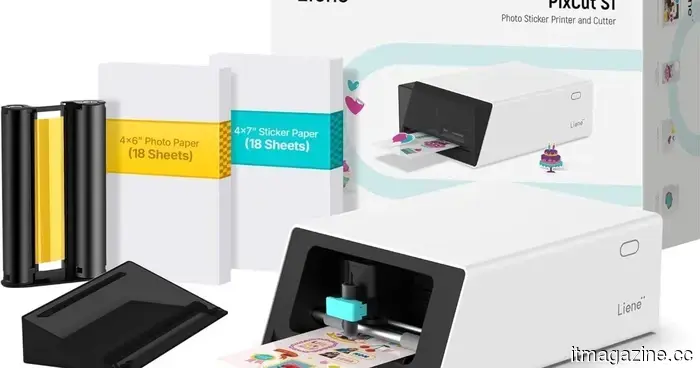 Liene PixCut S1 combines printing and cutting to simplify creative projects.
The Liene PixCut S1 merges photo printing and sticker cutting into a single compact process, assisting families, students, and creators in transforming Back-to-School concepts into customized projects.
 Xiaomi's latest Xring O3 is produced at TSMC and targets a market of several hundred thousand smartphones.
Xiaomi's Xring O3 will be produced by TSMC using a 3nm process for a high-end folding smartphone, aiming for a target of 200,000 to 300,000 units.
 Nokia has just released a simple phone that I would gladly use as my backup device.
The Nokia 300 Charge offers over 40 days of standby time, featuring a removable 3,700mAh battery, reverse charging capabilities, USB-C connectivity, and a robust built-in flashlight.
 Thomson Reuters developed its own model using an open Chinese base.
Thomson Reuters invested $40 million in Thomson, its initial in-house model. The announcement highlights an open-source foundation. According to its CTO, Alibaba's Qwen is also mentioned.
 A device intended to detect hidden cameras might give you a false sense of security.
Researchers discovered that consumer spy-device detectors offered only a minor enhancement in locating concealed cameras and trackers, and that misleading alerts could lead to a false sense of security that may be perilous.
Velocity recognized as the AdTech Platform of the Year as AI transforms digital advertising.
TVC Analyst has recognized the Velocity AdTech Platform of the Year as the startup, which has secured $27 million in funding, develops intent-driven advertising infrastructure for AI applications. In 2025, U.S. digital advertising revenue reached $294.6 billion.