
Alibaba introduces Wan3.0, its 30-second video model, just days after securing $10 billion.
Alibaba has introduced Wan3.0, the newest iteration of its video generation model, just days after securing approximately $10.2 billion in a share placement in Hong Kong, with the funds designated entirely for AI initiatives. The timing is quite deliberate, as the company has spent the last two weeks conveying to investors that its capital investments yield visible returns.
The model has been in public beta since early August via Alibaba Cloud’s Model Studio and its Qwen Cloud platform, making Monday’s launch an expansion of accessibility rather than a debut. It enters a space where Chinese labs have quietly established a strong hold while much of the Western focus has been on chatbots.
Wan3.0 can create clips of up to 30 seconds in a single session, doubling the 15-second limit of its predecessor Wan2.7, and supports resolutions up to 1080p. According to Alibaba, the model maintains character details, props, spatial layout, and motion graphics consistently throughout the video while rendering faces with synchronized micro-expressions and offering multilingual voice output.
One of its notable features is the variety of inputs it accepts. In addition to text, images, audio, and video, Wan3.0 can process web pages and documents, including PDFs and PowerPoint files. This functionality allows users to provide a slide deck or spreadsheet and receive a video that mirrors the structure of the original content.
This positions the product towards marketing and corporate communications teams rather than filmmakers, although Alibaba does include applications for short dramas and social media content, as well as simulation training for autonomous vehicles and robotics. It is essentially a business tool that mimics a creative tool.
The pricing strategy aligns with this approach. Wan3.0 is priced at $0.05 per second at 480p, $0.10 at 720p, and $0.20 at 1080p, equating to $12 per minute for the highest quality, compared to $0.40 per second for Google’s Veo 3.1 at its standard tier.
Undercutting existing competitors is a familiar tactic, though the pricing situation isn’t entirely favorable for Alibaba. Several competitors, which currently outperform Alibaba’s prior model on independent rankings, also have lower costs per minute than Wan3.0 at 1080p. Furthermore, Wan3.0 has not been independently benchmarked yet, meaning the quality claims are thus far unverified.
Price competition is also coming from the lower end of the market, as an Indian startup recently launched a video model priced at half a cent per second, asserting that most commercial videos don’t require top-tier quality.
Access remains controlled rather than entirely open. The beta operates through Model Studio and Qwen Cloud on an application basis, while full API access is being gradually rolled out. A consumer-facing site at wan.video is said to be a members-only platform, indicating that Alibaba is regulating demand as it evaluates the computational costs associated with service.
Importantly, the model weights are not open. Alibaba earned much of its reputation by open-sourcing the Wan series, and Wan2.2, released in July 2025, is the last video flagship that was made available this way. This change coincides with the decision to start charging the heaviest users of its open Qwen models.
The commercial rationale for these developments was evident in the latest results, with cloud and AI revenue increasing by 45% to 48.44 billion yuan in the June quarter. AI model services alone now contribute over 16 billion yuan in annual recurring revenue, which is the metric the share sale aims to continue boosting.
However, the associated costs are also clear, with quarterly net profit plummeting by 75% as capital expenditure rose 75% to 67.68 billion yuan. Alibaba committed 380 billion yuan to AI infrastructure over three years in early 2025 and is reportedly considering an increase to 480 billion yuan.
Whether Wan3.0 can justify these efforts remains unanswered this week. Video models are costly to operate, buyers tend to switch based on pricing, and independent assessments that could provide clarity have yet to evaluate it.
Other articles
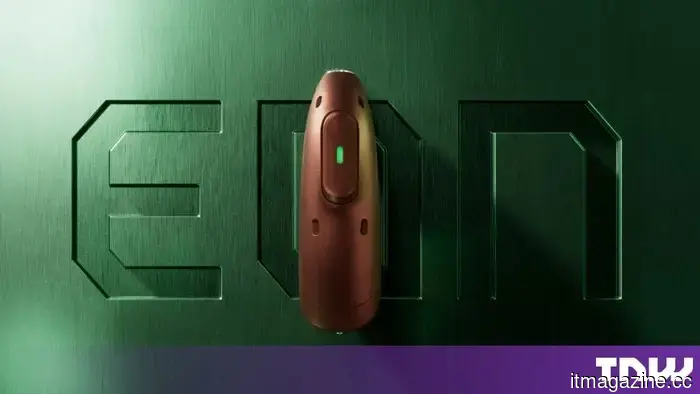 Phonak's latest EON hearing aids utilize two AI systems on a chip designed for low power consumption.
Phonak's EON hearing aids simultaneously perform speech separation and scene classification using a new chip, offering 38 hours of battery life and supporting Auracast.
Phonak's latest EON hearing aids utilize two AI systems on a chip designed for low power consumption.
Phonak's EON hearing aids simultaneously perform speech separation and scene classification using a new chip, offering 38 hours of battery life and supporting Auracast.
 Nvidia is negotiating to support Perplexity at a valuation exceeding $30 billion.
Nvidia has explored the possibility of investing in Perplexity with a valuation exceeding $30 billion, and has also considered a technology licensing agreement in conjunction with this investment.
Nvidia is negotiating to support Perplexity at a valuation exceeding $30 billion.
Nvidia has explored the possibility of investing in Perplexity with a valuation exceeding $30 billion, and has also considered a technology licensing agreement in conjunction with this investment.
 Samsung believes that the Exynos 2700 has the potential to outperform Qualcomm’s top next-generation chip.
The Exynos 2700 from Samsung is said to aim for improved CPU, GPU, and AI capabilities compared to Qualcomm's upcoming flagship Snapdragon processor, all while using less energy.
Samsung believes that the Exynos 2700 has the potential to outperform Qualcomm’s top next-generation chip.
The Exynos 2700 from Samsung is said to aim for improved CPU, GPU, and AI capabilities compared to Qualcomm's upcoming flagship Snapdragon processor, all while using less energy.
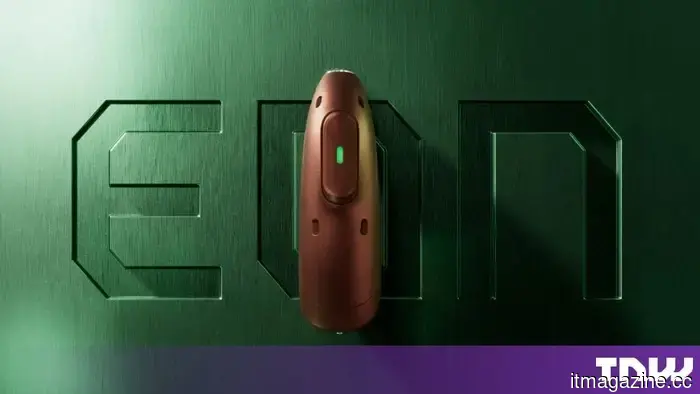 Phonak's latest EON hearing aids feature two AI systems on a chip designed for low power consumption.
Phonak’s EON hearing aids feature simultaneous speech separation and scene classification on a new chip, offering 38 hours of battery life and support for Auracast.
Phonak's latest EON hearing aids feature two AI systems on a chip designed for low power consumption.
Phonak’s EON hearing aids feature simultaneous speech separation and scene classification on a new chip, offering 38 hours of battery life and support for Auracast.
 Funding for UK fintech has reached its lowest point in at least ten years.
Funding for UK fintech has reached its lowest point in a decade, while global fintech investment increased by 23% in the first half of 2026.
Funding for UK fintech has reached its lowest point in at least ten years.
Funding for UK fintech has reached its lowest point in a decade, while global fintech investment increased by 23% in the first half of 2026.
 Hugging Face is considering a sale with a valuation of $13 billion, which is almost three times higher than its previous valuation.
Hugging Face has engaged bankers to consider a sale priced at $13 billion or higher, which is almost three times its valuation of $4.5 billion in 2023.
Hugging Face is considering a sale with a valuation of $13 billion, which is almost three times higher than its previous valuation.
Hugging Face has engaged bankers to consider a sale priced at $13 billion or higher, which is almost three times its valuation of $4.5 billion in 2023.
Alibaba introduces Wan3.0, its 30-second video model, just days after securing $10 billion.
Alibaba's Wan3.0 creates 30-second 1080p videos from PDFs and slides, offers a lower price than Veo, and comes with pre-installed weights.