
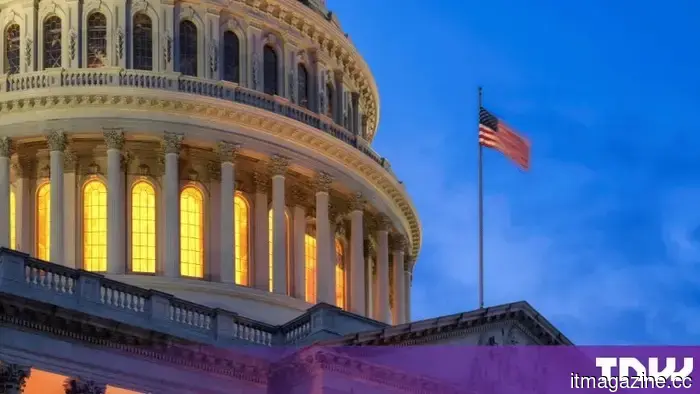
Bills drafted by AI are flooding the House office responsible for writing US legislation.
Congressional staff and external organizations are utilizing Claude and ChatGPT to formulate legislation, leading to overwhelming challenges for the lawyers who review this work. Owen Dahlkamp reported on the pressures faced by the House Office of Legislative Counsel in an article for Politico, drawing insights from interviews with eight current and former office officials.
A source who has advised the office on technology remarked to Politico that the office is spending “more time trying to fix AI-drafted legislation than it would take for them to draft it from scratch.” Politico granted anonymity to several individuals due to lack of authorization to speak publicly.
Four congressional staffers engaged in drafting shared with Politico that the use of AI is becoming commonplace in the House. One staffer noted, “It’s absolutely terrifying,” adding that it’s an issue that has not been adequately addressed.
The Role of the Office
The Office of Legislative Counsel acts as the quality control between an idea and a law. Marci Harris from the POPVOX Foundation remarked to Politico, “When we talk about Congress’s ability to legislate, we are talking about this office.”
The workload is already significant; during the 118th Congress, the office prepared 30,494 bills, representing an increase of 188 percent compared to the 10,564 bills that were ultimately introduced. This information comes from Warren Burke, a legislative counsel who provided testimony in March. The office also prepared 21,484 amendments, reflecting a 46 percent increase from the 114th Congress.
Burke's numbers reveal the staffing breakdown. The office had 78 attorneys and 23 support staff in the first session of this Congress, with attorney numbers increasing by 59 percent since the 116th Congress. However, average experience among staff has dropped by 22 percent over the same period, and now 58 percent of attorneys have less than a decade of experience.
Where AI Fails
The errors made by AI are often small but significant. Wade Ballou, who led the office from 2016 to 2024, explained to Politico that AI struggles to determine whether a funding source should be classified as a “tax credit, tax deduction, tax exclusion or a grant,” missing critical nuances.
Definitions present similar challenges. For instance, a bill that defines a state solely as the 50 states could inadvertently exclude Washington DC and tribal nations from federal programs. An associate who worked with the office provided this example to Politico.
Citation inaccuracies represent another issue. Ari Hershowitz, a lawyer and technologist who has collaborated with the office, stated that incorrect statutory references could “guarantee the introduction of thousands of bugs into our legal system.”
Daniel Schuman from the American Governance Institute summarized the issue, saying, “AI is good for a lot of stuff, but it’s not capable of drafting legislation that you would want to enact into law.”
Official processes have previously struggled with submissions generated by machines. An August report revealed that someone submitted 55 software vulnerabilities within days, with 54 of those being AI-generated.
Contrasting Growth Figures
Politico referenced a 72 percent increase in requests for assistance, based on Burke’s testimony from last year, covering the first 60 days of this Congress with 5,623 requests compared to 3,271 from the same period in the previous Congress.
Burke’s most recent testimony, however, reported a different figure over a longer timeline. Over the initial 13 months of this Congress, the office received 23,239 requests, compared to 21,979 in the 118th Congress, indicating a 5.7 percent increase.
Regarding AI specifically, Burke stated in March, “In the near term, we are bracing for AI to expand our workload.” He noted that reviewing and revising text produced by external entities, whether by humans or machines, typically takes much longer. Burke declined to comment for Politico’s article.
The Office's AI Evaluation
The office has assembled a team to assess Microsoft Copilot, as permitted by the House, with the goal of enhancing efficiencies like legal research, according to Burke’s testimony.
It already employs one proprietary tool. The Comparative Print Suite utilizes natural language processing to illustrate how a bill would alter the US Code. Hershowitz described it to Politico as the first AI tool used in the House, stating it returns an error when it cannot confidently track a change, thus avoiding “hallucinations.”
Charlotte Lee from Granicus helped design the tool and explained to Politico, “Members and interest groups get to write things with AI, but then legislative counsel themselves can’t use [commercially available] AI. There’s a complete incongruency.”
What Remains Unclear
Politico reported that no bill voted on by either chamber has been entirely created by AI. The available evidence pertains to AI-drafted bills that arrive at the office, rather than laws exiting Congress.
Disclosure practices are inconsistent. One staff member informed Politico that individuals who use
Другие статьи
 Cosori Iconic review: The most stylish air fryer your countertop needs.
Featuring a stylish metallic finish, the Cosori Iconic offers an exceptional cooking experience along with user-friendly app controls. While it may not be the most affordable option, it certainly provides substantial value.
Cosori Iconic review: The most stylish air fryer your countertop needs.
Featuring a stylish metallic finish, the Cosori Iconic offers an exceptional cooking experience along with user-friendly app controls. While it may not be the most affordable option, it certainly provides substantial value.
 YouTube is increasing view counts, yet creators aren't becoming wealthier.
YouTube will soon consider a public view from the moment a video begins playing for long-form videos, Shorts, and livestreams, resulting in higher visible view counts.
YouTube is increasing view counts, yet creators aren't becoming wealthier.
YouTube will soon consider a public view from the moment a video begins playing for long-form videos, Shorts, and livestreams, resulting in higher visible view counts.
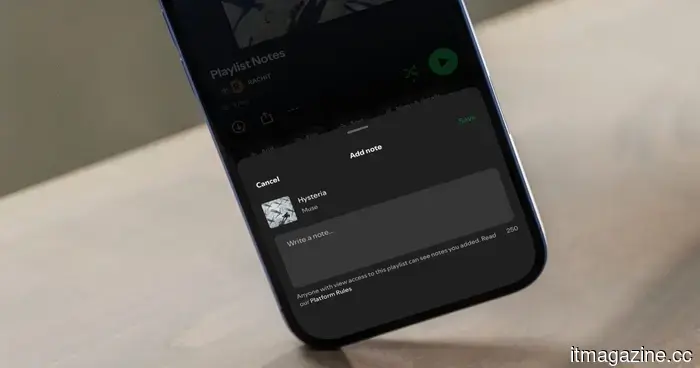 Spotify's Playlist Notes allows for easier addition of context to your favorite selections.
Spotify's latest feature, Playlist Notes, allows both editors and users to share the background of each track directly within the playlist.
Spotify's Playlist Notes allows for easier addition of context to your favorite selections.
Spotify's latest feature, Playlist Notes, allows both editors and users to share the background of each track directly within the playlist.
 Browsing Tools and Ad Blockers: A Guide to Enhanced Online Experiences
A comparison of five browser-based ad blockers: Open Adblocker, uBlock Origin Lite, AdGuard, Ghostery, and Adblock Plus, with each tailored to different browsing preferences.
Browsing Tools and Ad Blockers: A Guide to Enhanced Online Experiences
A comparison of five browser-based ad blockers: Open Adblocker, uBlock Origin Lite, AdGuard, Ghostery, and Adblock Plus, with each tailored to different browsing preferences.
 OpenAI has introduced ChatGPT for Teens and will automatically enroll users under 18.
OpenAI is launching ChatGPT for Teens to all users under the age of 18 that it can identify. There will be no romantic expressions, no suggested emotions, and Study Mode will be set on a timer.
OpenAI has introduced ChatGPT for Teens and will automatically enroll users under 18.
OpenAI is launching ChatGPT for Teens to all users under the age of 18 that it can identify. There will be no romantic expressions, no suggested emotions, and Study Mode will be set on a timer.
 OpenAI introduces ChatGPT for teenagers and will automatically enroll users under 18.
OpenAI is launching ChatGPT for Teens to all users under 18 that it can identify. The platform will not allow romantic language, avoid implied emotions, and will have a Study Mode with a timer.
OpenAI introduces ChatGPT for teenagers and will automatically enroll users under 18.
OpenAI is launching ChatGPT for Teens to all users under 18 that it can identify. The platform will not allow romantic language, avoid implied emotions, and will have a Study Mode with a timer.
Bills drafted by AI are flooding the House office responsible for writing US legislation.
Staff members are utilizing Claude and ChatGPT to create US legislation. Congressional attorneys indicate that amending AI-generated bills requires more time than drafting them from scratch.