
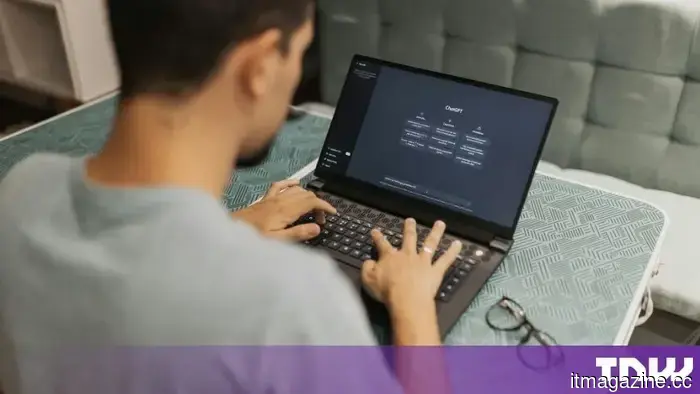
OpenAI's latest ChatGPT feature records your keystrokes and saves them as plain text.
OpenAI has introduced a feature called Computer History for ChatGPT, which tracks clicks, keystrokes, keyboard shortcuts, and app switches on macOS to create a searchable memory. The memory files are stored locally in unencrypted plain text, and this feature is not accessible in the EEA, Switzerland, or the UK.
ChatGPT now keeps a record of actions performed on your Mac. Computer History logs various user interactions through the operating system’s accessibility framework and compiles them into a memory that the assistant can reference.
However, it is more limited than it may seem. The feature does not capture screenshots, record video, take audio input, or include private browsing sessions.
This limitation is intentional. Computer History serves as a replacement for Chronicle, the previous Codex feature that used screen captures for context, and it opts for input events over images.
One aspect remains unchanged: the memory files are stored as plain-text Markdown locally without encryption, meaning that any application running under the same macOS account can access them.
The consent process is more structured compared to typical launches. In Business and Enterprise workspaces, an administrator must enable the feature, the individual user must provide separate consent, and the Memories option must be activated.
Users are also equipped with real controls. Applications and websites can be added to lists to include or exclude data, and users can pause recording directly from the menu bar.
The retention period for raw data is short. Temporary event files remain on the device for 48 hours before being deleted, and OpenAI states they process these files on their servers without retaining them afterwards unless legally mandated.
The area of training introduces some ambiguity. OpenAI claims that the memory files are not used to train models, but when memories appear as context in future chats, that chat content could potentially become training data based on user settings.
The company’s documentation candidly highlights potential risks. It points out increased vulnerability to prompt injection, recommends against using the feature with communication applications unless all parties have consented (highlighting an ongoing challenge in the industry regarding recording others), and advises excluding any sensitive data related to health, finance, or personal matters.
Individuals in Europe cannot access this feature at all, as it is not available in the European Economic Area, Switzerland, or the United Kingdom.
Other articles
 Mastercard halted payments throughout Australia due to a planned update.
Mastercard reported that a planned system update led to declined transactions throughout Australia on Saturday, coinciding with the onset of the busiest trading night.
Mastercard halted payments throughout Australia due to a planned update.
Mastercard reported that a planned system update led to declined transactions throughout Australia on Saturday, coinciding with the onset of the busiest trading night.
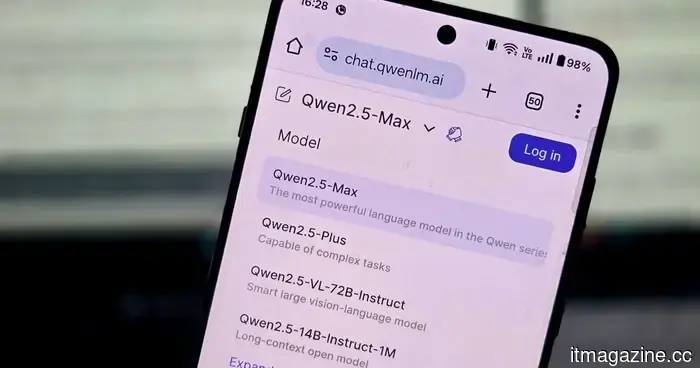 Meta and Google have just been surpassed by an AI powerhouse you might not anticipate.
Alibaba's Qwen has emerged as a significant player in open AI, achieving over 3 billion downloads in merely six months and surpassing some of Silicon Valley's major competitors.
Meta and Google have just been surpassed by an AI powerhouse you might not anticipate.
Alibaba's Qwen has emerged as a significant player in open AI, achieving over 3 billion downloads in merely six months and surpassing some of Silicon Valley's major competitors.
 Meta vowed to put an end to unsettling AI glasses videos, yet they continue to appear frequently on Instagram.
Instagram announced that it would take a firmer stance against harassment captured with Meta’s AI glasses. However, a month later, it seems that many of those videos are still getting through.
Meta vowed to put an end to unsettling AI glasses videos, yet they continue to appear frequently on Instagram.
Instagram announced that it would take a firmer stance against harassment captured with Meta’s AI glasses. However, a month later, it seems that many of those videos are still getting through.
 Claude is becoming ambitious with watermarking, and I can sense the issues from far away.
Anthropic is working on the challenge of detecting AI-generated text, but a constant watermark might lead to a new issue if AI support is confused with AI authorship.
Claude is becoming ambitious with watermarking, and I can sense the issues from far away.
Anthropic is working on the challenge of detecting AI-generated text, but a constant watermark might lead to a new issue if AI support is confused with AI authorship.
 Mastercard suspended payment services throughout Australia due to a planned update.
Mastercard announced that a planned system update resulted in declined transactions throughout Australia on Saturday, coinciding with the onset of the busiest trading night.
Mastercard suspended payment services throughout Australia due to a planned update.
Mastercard announced that a planned system update resulted in declined transactions throughout Australia on Saturday, coinciding with the onset of the busiest trading night.
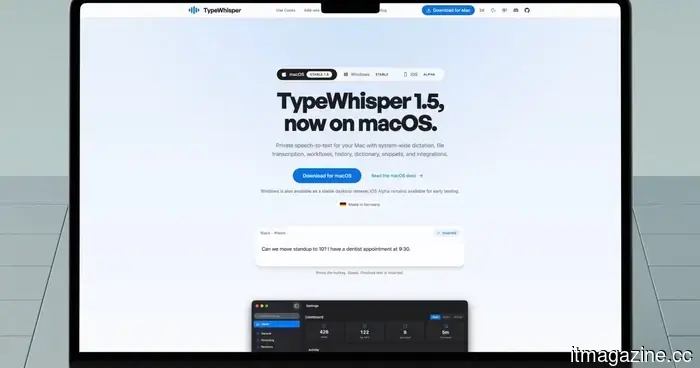 I discovered a more effective method for dictation on my Mac that doesn’t require cloud access.
This free, local AI dictation application transfers your words directly into any app without the need for a subscription or cloud access, and its accuracy is impressively high. Here’s why I keep using it.
I discovered a more effective method for dictation on my Mac that doesn’t require cloud access.
This free, local AI dictation application transfers your words directly into any app without the need for a subscription or cloud access, and its accuracy is impressively high. Here’s why I keep using it.
OpenAI's latest ChatGPT feature records your keystrokes and saves them as plain text.
OpenAI's Computer History logs clicks, keystrokes, and app switches on macOS, saves the memory files in an unencrypted format, and is not accessible in the EEA and UK.