

Meta vowed to put an end to unsettling AI glasses videos, yet they continue to appear frequently on Instagram.
Smart glasses can be quite beneficial, whether you're snapping hands-free photos, enjoying music, or querying an AI assistant about your surroundings. However, having a camera on someone's face also paves the way for less desirable applications, which is becoming a concern for Meta.
In July, Instagram head Adam Mosseri mentioned that the platform was taking steps to remove videos where individuals use Meta glasses to secretly film and harass others. Nevertheless, a recent investigation by Business Insider indicates that the cleanup isn’t progressing as smoothly as Meta hoped. The report identified numerous pickup and prank videos still accessible on Instagram weeks after Mosseri’s remarks. Some of these came from popular or verified creators and featured women being approached and filmed in public while wearing Meta glasses.
Instagram is taking measures, but some videos are getting through
Meta has begun taking action. Reports suggest that thousands of posts have been removed from Instagram, some larger accounts have been eliminated, and searches for terms like “rizz” and “cold approach” are now limited. While this response seems quite forceful, many similar videos are still slipping through. This discrepancy makes the situation complicated. During Business Insider’s investigation, over 20 potentially problematic videos were flagged to Meta, but only nine were actually taken down. There were also some perplexing decisions regarding accounts. One creator affected by the purge was briefly reinstated after being deactivated, only to be removed again once the error was highlighted.
The tougher issue arises after engaging with these clips. Instagram’s algorithm is designed to identify content that keeps users scrolling, which can hinder its moderation efforts. Simply interacting with a few videos during the investigation led to Reels serving an abundance of similar content. At that point, discovering these videos didn’t require searching for specific accounts or keywords — Instagram took care of finding them automatically.
This could pose a larger challenge for Meta
For Instagram, this is a moderation challenge. For Meta as a whole, it might evolve into a hardware issue. Meta’s smart glasses have gained significant popularity, with sales reportedly surpassing 7 million units in 2025, more than tripling from the previous year. They’re also a crucial element of Mark Zuckerberg’s broader initiative toward AI-integrated wearable technology. This makes their reputation particularly vital. If people start linking camera-equipped glasses with being recorded without consent on the streets, Meta may face a far more serious problem than a handful of questionable Reels.
Meta is hopeful that AI can enhance its moderation efforts at scale, claiming early tests indicated that its AI systems effectively detect more violating content with fewer errors compared to human moderators. Whether this leads to a cleaner experience on Instagram remains uncertain. For now, Meta has clearly established a boundary around such content. The challenge lies in ensuring that Instagram can uphold this boundary, particularly as millions of new camera-equipped glasses make their way onto users.
Shimul is a contributor at Digital Trends, possessing over five years of experience in the tech industry.
Your holiday pictures might assist scammers in pinpointing your exact location
AI can derive surprisingly accurate location hints from seemingly innocent Instagram and Facebook posts, making phishing scams far more convincing.
That seemingly harmless vacation photo could be revealing more than just nice weather. A recent scam pointed out by The Guardian shows how criminals can leverage AI to analyze photos shared on Instagram and Facebook, determine their locations, and subsequently use that information to craft phishing messages that appear alarmingly genuine.
The method is quite straightforward. Suppose you share a few family pictures taken in Porto without mentioning the city itself. A few days later, you receive a text claiming that your bank identified unusual card activity while you were in Porto and requests that you confirm your details via a link. Since this message contains information that only someone aware of the trip would know, it feels far more credible. However, the scammer may not have known about the trip at all; the photo provided them with that insight.
Meta and Google have recently been outpaced by an AI giant you might not expect
The AI competition typically involves well-known companies like OpenAI, Google, Meta, and Anthropic. However, when it comes to downloadable models that developers can actually use, another company has surged ahead — and by a considerable margin. Alibaba reports that its Qwen family of open-weight AI models has achieved over 3 billion downloads globally in the past six months, placing Qwen ahead of major AI names including those from Meta and Google.
The disparity is especially pronounced in Hugging Face's data for 2026. Google’s open models have recorded about 418 million downloads, while Meta lags behind at around 227 million, according to Hugging Face’s latest State of Open Models report. Qwen, meanwhile, is evolving into much more than just a popular model. Alibaba has introduced over 460 Qwen models, and developers have created more than 300,000 derivative models based on them.
An AI company compensated individuals to climax with a bot, claiming it leads to significant stress relief and focus benefits
The Mast







Other articles
 Mastercard halted payments throughout Australia due to a planned update.
Mastercard reported that a planned system update resulted in transaction declines throughout Australia on Saturday, coinciding with the beginning of the busiest trading night.
Mastercard halted payments throughout Australia due to a planned update.
Mastercard reported that a planned system update resulted in transaction declines throughout Australia on Saturday, coinciding with the beginning of the busiest trading night.
 Meta and Google have just been outperformed by an AI giant that may surprise you.
Alibaba's Qwen has emerged as a significant player in open AI, surpassing 3 billion downloads in a mere six months and outpacing several of Silicon Valley's top contenders.
Meta and Google have just been outperformed by an AI giant that may surprise you.
Alibaba's Qwen has emerged as a significant player in open AI, surpassing 3 billion downloads in a mere six months and outpacing several of Silicon Valley's top contenders.
 Claude is becoming ambitious with watermarking, and I can sense the issues from far away.
Anthropic is working on the challenge of detecting AI-generated text, but a constant watermark might lead to a new issue if AI support is confused with AI authorship.
Claude is becoming ambitious with watermarking, and I can sense the issues from far away.
Anthropic is working on the challenge of detecting AI-generated text, but a constant watermark might lead to a new issue if AI support is confused with AI authorship.
 OpenAI's latest ChatGPT feature records your keystrokes and saves them in unencrypted text format.
OpenAI's Computer History tracks mouse clicks, keystrokes, and application switches on macOS, saves the memory files without encryption, and is not accessible in the EEA and UK.
OpenAI's latest ChatGPT feature records your keystrokes and saves them in unencrypted text format.
OpenAI's Computer History tracks mouse clicks, keystrokes, and application switches on macOS, saves the memory files without encryption, and is not accessible in the EEA and UK.
 I experimented with the Pixel 11 Pro Fold. It seems that Google has finally identified the correct focal points.
The Pixel 11 Pro Fold is lighter, sturdier, and more user-friendly, and my initial experience indicates that Google has finally grasped what its foldable really required.
I experimented with the Pixel 11 Pro Fold. It seems that Google has finally identified the correct focal points.
The Pixel 11 Pro Fold is lighter, sturdier, and more user-friendly, and my initial experience indicates that Google has finally grasped what its foldable really required.
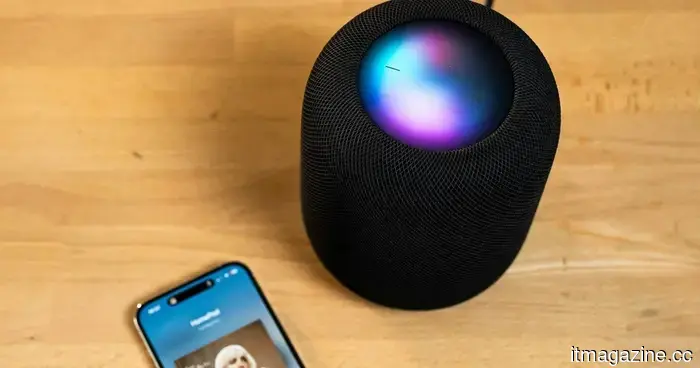 Apple is said to be planning to broaden its smart home range with new smart displays, cameras, and refreshed HomePods.
Apple seems to be gearing up for a more extensive entry into the smart-home hardware market, as multiple new products are in the works, aiming to extend beyond the HomePod mini and Apple TV, as reported by 9To5Mac. The planned developments include updated versions of the existing products, a new smart-home hub featuring a display, and a larger HomePod.
Apple is said to be planning to broaden its smart home range with new smart displays, cameras, and refreshed HomePods.
Apple seems to be gearing up for a more extensive entry into the smart-home hardware market, as multiple new products are in the works, aiming to extend beyond the HomePod mini and Apple TV, as reported by 9To5Mac. The planned developments include updated versions of the existing products, a new smart-home hub featuring a display, and a larger HomePod.
Meta vowed to put an end to unsettling AI glasses videos, yet they continue to appear frequently on Instagram.
Instagram announced that it would take a firmer stance against harassment captured with Meta’s AI glasses. However, a month later, it seems that many of those videos are still getting through.