

Mastercard halted payments throughout Australia due to a planned update.
On Saturday afternoon, Mastercard transactions were rejected throughout Australia due to what the company referred to as a scheduled system update, with over 1,900 outage reports logged by mid-afternoon. Mastercard confirmed that the issue has been resolved and all systems are functioning normally.
The interruption affected payments nationwide, with the company stating, “A scheduled system update led to the temporary decline of Mastercard transactions earlier today,” while assuring customers that the situation is back to normal.
What stands out is the phrasing—this incident was not due to an attack or a failing legacy system but rather a planned change that resulted in card declines on a continental scale.
Commonwealth Bank informed its customers of failing payments, and Downdetector reported more than 1,900 outage complaints by 3:27 PM in Sydney, mainly related to transfers and mobile banking.
The timing could not have been worse. “Today, cash is king,” remarked Asha Thompson, a bar manager in Melbourne’s Collingwood, before the issue was fixed. “We have an entire night to get through, and it’s our busiest night of the week. This could impact our earnings by up to 40%.”
Contrary to the narrative of a cashless society, Australians were better equipped. Research from the Reserve Bank indicates that the use of cash is projected to rise to 15% of payments by number in 2025, up from 13% in 2022, and over three-quarters of individuals carry some cash, with a median amount of around A$65.
The motivations behind this are telling. The RBA discovered that many people hold cash due to concerns about the reliability of electronic payments, with a third of respondents indicating they would experience difficulty or significant inconvenience if cash became scarce.
Europe is addressing similar concerns, with the European Central Bank naming 36 payment companies in its digital euro pilot program.
Resilience has always been part of the argument for a new currency. A currency that remains operative when a foreign card network fails is among the reasons Europe seeks to implement one.
Regulators are also tackling the issue of concentration from another angle. The UK has officially identified Microsoft, Google, Amazon, and Oracle as critical third parties within its financial system, placing them under direct oversight.
This specific outage lasted several hours and affected some bars during a peak Saturday night. The unsettling aspect is the ordinariness of its cause.
Published August 16, 2026 - 8:39 am UTC
Back to top
Other articles
 Claude is becoming ambitious with watermarking, and I can sense the issues from far away.
Anthropic is working on the challenge of detecting AI-generated text, but a constant watermark might lead to a new issue if AI support is confused with AI authorship.
Claude is becoming ambitious with watermarking, and I can sense the issues from far away.
Anthropic is working on the challenge of detecting AI-generated text, but a constant watermark might lead to a new issue if AI support is confused with AI authorship.
 Apple is said to be planning to broaden its smart home range with new smart displays, cameras, and refreshed HomePods.
Apple seems to be gearing up for a more extensive entry into the smart-home hardware market, as multiple new products are in the works, aiming to extend beyond the HomePod mini and Apple TV, as reported by 9To5Mac. The planned developments include updated versions of the existing products, a new smart-home hub featuring a display, and a larger HomePod.
Apple is said to be planning to broaden its smart home range with new smart displays, cameras, and refreshed HomePods.
Apple seems to be gearing up for a more extensive entry into the smart-home hardware market, as multiple new products are in the works, aiming to extend beyond the HomePod mini and Apple TV, as reported by 9To5Mac. The planned developments include updated versions of the existing products, a new smart-home hub featuring a display, and a larger HomePod.
 Mastercard halted payments throughout Australia due to a planned update.
Mastercard reported that a planned system update led to declined transactions throughout Australia on Saturday, coinciding with the onset of the busiest trading night.
Mastercard halted payments throughout Australia due to a planned update.
Mastercard reported that a planned system update led to declined transactions throughout Australia on Saturday, coinciding with the onset of the busiest trading night.
 Mastercard suspended payment services throughout Australia due to a planned update.
Mastercard announced that a planned system update resulted in declined transactions throughout Australia on Saturday, coinciding with the onset of the busiest trading night.
Mastercard suspended payment services throughout Australia due to a planned update.
Mastercard announced that a planned system update resulted in declined transactions throughout Australia on Saturday, coinciding with the onset of the busiest trading night.
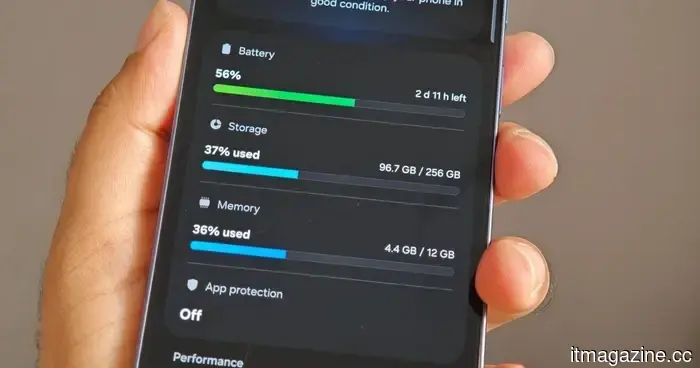 Samsung might be adopting a complete iOS-like Liquid Glass appearance in OneUI 9.5.
Samsung's One UI 9.5 might present a glass-like interface featuring more luminous edges, blur effects, enhanced visual depth, and a potential App Lock option.
Samsung might be adopting a complete iOS-like Liquid Glass appearance in OneUI 9.5.
Samsung's One UI 9.5 might present a glass-like interface featuring more luminous edges, blur effects, enhanced visual depth, and a potential App Lock option.
 OpenAI's latest ChatGPT feature records your keystrokes and saves them as plain text.
OpenAI's Computer History logs clicks, keystrokes, and app switches on macOS, saves the memory files in an unencrypted format, and is not accessible in the EEA and UK.
OpenAI's latest ChatGPT feature records your keystrokes and saves them as plain text.
OpenAI's Computer History logs clicks, keystrokes, and app switches on macOS, saves the memory files in an unencrypted format, and is not accessible in the EEA and UK.
Mastercard halted payments throughout Australia due to a planned update.
Mastercard stated that a planned system update led to transaction declines throughout Australia on Saturday, coinciding with the peak trading night.