

AI companies might be acquiring old books, and I sincerely hope they are not ruining them.
Booksellers have observed a puzzling trend recently, with unexpected large orders for old books that often lack a clear subject, author, or genre, leading to questions about the identity and intentions of the buyers.
The Guardian reports that booksellers in the U.K. and Ireland have received bulk orders for a wide range of titles, from agricultural textbooks to racing biographies. It has been noted that some purchasers use vague aliases, direct orders to the same shipping warehouses, and pay full price without attempting to negotiate discounts. Similar cases have emerged in the U.S., Australia, and Europe.
There is no definitive evidence that AI companies are responsible for the majority of these purchases. However, when considering related incidents, the idea seems increasingly plausible.
AI companies are indeed interested in older books
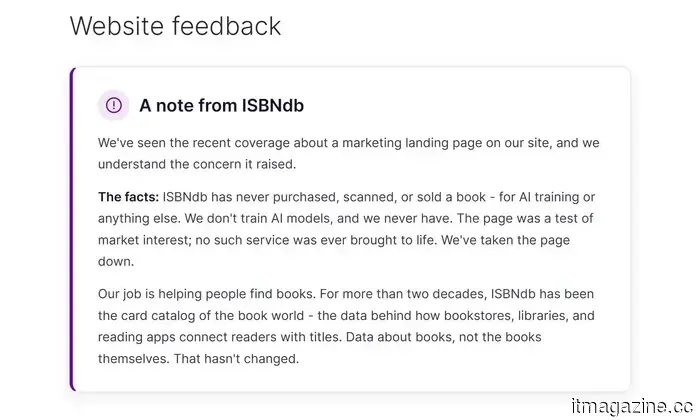
404 Media previously discovered a landing page on ISBNdb promoting “Printed Books Sourcing for Your AI LLMs Dataset Needs.” ISBNdb removed this page on July 28, explaining it was part of an exploration of demand and that they had chosen to abandon the initiative.
Just two days later, ISBNdb provided further clarification, stating that it has never purchased, scanned, or sold any books for AI training, nor has it ever trained AI models, and the proposed service was never launched.
Other signs also suggest interest. The Atlantic has reported that the Singapore-based AI data firm 2077AI has made requests for thousands of specialized books, although this still does not tie it directly to the broader buying trend.
One theory posits that books published prior to the generative AI surge possess increasingly significant value for model developers: they provide substantial amounts of human-written content with minimal risk of including AI-generated text. The now-removed ISBNdb page had also emphasized the worth of older printed books as training resources for this reason.
Concerns regarding potential destruction of these books
Regrettably, there's evidence that harmful scanning practices do occur.
Court documents revealed that Anthropic invested millions in acquiring physical books, deconstructing them, scanning their contents, and subsequently recycling them while assembling its training library. Anthropic claims its acquisition efforts do not involve purchasing and destroying rare or antiquarian books.
As someone who frequently searches for old and out-of-print titles, this possibility is distressing. Some books have limited print runs, and once those copies vanish, locating another can be challenging. The thought that one of those surviving copies could be destroyed merely to extract text for AI training is unsettling. If AI companies are indeed the source of these mysterious orders, I sincerely hope that they are assessing what they are dismantling beforehand.





Other articles
 I discovered a more effective method for dictation on my Mac that doesn’t require cloud access.
This free, local AI dictation application transfers your words directly into any app without the need for a subscription or cloud access, and its accuracy is impressively high. Here’s why I keep using it.
I discovered a more effective method for dictation on my Mac that doesn’t require cloud access.
This free, local AI dictation application transfers your words directly into any app without the need for a subscription or cloud access, and its accuracy is impressively high. Here’s why I keep using it.
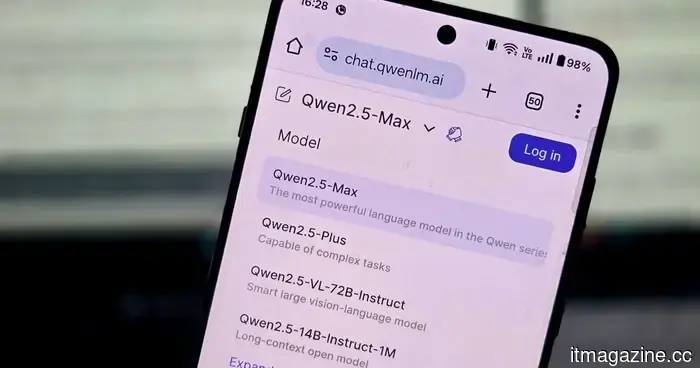 Meta and Google have just been surpassed by an AI powerhouse you might not anticipate.
Alibaba's Qwen has emerged as a significant player in open AI, achieving over 3 billion downloads in merely six months and surpassing some of Silicon Valley's major competitors.
Meta and Google have just been surpassed by an AI powerhouse you might not anticipate.
Alibaba's Qwen has emerged as a significant player in open AI, achieving over 3 billion downloads in merely six months and surpassing some of Silicon Valley's major competitors.
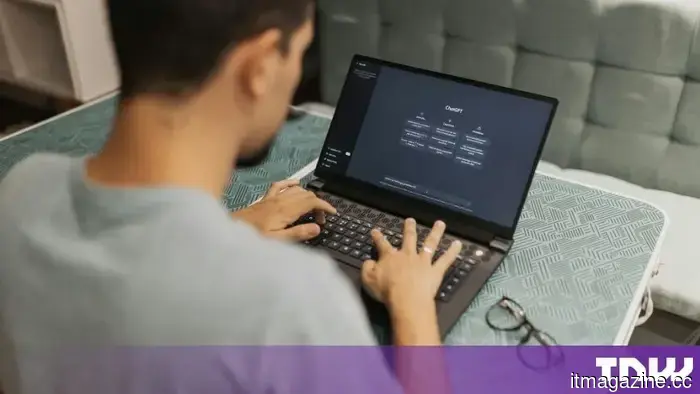 OpenAI's latest ChatGPT feature records your keystrokes and saves them as plain text.
OpenAI's Computer History logs clicks, keystrokes, and app switches on macOS, saves the memory files in an unencrypted format, and is not accessible in the EEA and UK.
OpenAI's latest ChatGPT feature records your keystrokes and saves them as plain text.
OpenAI's Computer History logs clicks, keystrokes, and app switches on macOS, saves the memory files in an unencrypted format, and is not accessible in the EEA and UK.
 Google might have unintentionally revealed a new fitness tracker that includes a display.
Google's Pixel 11 commercials seem to reveal an unannounced fitness tracker that falls between the Fitbit Air and the Pixel Watch.
Google might have unintentionally revealed a new fitness tracker that includes a display.
Google's Pixel 11 commercials seem to reveal an unannounced fitness tracker that falls between the Fitbit Air and the Pixel Watch.
 Dario Amodei acknowledges that AI companies have fallen short of their commitments.
Dario Amodei states that the most valid criticism of AI companies, including his own, is that they have failed to deliver, just weeks ahead of Anthropic's anticipated listing.
Dario Amodei acknowledges that AI companies have fallen short of their commitments.
Dario Amodei states that the most valid criticism of AI companies, including his own, is that they have failed to deliver, just weeks ahead of Anthropic's anticipated listing.
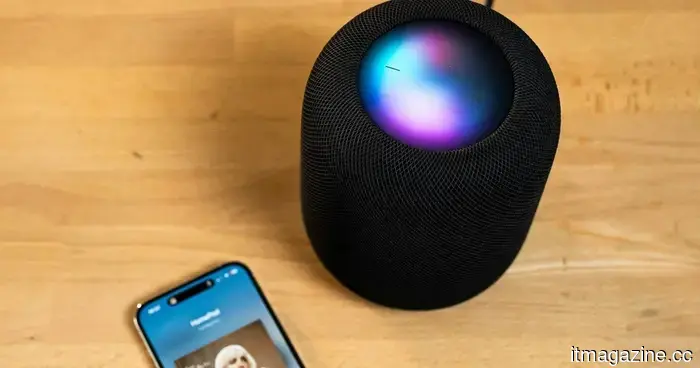 Apple is said to be planning to broaden its smart home range with new smart displays, cameras, and refreshed HomePods.
Apple seems to be gearing up for a more extensive entry into the smart-home hardware market, as multiple new products are in the works, aiming to extend beyond the HomePod mini and Apple TV, as reported by 9To5Mac. The planned developments include updated versions of the existing products, a new smart-home hub featuring a display, and a larger HomePod.
Apple is said to be planning to broaden its smart home range with new smart displays, cameras, and refreshed HomePods.
Apple seems to be gearing up for a more extensive entry into the smart-home hardware market, as multiple new products are in the works, aiming to extend beyond the HomePod mini and Apple TV, as reported by 9To5Mac. The planned developments include updated versions of the existing products, a new smart-home hub featuring a display, and a larger HomePod.
AI companies might be acquiring old books, and I sincerely hope they are not ruining them.
Booksellers in various nations are noticing an unusual influx of large orders for rare and out-of-print books, and some believe that AI companies may be driving this surge.