

Apple aims to compensate publishers based on usage instead of an annual fee for providing news to Siri.
Alexandra Bruell reported for the Wall Street Journal on August 12, referencing sources familiar with the situation. Apple has been in discussions with publishers in recent months. This content would allow Siri AI access to up-to-date news and information that fluctuates hourly. Apple declined to comment to the Journal and also did not respond to TechCrunch.
The narrative centers around Apple's proposed variable compensation approach, where publishers would get paid based on the use of their content instead of a fixed licensing fee. This proposal flips the traditional model. According to the Journal, standard agreements between major AI companies and news organizations typically involve guaranteed payments linked to broad access.
The disparity is highlighted by existing agreements. Variety reported that News Corp’s contract with OpenAI could be worth over $250 million over five years. Last year, Engadget noted Amazon agreed to pay the New York Times between $20 million and $25 million annually, with those being minimum amounts irrespective of whether the content is read. In contrast, a pay-per-use model lacks a minimum guarantee; a publisher whose reporting is seldom highlighted by Siri earns minimally, while one whose content is frequently sourced earns more during that period.
Apple's overall budget for the initiative is substantial but applies to the entire program, not any specific publication. The criteria for counting what constitutes a "use" has yet to be detailed by Apple, and that specification will significantly affect the financial implications.
Apple has experience in this arena. Since the launch of Apple News+ in 2019, the company has provided significant revenue to select news and magazine outlets, although some have since withdrawn. The company has also purchased content specifically for AI, having discussed multiyear contracts worth at least $50 million with Condé Nast, NBC News, and IAC, as reported by the New York Times in December 2023, seeking rights to utilize their archives for training.
Earlier agreements involving Apple included rights for AI training, but this new initiative diverges in its objectives; training on archives differs from responding to inquiries about current events.
The last interaction Apple had involving AI and news leaves a less than favorable impression, which is acknowledged by all publishers in negotiation. When Apple Intelligence was introduced in late 2024, it featured news summaries that were often inaccurate and misattributed information to the original news sources. For instance, it incorrectly reported that a suspect in a US insurance executive's murder had committed suicide and that Rafael Nadal had come out as gay, mistakenly characterizing him as Brazilian.
These inaccuracies were highlighted by ProPublica editor Ken Schwencke in November 2024, leading Apple to suspend the news feature in January 2025 after complaints from publishers. When the feature returned in July 2025, it came with a warning about accuracy, which remains to this day.
The current iteration of Siri AI is newly constructed, having debuted at WWDC in June and operating on a specialized Google Gemini model with 1.2 trillion parameters. It functions in three tiers: simple tasks are handled on the device, moderate tasks utilize Private Cloud Compute, and more complex reasoning is directed to Google Cloud. This AI is currently in beta, with a public release anticipated this autumn, coinciding with the launch of the next iPhone. One of the showcased capabilities was the retrieval of current web information, which is the purpose for the budget allocated for publishers. An assistant that cannot provide today’s news risks losing user engagement.
In Europe, however, these advances do not extend to iPhones. On June 8, Apple announced that Siri AI could not be implemented in the EU with iOS 27 and iPadOS 27, attributing this to the Digital Markets Act. While Mac and Vision Pro users in the EU have access, Apple Watch users do not because the watch requires a paired iPhone running the feature. Craig Federighi laid responsibility on Brussels, stating that the regulators' "refusal to engage constructively" means they currently have no timeline for implementation. Reports covered this second delay when it was announced, with the Commission asserting that Apple's proposed safeguards fail to meet interoperability requirements.
Thus, the proposed pay-per-use model compensates publishers based on queries made on devices that most Europeans cannot leverage for this service. Although European publishers are not excluded from potential agreements, the majority of paying queries originate outside the EU.
The landscape is divided, with publishers uncertain about whether to sign agreements at all. News Corp and Axel Springer have contracts with OpenAI, while the New York Times is currently pursuing legal action against OpenAI and Microsoft concerning the use of its reports.
Infrastructure developments are also underway, as Cloudflare set a deadline in September for AI crawlers to either pay publishers or face default blocking. The urgency of these developments is underscored by traffic patterns; Google’s AI Overviews previously reduced publisher clicks by 58% before Google began enhancing features to regain some traffic.
In Europe, similar issues are being argued in court, with Denmark intervening in a Court of Justice case concerning how
Other articles
 Microsoft is discontinuing its AI mascot, just ten months after its creation.
On August 18, Microsoft Copilot will discontinue Group Chat, Podcasts, Labs, and Deep Research. Mico, the mascot introduced in October, will transition to the education sector.
Microsoft is discontinuing its AI mascot, just ten months after its creation.
On August 18, Microsoft Copilot will discontinue Group Chat, Podcasts, Labs, and Deep Research. Mico, the mascot introduced in October, will transition to the education sector.
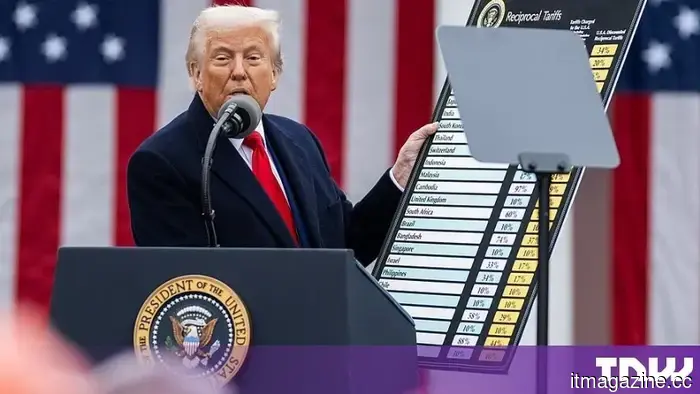 Private companies in the US are now permitted to conduct cyber operations internationally, while state-sponsored hackers are not included.
A memo from the White House permits approved US companies to conduct offensive cyber operations against overseas criminal organizations. Hackers operating under state direction are not included in this authorization.
Private companies in the US are now permitted to conduct cyber operations internationally, while state-sponsored hackers are not included.
A memo from the White House permits approved US companies to conduct offensive cyber operations against overseas criminal organizations. Hackers operating under state direction are not included in this authorization.
 Europe's 'Made in EU' regulations begin at 5%, and there is no reference to software.
The EU's origin regulations stipulate a minimum of 5% for concrete and 25% for aluminium. Engineering software and cloud hosting are completely excluded from the Act.
Europe's 'Made in EU' regulations begin at 5%, and there is no reference to software.
The EU's origin regulations stipulate a minimum of 5% for concrete and 25% for aluminium. Engineering software and cloud hosting are completely excluded from the Act.
 Apple aims to compensate publishers based on usage rather than on an annual basis for providing news to Siri.
According to the Wall Street Journal, Apple’s agreements with publishers for Siri would compensate news organizations every time their articles are utilized, with a potential budget reaching nine figures.
Apple aims to compensate publishers based on usage rather than on an annual basis for providing news to Siri.
According to the Wall Street Journal, Apple’s agreements with publishers for Siri would compensate news organizations every time their articles are utilized, with a potential budget reaching nine figures.
 Flock Safety reduces data retention to seven days following numerous instances of police misconduct.
Flock Safety's updates to privacy policies have reduced data retention from 30 days to seven and mandated search audits, following multiple incidents of police misconduct.
Flock Safety reduces data retention to seven days following numerous instances of police misconduct.
Flock Safety's updates to privacy policies have reduced data retention from 30 days to seven and mandated search audits, following multiple incidents of police misconduct.
 The CEO of Airbnb claims that AI is not being developed for everyday users. He is a member of the board of Y Combinator.
Brian Chesky claims that the gap in consumer AI is the reason many Americans have a negative perception of AI. According to him, 159 out of 175 Y Combinator startups focus on enterprise solutions.
The CEO of Airbnb claims that AI is not being developed for everyday users. He is a member of the board of Y Combinator.
Brian Chesky claims that the gap in consumer AI is the reason many Americans have a negative perception of AI. According to him, 159 out of 175 Y Combinator startups focus on enterprise solutions.
Apple aims to compensate publishers based on usage instead of an annual fee for providing news to Siri.
According to the Wall Street Journal, Apple’s deals with publishers for Siri would compensate news organizations every time their articles are utilized, backed by a potential budget in the nine-figure range.