

Sieving the Pixels: Identifying AI-Generated Content in 2026
The digital landscape is currently experiencing a surge in media created synthetically. AI models are generating art, videos, music, and even short films. Although earlier AI-generated images were often easily identifiable due to various amusing anatomical mistakes, the most recent models are producing results that are much harder to distinguish. This advancement in AI technology suggests that merely relying on one’s perception is insufficient to differentiate between fact and fiction.
Adopting a Layered Verification Method
Forensic specialists typically employ a strategic, multi-faceted technique to uncover the truth. Rather than searching for a single definitive piece of evidence, those investigating media should construct a compelling case for or against the authenticity of an image by analyzing it from several perspectives, starting with its background and progressing to technical scrutiny.
The initial step is context, which frequently provides the clearest indicators: understanding when and where a photo emerged can provide better insight into its claims. Tools such as reverse image searches can help identify if an image has been reused from previous media, which is a common trait of AI-generated content. Additionally, technical data within a file, known as metadata, can provide clues, as a complete lack of metadata is often a significant warning sign. However, modern standards like C2PA can assist in tracking a file’s history by integrating origin data directly into its structure, making it considerably more difficult to alter or remove. It is important to keep in mind that no system is flawless, and many images and videos can still be manipulated by skilled individuals.
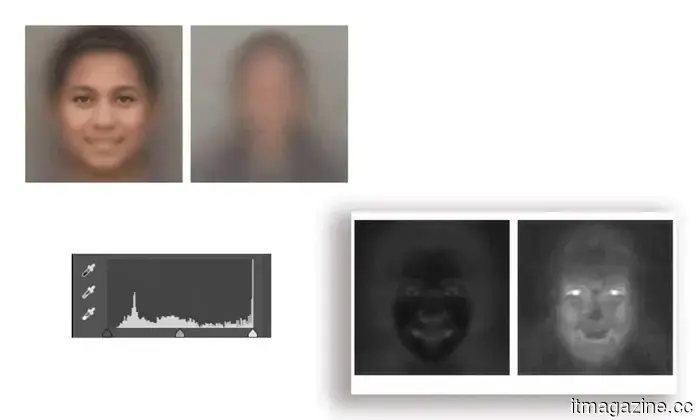
For a more in-depth analysis, manual methods like Y-channel analysis can uncover imperfections that may elude the human eye. This technique eliminates color to concentrate on brightness, revealing aspects such as noise patterns and transitions of light. AI often finds it challenging to accurately mimic the randomness of light, resulting in recognizable "ghosts" or unnaturally smooth areas that become apparent when the image is dissected.
The Role of Detection Software
Another strategy for detection involves utilizing algorithmic detection software. Specialized tools, like the AI image detector at Truthscan.com, leverage machine learning to identify mathematical patterns linked to synthetic generation. This tool can provide investigators with probability scores and heatmaps illustrating potentially suspicious areas, although their findings are best viewed as indicators to be considered alongside other methods rather than being taken at face value.
The last aspect of this layered approach is the presence of a digital footprint. Investigators should attempt to trace an image back to its primary source whenever feasible. This can lead to social media threads or niche forums where files may have originated prior to being disseminated by mainstream outlets. By doing this, an image might be traced back to its source and then evaluated based on the context or the credibility of the individual who shared it. Additionally, tools such as Google Lens or TinEye can indicate whether an image has been digitally modified from a previous photograph.
Algorithmic Analysis, Constraints, and Human Doubt
It's important to remember that manual examinations, although widely used, can often be among the least reliable methods. Even though early generative models were notorious for their inability to accurately depict certain human body parts, many of those flaws have been resolved. Nevertheless, light remains a challenging element for AI to replicate accurately and can sometimes serve as a helpful indicator, as intricate reflections or shadows often fail to match primary light sources. However, depending solely on visual cues can lead to false negatives, and in instances where visual or metadata is in doubt, employing algorithmic detection, which approaches the problem mathematically, can be beneficial.
These tools can evaluate the underlying pixel distribution for noise patterns characteristic of Generative Adversarial Networks (GANs) and diffusion models. Various platforms offering heatmaps of altered areas can provide yet another type of analysis. Conducting cross-platform checks is also valuable, as different detectors are trained to recognize different signs, and utilizing a variety of them can yield a more comprehensive understanding of the likelihood that the image is authentic.
In conclusion, digital forensics hinges on a game of probabilities. No singular software, metadata tag, or expert evaluation can provide investigators with a 100% guarantee. Often, the most effective tool is a critical mindset. Merging technical data, mathematical likelihoods from platforms like TruthScan, and a thorough examination of the image's publication history can generate substantial probabilities. Ultimately, investigators can only strive for the best through a layered verification process that might uncover the hidden AI intricacies of an image or leave them concealed indefinitely in the digital realm.
Other articles
 The iPhone 18 might receive the RAM upgrade it urgently requires.
The regular iPhone 18 may be equipped with 12GB of RAM, surpassing the earlier speculation of 9GB. This upgrade could provide sufficient memory to support a greater number of Apple’s on-device AI functionalities.
The iPhone 18 might receive the RAM upgrade it urgently requires.
The regular iPhone 18 may be equipped with 12GB of RAM, surpassing the earlier speculation of 9GB. This upgrade could provide sufficient memory to support a greater number of Apple’s on-device AI functionalities.
 Microsoft issued a warning of potential legal action, yet this researcher has still released a new Windows vulnerability.
A researcher targeted by Microsoft with potential legal action has unveiled a new zero-day vulnerability in Windows named ShieldBreak, and it remains unpatched.
Microsoft issued a warning of potential legal action, yet this researcher has still released a new Windows vulnerability.
A researcher targeted by Microsoft with potential legal action has unveiled a new zero-day vulnerability in Windows named ShieldBreak, and it remains unpatched.
 Smartphones priced under $100 are likely to become increasingly uncommon.
Budget smartphones are quickly disappearing, with sales of phones priced under $100 plummeting 64% year over year, while larger brands like Apple and Samsung have remained fairly steady.
Smartphones priced under $100 are likely to become increasingly uncommon.
Budget smartphones are quickly disappearing, with sales of phones priced under $100 plummeting 64% year over year, while larger brands like Apple and Samsung have remained fairly steady.
 WhatsApp's newly introduced Scam Alert feature will identify scam messages while ensuring the privacy of your chats.
WhatsApp's newly introduced Scam Alert feature utilizes on-device AI to identify potentially fraudulent messages, ensuring that your private chats remain completely unread by Meta.
WhatsApp's newly introduced Scam Alert feature will identify scam messages while ensuring the privacy of your chats.
WhatsApp's newly introduced Scam Alert feature utilizes on-device AI to identify potentially fraudulent messages, ensuring that your private chats remain completely unread by Meta.
 Sieving the Pixels: Identifying AI-Generated Content in 2026
The digital landscape is currently experiencing a surge in artificially generated media. Art, videos, music, and even short films are being created by AI models. Although the initial AI-generated images were frequently recognizable due to various (and often humorous) anatomical mistakes, the latest models are yielding outputs that are much harder to distinguish. […]
Sieving the Pixels: Identifying AI-Generated Content in 2026
The digital landscape is currently experiencing a surge in artificially generated media. Art, videos, music, and even short films are being created by AI models. Although the initial AI-generated images were frequently recognizable due to various (and often humorous) anatomical mistakes, the latest models are yielding outputs that are much harder to distinguish. […]
 The iPhone 18 might receive the necessary RAM enhancement it requires.
The standard iPhone 18 may feature 12GB of RAM instead of the earlier suggested 9GB, which could enable it to support a greater number of Apple’s on-device AI capabilities.
The iPhone 18 might receive the necessary RAM enhancement it requires.
The standard iPhone 18 may feature 12GB of RAM instead of the earlier suggested 9GB, which could enable it to support a greater number of Apple’s on-device AI capabilities.
Sieving the Pixels: Identifying AI-Generated Content in 2026
The digital landscape is experiencing a surge of media created through synthetic means. Art, videos, music, and short films are now being generated by AI systems. Although early instances of AI-generated images were frequently identifiable due to various (and often humorous) anatomical mistakes, the newest models are yielding results that are much harder to distinguish. [...]