
Microsoft is encouraging you to abandon SMS passwords as AI complicates the prevention of phishing attacks.
AI has simplified phishing, prompting Microsoft to discontinue SMS logins.
Microsoft has issued a significant alert to IT administrators, urging them to cease the use of SMS and voice-based authentication due to the rise of AI-enabled phishing attacks.
Why is Microsoft eliminating SMS authentication?
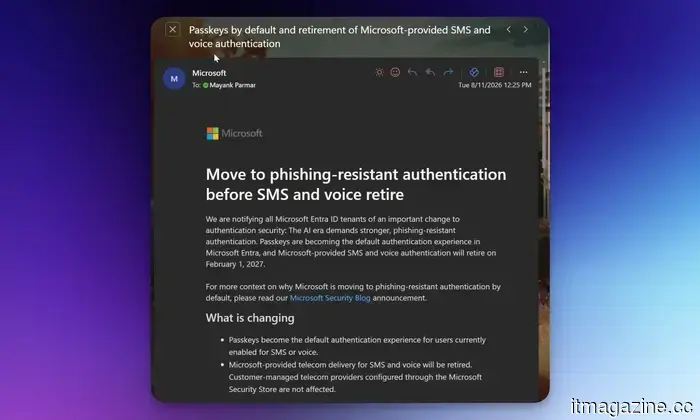
In an email reported by Windows Latest, Microsoft highlighted that the advent of AI necessitates stronger, phishing-resistant authentication methods. Essentially, AI has greatly facilitated the ability of attackers, even those with limited skills, to exploit SMS and voice communication. SIM swapping has also become more straightforward with the help of AI, enabling malicious actors to transfer your number to a SIM card they control with relative ease.
Windows Latest
Microsoft indicates a steep increase in AI-driven assaults aimed at stealing passwords and multi-factor authentication (MFA) codes, with these attacks demonstrating a much higher success rate compared to earlier phishing attempts that predated AI. While AI is not directly hacking SIM cards, it is significantly simplifying the process of luring individuals into surrendering their credentials.
When will this change take place?
Microsoft has outlined a two-phase timeline for this transition. Beginning September 1, Entra users who utilize SMS or voice authentication will be prompted to configure a passkey during the sign-in process. Users who are not prepared for this change must transition away from SMS or voice authentication prior to the start of this rollout.
Rachit Agarwal / Digital Trends
Subsequently, on February 1, 2027, Microsoft will completely phase out SMS and voice authentication for Entra ID, making passkeys obligatory. There will be no options to opt out, impacting every single tenant without exception.
What about personal accounts?
Those using a personal Microsoft account for services like Outlook, Xbox, or Windows 11 are also affected. Microsoft has already begun to discontinue SMS authentication and account recovery for personal accounts, though no specific deadline has yet been set for regular users.
It’s advisable not to wait for Microsoft to enforce this change on you. Consider setting up a passkey now or switching to Microsoft Authenticator if that suits you better. Relying solely on passwords is increasingly inadequate, especially with AI making phishing risks more pronounced.
Rachit is an experienced tech journalist with over ten years of experience in the consumer technology sector.
Comu’s small AI recorder can convert your meetings into slides, emails, and action plans.
The Comu Action Pro records for up to 70 hours and supports more than 113 languages.
AI voice recorders that can document meetings, transcribe discussions, and generate summaries are becoming more widespread. For instance, Flowtica’s Scribe integrates those functionalities into a pen that can also be utilized for handwritten notes. Comu, previously known as Comulytic, is advancing this concept with the Action Pro, a compact AI recorder that can transform recorded discussions into editable presentations, follow-up emails, meeting summaries, documents, and actionable plans. The device features a dedicated AI button allowing users to request these materials through voice commands.
Microsoft threatened legal action, yet this researcher just unveiled a new Windows bug anyway.
Windows Defender was meant to protect you, but right now, it’s causing problems.
Microsoft's legal threats evidently did not deter security researcher Nightmare Eclipse. Just weeks after the company warned it might take action against researchers releasing undisclosed bugs outside of official channels, Nightmare Eclipse has published a new Windows vulnerability, which is significant.
What exactly does ShieldBreak do?
Twitch is utilizing your streams to train Amazon's AI, and you're automatically opted in.
It turns out that your favorite stream may be secretly educating Amazon's AI. Twitch has quietly begun incorporating your streams, VODs, and clips into Amazon's AI training process, with the opt-out button buried deep within your settings, making it unlikely that most users will find it.
As Kotaku reported, streaming journalist Zach Bussey discovered a new option in Twitch's account settings on August 12 that allows you to prevent your content from being used to train Amazon's generative AI tools. The screenshot of this discovery circulated rapidly, along with the direct link to the specific settings page, largely due to Twitch’s failure to announce the change publicly.




Other articles
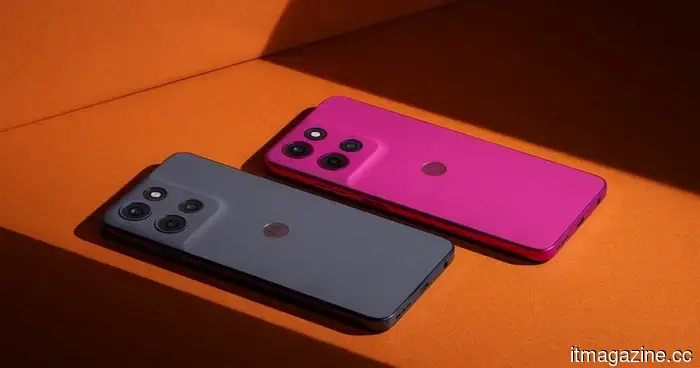 Smartphones priced under $100 are likely to become increasingly uncommon.
Budget smartphones are quickly disappearing, with sales of phones priced under $100 plummeting 64% year over year, while larger brands like Apple and Samsung have remained fairly steady.
Smartphones priced under $100 are likely to become increasingly uncommon.
Budget smartphones are quickly disappearing, with sales of phones priced under $100 plummeting 64% year over year, while larger brands like Apple and Samsung have remained fairly steady.
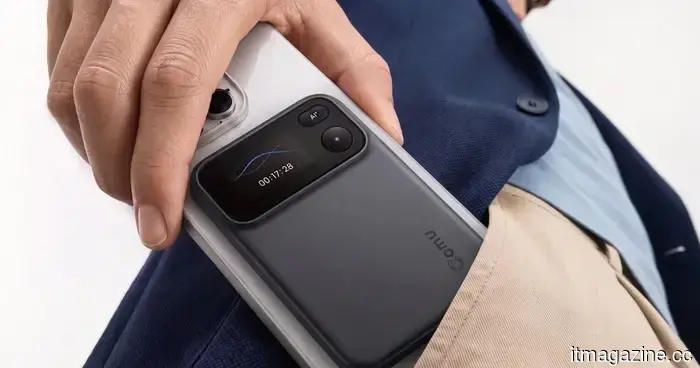 Comu's compact AI recorder can convert your meetings into slides, emails, and action items.
Comu's latest Action Pro is capable of recording and transcribing meetings, and then utilizing AI to create editable slides, follow-up emails, documents, and action plans.
Comu's compact AI recorder can convert your meetings into slides, emails, and action items.
Comu's latest Action Pro is capable of recording and transcribing meetings, and then utilizing AI to create editable slides, follow-up emails, documents, and action plans.
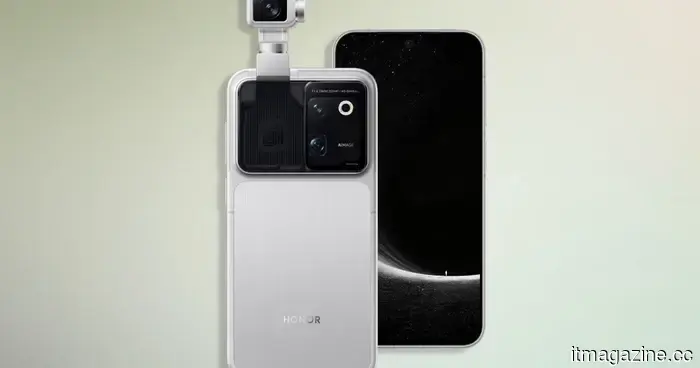 The Honor Robot Phone is now available for purchase, and it could be the most ambitious camera phone to date.
The Honor Robot Phone features top-tier hardware along with a 200MP camera installed on a motorized gimbal, equipped with AI-driven subject tracking and imaging technology created in partnership with ARRI. Additionally, it carries a significantly high price.
The Honor Robot Phone is now available for purchase, and it could be the most ambitious camera phone to date.
The Honor Robot Phone features top-tier hardware along with a 200MP camera installed on a motorized gimbal, equipped with AI-driven subject tracking and imaging technology created in partnership with ARRI. Additionally, it carries a significantly high price.
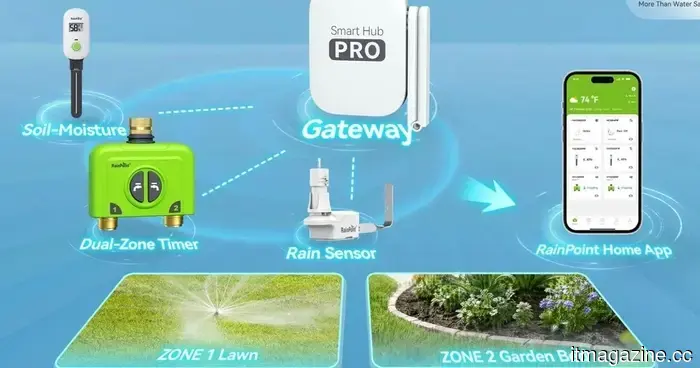 From Timers to Networks: Insights on Outdoor Automation from Connected Irrigation
Watering a lawn or garden has historically depended on established schedules that may not accurately represent the existing conditions. Connected irrigation systems aim to overcome this drawback by integrating timers with environmental sensors and centralized software. A prime example of this is RainPoint’s smart garden system, which illustrates how manufacturers are linking timers and environmental...
From Timers to Networks: Insights on Outdoor Automation from Connected Irrigation
Watering a lawn or garden has historically depended on established schedules that may not accurately represent the existing conditions. Connected irrigation systems aim to overcome this drawback by integrating timers with environmental sensors and centralized software. A prime example of this is RainPoint’s smart garden system, which illustrates how manufacturers are linking timers and environmental...
 Nvidia's GeForce Now concludes its beta phase on Linux, featuring enhanced cloud gaming performance.
Nvidia's GeForce NOW native Linux application has officially left beta after seven months, introducing quicker streaming, support for Chromebooks, and the addition of nine new cloud games.
Nvidia's GeForce Now concludes its beta phase on Linux, featuring enhanced cloud gaming performance.
Nvidia's GeForce NOW native Linux application has officially left beta after seven months, introducing quicker streaming, support for Chromebooks, and the addition of nine new cloud games.
 Microsoft issued a warning of potential legal action, yet this researcher has still released a new Windows vulnerability.
A researcher targeted by Microsoft with potential legal action has unveiled a new zero-day vulnerability in Windows named ShieldBreak, and it remains unpatched.
Microsoft issued a warning of potential legal action, yet this researcher has still released a new Windows vulnerability.
A researcher targeted by Microsoft with potential legal action has unveiled a new zero-day vulnerability in Windows named ShieldBreak, and it remains unpatched.
Microsoft is encouraging you to abandon SMS passwords as AI complicates the prevention of phishing attacks.
Microsoft is advising IT administrators to abandon SMS and voice authentication due to the increased risk of AI-driven phishing attacks that make these methods more vulnerable. Here’s the complete schedule for transitioning to passkeys.