
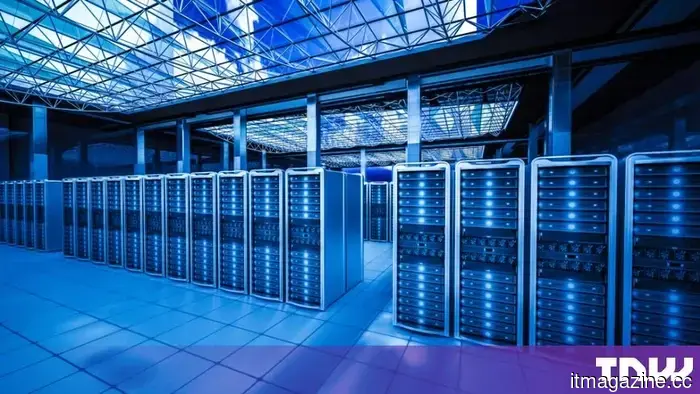
Nvidia has ceased to solely finance the AI surge, Saudi banks are unable to support theirs, and 500 towns in the US have prohibited the construction of such facilities.
TL;DR Nvidia has enlisted six major private capital firms into a $500 billion financing consortium after months of underwriting customers on its own, Saudi Arabia's data center pipeline requires more debt than its banks can provide, and US local data center bans exceeded 500 in July. These three developments in 48 hours indicate that the primary constraints on AI infrastructure are now capital and consent, rather than chips.
On Monday, Nvidia announced a partnership with six leading private capital firms to finance AI infrastructure through vehicles exceeding $500 billion. The participating firms include Apollo, BlackRock, Blackstone, Brookfield, Goldman Sachs, and KKR.
Recently, Nvidia has been lending from its own balance sheet to customers so they can purchase its products, notably OpenAI. Engaging external lenders signifies a recognition of the limits to which the world’s most valuable company can underwrite independently.
Benefits for Nvidia
“These financing platforms will enable customers to access scarce compute resources at scale and develop the DSX AI factories essential for every industry and country in the AI era,” stated Jensen Huang, according to Semafor.
This arrangement distributes risk while ensuring capital remains linked to Nvidia’s ecosystem and not available to competitors. This concern was acknowledged as Nvidia’s stock fell following the news, initially reported by the Financial Times.
This reflects a familiar trend. Nvidia has promised over $40 billion towards AI equity positions by 2026, and critics have consistently regarded this setup as circular.
The Gulf faces a similar challenge without the financial backing
Saudi Arabia’s data center capacity is projected to reach one gigawatt by 2030, marking the fastest growth in the Gulf. The declared pipeline is significantly larger, with PIF-owned HUMAIN aiming for over six gigawatts in the next decade.
Financing even half of that would require approximately $32 billion in debt, more than what the kingdom’s banks are expected to gather on their own, according to Alvarez & Marsal consultancy.
“Digital infrastructure has become one of the largest sources of new project debt in our pipeline,” noted report author Kurt Davis Jr to Semafor. The catalysts include government demand, data sovereignty rules mandating local data storage, hyperscalers opting to lease rather than build, along with affordable power and land availability.
The same lenders appear in both scenarios
Notably, KKR allocated part of a $192 billion infrastructure fund for Gulf technology expansion last week and is also one of Nvidia's six partners.
Private capital is emerging as the fundamental link in the AI infrastructure growth, especially as the financial requirements surpass what any single corporate or national balance sheet can manage.
Much of the resulting liability isn’t where one would typically anticipate. Big Tech’s off-balance-sheet AI commitments are estimated to be around $1.65 trillion.
Short memories
Gulf optimism arises five months after Iranian drones hit AWS locations in the UAE and Bahrain, raising concerns about regional vulnerabilities at that time. Semafor pointed out that investors tend to forget more quickly than data centers depreciate.
This pattern is pervasive. Capital is being allocated with decades-long expectations against risks that have yet to be accurately priced.
Meanwhile, towns are rejecting proposals
The third constraint is consent, evolving most rapidly. The number of local data center bans in the US surged from about 300 in late June to over 500 in July, with New York implementing an outright construction ban.
A Republican senator remarked to Semafor that Americans are strongly opposed to data centers, highlighting this as an issue that crosses party lines.
The industry is responding
Mark Zuckerberg recently shared a 6,500-word essay announcing a $1 billion fund for communities hosting Meta data centers, while OpenAI sent an open letter to Texas’ governor committing to responsible infrastructure development.
The White House has largely remained uninvolved, with the president referring to data centers as “Money Machines.” This situation leaves companies to negotiate directly with counties.
The issues are tangible. US utilities are planning $1.4 trillion in electricity infrastructure investments by 2030, costs that will ultimately fall on customers.
The connection between the three issues
Chips have ceased to be the primary bottleneck. The current binding factors are the availability of capital and the willingness to allow construction.
Both restraints push toward similar outcomes: larger projects situated farther from populated areas, financed by institutional investors rather than corporate funds. The concurrent gas-plant expansion is symptomatic of this trend.
A $1 billion community fund compared to a $500 billion financing platform illustrates the disparity. If demand underwhelms, the debt remains, and the towns that opposed the developments will not bear the burden.
Other articles
 Apple might make it more difficult for fake photos to be presented as if they were taken with an iPhone.
Apple is reportedly working on Reference Image for iOS 27, a camera authentication feature that may verify if a photo was taken using an iPhone's camera hardware.
Apple might make it more difficult for fake photos to be presented as if they were taken with an iPhone.
Apple is reportedly working on Reference Image for iOS 27, a camera authentication feature that may verify if a photo was taken using an iPhone's camera hardware.
 Target names its inaugural chief AI officer as retailers increase their investment in artificial intelligence.
Target has appointed Chandhu Nair, an executive from Lowe's, as its inaugural chief AI officer, a position that IBM reports is now held by three-quarters of large organizations.
Target names its inaugural chief AI officer as retailers increase their investment in artificial intelligence.
Target has appointed Chandhu Nair, an executive from Lowe's, as its inaugural chief AI officer, a position that IBM reports is now held by three-quarters of large organizations.
 IBM invests $240 million in affordable, open-source inference to compete with the hyperscalers.
IBM and Together AI have reached a $240 million agreement to establish an Nvidia Blackwell inference cluster on IBM Cloud, placing a bet on the financial advantages of open-source AI compared to its closed competitors.
IBM invests $240 million in affordable, open-source inference to compete with the hyperscalers.
IBM and Together AI have reached a $240 million agreement to establish an Nvidia Blackwell inference cluster on IBM Cloud, placing a bet on the financial advantages of open-source AI compared to its closed competitors.
 Italian scientists prepare a new solar instrument for a crucial eclipse evaluation.
Italian scientists will evaluate a new spectrometer, CISS, during the total solar eclipse on August 12 in Spain, aiming for a quicker analysis of the Sun's corona.
Italian scientists prepare a new solar instrument for a crucial eclipse evaluation.
Italian scientists will evaluate a new spectrometer, CISS, during the total solar eclipse on August 12 in Spain, aiming for a quicker analysis of the Sun's corona.
 The SEC has resolved a fraud case involving Adit Ventures concerning counterfeit pre-IPO shares of SpaceX and Klarna.
The SEC has resolved fraud allegations against Adit Ventures, a private-fund adviser, and its CEO, who reportedly fabricated pre-IPO assets in SpaceX and Klarna while misappropriating client funds.
The SEC has resolved a fraud case involving Adit Ventures concerning counterfeit pre-IPO shares of SpaceX and Klarna.
The SEC has resolved fraud allegations against Adit Ventures, a private-fund adviser, and its CEO, who reportedly fabricated pre-IPO assets in SpaceX and Klarna while misappropriating client funds.
 Italian researchers prepare a new solar instrument for a crucial eclipse experiment.
Italian scientists will evaluate a new spectrometer, CISS, on 12 August during the total solar eclipse in Spain, aiming for a quicker assessment of the Sun’s corona.
Italian researchers prepare a new solar instrument for a crucial eclipse experiment.
Italian scientists will evaluate a new spectrometer, CISS, on 12 August during the total solar eclipse in Spain, aiming for a quicker assessment of the Sun’s corona.
Nvidia has ceased to solely finance the AI surge, Saudi banks are unable to support theirs, and 500 towns in the US have prohibited the construction of such facilities.
Nvidia enlisted Apollo, BlackRock, and KKR for a $500 billion financing initiative. Saudi banks are unable to finance their projects. In July, local bans in the U.S. exceeded 500.