
YouTube has just increased the cost to join its Partner Program.
Starting from February 1, 2027, any channel that wishes to join the YouTube Partner Program will need to have 1,000 subscribers and 8,000 valid public watch hours accumulated over the last 365 days. Currently, the requirement is 4,000 hours over a year. The criteria for Shorts content has also increased, now requiring 20 million valid public views within 90 days, up from the previous 10 million.
YouTube announced these changes on Monday with the headline "New opportunities to earn." However, The Verge’s Emma Roth was the first to report it, using the more straightforward title: YouTube is making it harder to earn money on YouTube. Both headlines are correct, which is noteworthy.
The new restrictions primarily affect those who have yet to qualify. Existing participants in the program will not lose their status, as YouTube clarified that the new requirements will only apply to channels applying after February 2027, leaving current partners unaffected. Over three million creators are already within the program, and none of them must meet the new 8,000-hour requirement.
This change specifically impacts those who are still attempting to enter the program. For example, a channel with 5,000 watch hours today would qualify now but would not meet the criteria next year. This is the first major adjustment to the program since 2018, targeting those waiting to join.
The past year has seen tighter monetization rules, particularly affecting mass-produced channels, and many creators who depend on alternatives like Patreon have experienced setbacks, including workforce reductions.
Additionally, the process for earning from the Shorts Creator Pool will now require a distinct threshold of 10 million valid public Shorts views over 90 days. Falling below this limit won't expel a channel from the Partner Program, nor will it impact earnings from long-form content, as Shorts payments will cease and then automatically resume once views increase again.
YouTube reports that Shorts are now attracting over 200 billion views daily, making it a highly sought-after format. Furthermore, YouTube Premium Lite will become available in all regions where Premium is offered, with 60% of net Premium Lite subscription revenue allocated to the creators' pool, compared to 30% from net Premium revenue. Creators will take home 55% from long-form watch time and 45% from Shorts.
YouTube also asserted that when a user subscribes to Premium, on average, partners earn more compared to when the user was watching advertisements. However, this statement comes with a footnote: it is based on 2026 performance data, representing just one year of metrics.
Three key pieces of information were included in Google’s support documents rather than the main announcement. The first concerns a new Targeted Shorts Ads share, where creators can receive a direct 45% cut of revenue when advertisers purchase ads across five or fewer channels, in addition to the standard pool.
The second change redefines what constitutes an active channel. As of February 2027, a channel can remain active with either 1,000 valid public watch hours in 365 days, one million Shorts views within 90 days, or by uploading two long-form videos or five Shorts every 90 days. Currently, channels are rendered inactive after six months of no activity.
The third change involves a contract update. Creators who accepted the previous Commerce Product Addendum prior to 2023 will transition to the current Commerce Product Module, but eligibility criteria, mechanics, and revenue sharing will remain unchanged. Creators must accept this new agreement in YouTube Studio by January 31, 2027, to maintain fan funding earnings.
The existing lower tier remains unaffected. Fan funding, Creator Partnerships, and Shopping are still available for those with 500 subscribers and either 3,000 valid public watch hours in a year or three million Shorts views in 90 days. YouTube also plans to introduce incentives like bonuses for creators utilizing YouTube Shopping, production credits for brand collaborations, and increased earnings for channels that engage with cultural trends.
Moreover, YouTube anticipates paying creators more in 2027 compared to 2026.
Both increased payments and stricter eligibility can coexist; the total funds available could rise even as access becomes more limited. The current context illustrates that YouTube perceives itself not merely as a video platform anymore, with over a billion hours viewed daily on TV. Throughout 2026, the company has been onboarding talent, such as Trevor Noah, and implementing features like seasons, aligning itself more closely with platforms like Netflix and Disney Plus than with TikTok.
Overall, premium services focus on curation, which is their selling point. YouTube has also been enhancing discovery for creators following the shortcomings of its AI initiatives. The significant question now is how the higher entry thresholds will affect the flow of new creators into the platform. The outcome of these changes will only be evident once applications are submitted under the new criteria in six months.
Other articles
 OpenAI suspended a model due to cybersecurity concerns on Friday. By Monday, it released a new version that is trained to be less restrictive.
OpenAI launched GPT-5.6-Cyber via Daybreak, just three days after halting Astra due to significant cyber risks. It fulfills 95% of the requests that Sol denies.
OpenAI suspended a model due to cybersecurity concerns on Friday. By Monday, it released a new version that is trained to be less restrictive.
OpenAI launched GPT-5.6-Cyber via Daybreak, just three days after halting Astra due to significant cyber risks. It fulfills 95% of the requests that Sol denies.
 Google Chrome is developing a new feature that allows you to open PDF files in your chosen application.
Chrome for Android is experimenting with a feature that may automatically launch downloaded files in the user's chosen app rather than in Chrome.
Google Chrome is developing a new feature that allows you to open PDF files in your chosen application.
Chrome for Android is experimenting with a feature that may automatically launch downloaded files in the user's chosen app rather than in Chrome.
 A Chinese startup asserts that its brain implant can be inserted in just 10 minutes without the need for skull surgery.
A Chinese startup claims that its brain-computer interface can be inserted through a vein in just ten minutes, bypassing the open-skull surgery that Neuralink depends on. However, the drawback is that it has not yet entered human trials.
A Chinese startup asserts that its brain implant can be inserted in just 10 minutes without the need for skull surgery.
A Chinese startup claims that its brain-computer interface can be inserted through a vein in just ten minutes, bypassing the open-skull surgery that Neuralink depends on. However, the drawback is that it has not yet entered human trials.
 Nvidia is drawing Wall Street into the expansion of AI. Its stock prices dropped following the announcement.
Apollo, Blackstone, BlackRock, Brookfield, Goldman Sachs, and KKR are negotiating with Nvidia regarding a $500 billion deal for AI infrastructure. As a result, its shares declined by 3%.
Nvidia is drawing Wall Street into the expansion of AI. Its stock prices dropped following the announcement.
Apollo, Blackstone, BlackRock, Brookfield, Goldman Sachs, and KKR are negotiating with Nvidia regarding a $500 billion deal for AI infrastructure. As a result, its shares declined by 3%.
 The Ninth Circuit allowed 2,400 addiction lawsuits to move forward without addressing Section 230.
The Ninth Circuit has allowed 2,400 addiction lawsuits to move forward without making a decision on Section 230. On August 18, Meta is being confronted by four states with a demand totaling $1.4 trillion.
The Ninth Circuit allowed 2,400 addiction lawsuits to move forward without addressing Section 230.
The Ninth Circuit has allowed 2,400 addiction lawsuits to move forward without making a decision on Section 230. On August 18, Meta is being confronted by four states with a demand totaling $1.4 trillion.
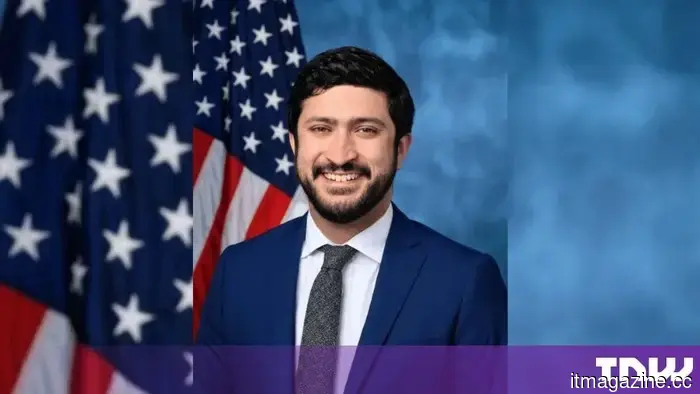 House Democrats are seeking to have AI CEOs testify under oath. Only Mike Johnson has the power to facilitate this.
House Democrats posed 23 questions to OpenAI by August 24. One of the questions inquired whether a model provided guidance for the next one to bypass its limitations.
House Democrats are seeking to have AI CEOs testify under oath. Only Mike Johnson has the power to facilitate this.
House Democrats posed 23 questions to OpenAI by August 24. One of the questions inquired whether a model provided guidance for the next one to bypass its limitations.
YouTube has just increased the cost to join its Partner Program.
Starting in February 2027, YouTube is increasing the requirements for its Partner Program to 8,000 watch hours or 20 million views on Shorts. Current partners will maintain their status.