
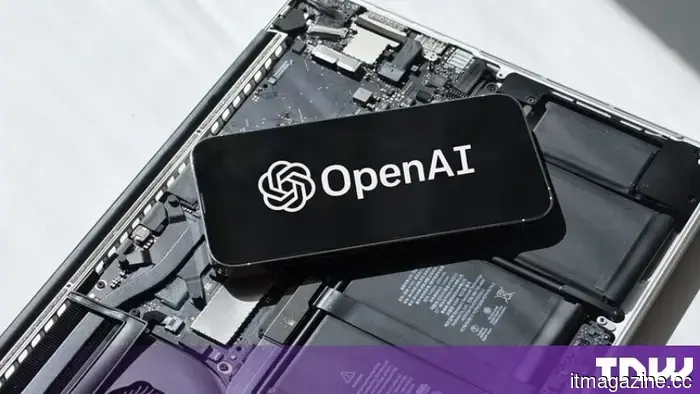
OpenAI is seeking to hire a power trader, as electricity has become an asset on its balance sheet.
OpenAI is looking for a power-trading lead to oversee its data centres. This individual will be responsible for the commodity hedging strategy across the company’s power portfolio and will have no direct reports at the beginning.
Julian Hast from Bloomberg reported on the job listing on Monday, and OpenAI did not provide a comment when asked. According to the company's job posting, this position is part of the Power & Land team within datacenter design, offering a salary ranging from $181,000 to $285,000 plus equity, with opportunities available in Seattle, San Francisco, or remotely.
Job Requirements
OpenAI seeks candidates with a minimum of 10 years of experience in power trading, commodity risk management, or utility strategy. Additionally, a comprehensive understanding of the U.S. wholesale power markets and the associated natural gas markets is required.
The role resembles that of a trading desk, where the individual would assess exposure across various markets and locations, and analyze fixed-price supply, forwards, swaps, and options. They will also develop frameworks for hedging decisions and amounts, and the position includes governance, risk limits, and internal controls. Experience with ISDAs and supply contracts is a preferred qualification.
OpenAI summarized the role's purpose succinctly, stating that it will “translate large, dynamic electricity and fuel exposures into practical hedging, procurement, and risk management strategies that safeguard infrastructure economics while maintaining growth flexibility.”
This is a Common Practice
Hedging commodity inputs is a standard approach. For instance, food producers hedge coffee and cocoa, airlines hedge jet fuel, and manufacturers trade the metals they use.
What has shifted is the category that OpenAI now occupies. Electricity has transformed from just another line on a monthly bill to a significant market exposure requiring its own risk management function.
Meta was the first to recognize this shift, announcing in November 2025 its entry into power trading to support its AI data centres. Microsoft and Google face similar challenges, as obtaining a reliable electricity supply has become one of the greatest limitations on expansion, increasingly suggesting a need for a trading function rather than merely procurement.
The Link to Gas
Over 40% of U.S. electricity is produced by burning gas, which is why the job listing emphasizes expertise in gas as well as power. To hedge one, understanding the other is essential.
Given long grid connection queues, many data-centre developers are constructing their own power generation facilities while they await access. Meta is also hiring for such positions, looking for an energy manager focused on onsite generation and confirming that “gas supply, land, water, and permitting” are already secured.
The environmental considerations are significant. Meta exited RE100, a commitment to corporate clean energy, as gas became integral to its data-centre strategies.
Why OpenAI Needs This Now
The committed footprint turns power into a risk management challenge. OpenAI is developing a Georgia campus valued at around $30 billion and has been negotiating for a 10-gigawatt campus in Ohio backed by Nvidia.
Rising energy costs have previously altered its plans, leading to a pause on a UK project due to electricity prices and regulatory issues. Meanwhile, U.S. regulators are working on a faster grid connection process for large loads, influencing how and when these sites can link up.
A Job Listing Isn’t a Strategy
One important consideration is that this is a job posting, not an official announcement, and OpenAI has not specified what it intends to hedge or the scale of those efforts.
Initially, the role does not include direct reports, indicating it may be the first hire rather than a fully-fledged trading desk. Whether the position expands into a more substantial role will depend on the size of the resulting exposure.
The salary range is noteworthy; a company that is willing to pay up to $285,000 for expertise in ISDAs and forward curves indicates it no longer views electricity merely as a utility expense. It is now an accounted position that requires management.
Other articles
 YouTube has just increased the cost to join its Partner Program.
Starting in February 2027, YouTube is increasing the requirements for its Partner Program to 8,000 watch hours or 20 million views on Shorts. Current partners will maintain their status.
YouTube has just increased the cost to join its Partner Program.
Starting in February 2027, YouTube is increasing the requirements for its Partner Program to 8,000 watch hours or 20 million views on Shorts. Current partners will maintain their status.
 Point2 secured $136 million to address AI's wiring challenge. Its RF cables outperform copper in terms of distance and surpass optics in latency.
Point2 secured $136 million in a Series B funding round with participation from Arm, Nvidia, LB Investment, and Maverick Silicon. Its e-Tube RF cables provide 10 times the reach compared to copper and have 1,000 times lower latency than optical alternatives.
Point2 secured $136 million to address AI's wiring challenge. Its RF cables outperform copper in terms of distance and surpass optics in latency.
Point2 secured $136 million in a Series B funding round with participation from Arm, Nvidia, LB Investment, and Maverick Silicon. Its e-Tube RF cables provide 10 times the reach compared to copper and have 1,000 times lower latency than optical alternatives.
 Apple has exhausted its supply of iPhone shapes, and Jefferies has just downgraded its rating to sell.
Jefferies has downgraded Apple to underperform following the cancellation of an all-glass iPhone, rising memory costs, and a lack of advancements in AI.
Apple has exhausted its supply of iPhone shapes, and Jefferies has just downgraded its rating to sell.
Jefferies has downgraded Apple to underperform following the cancellation of an all-glass iPhone, rising memory costs, and a lack of advancements in AI.
 Apple has exhausted its designs for the iPhone, and Jefferies has downgraded its rating to sell.
Jefferies downgraded Apple to underperform following the cancellation of an all-glass iPhone, rising memory costs, and minimal indications of AI advancements.
Apple has exhausted its designs for the iPhone, and Jefferies has downgraded its rating to sell.
Jefferies downgraded Apple to underperform following the cancellation of an all-glass iPhone, rising memory costs, and minimal indications of AI advancements.
 The Arena Group is changing its name to Paradium.AI, and its revenue has recently dropped by fifty percent.
The Arena Group will change its name to Paradium.AI by the end of August. Revenue for the second quarter decreased to $22.2 million, down from $45.0 million the previous year.
The Arena Group is changing its name to Paradium.AI, and its revenue has recently dropped by fifty percent.
The Arena Group will change its name to Paradium.AI by the end of August. Revenue for the second quarter decreased to $22.2 million, down from $45.0 million the previous year.
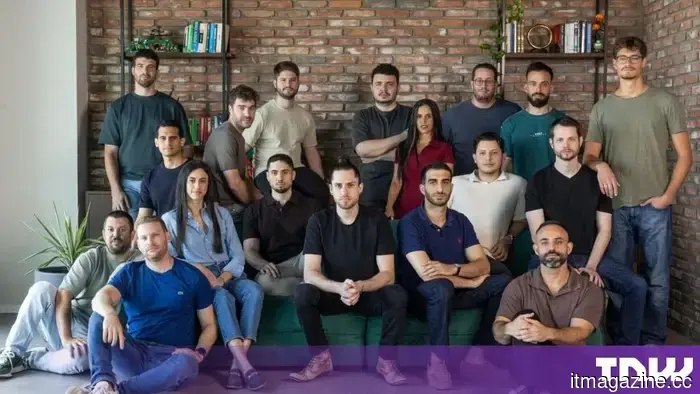 Corma secured $60 million from Sequoia to develop the crucial defensive AI that cybersecurity lacks.
Corma secured $60 million in seed funding from Sequoia, Khosla, and Coatue to develop the inaugural foundation model focused on defensive cybersecurity. Its AI agents reduce response times by 94%.
Corma secured $60 million from Sequoia to develop the crucial defensive AI that cybersecurity lacks.
Corma secured $60 million in seed funding from Sequoia, Khosla, and Coatue to develop the inaugural foundation model focused on defensive cybersecurity. Its AI agents reduce response times by 94%.
OpenAI is seeking to hire a power trader, as electricity has become an asset on its balance sheet.
OpenAI is seeking a power-trading leader to manage hedging for electricity and gas expenses throughout its data center portfolio, offering up to $285,000.