
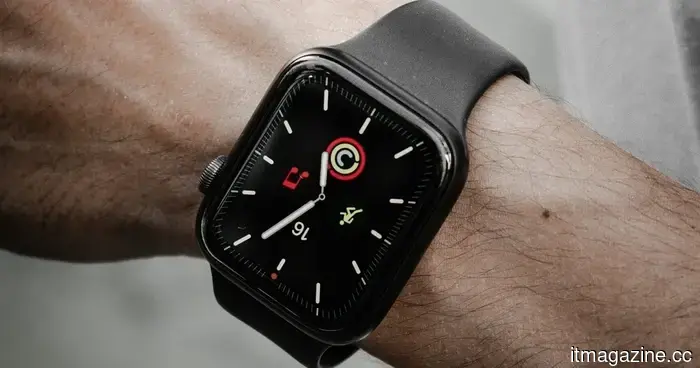
Apple adopting a circular design could enhance the Watch's functionality as a timepiece.
For over ten years, the Apple Watch has resembled a small computer on the wrist. But what if Apple opted for a design that looks more like a traditional watch? Recent reports indicate that Apple is contemplating round displays for future Apple Watch versions, among other design concepts, as the company reassesses its wearable range. Although no decisions have been made yet, this possibility invites an intriguing question: would a round Apple Watch actually be an improvement, or is Apple attempting to fix something that isn't broken? The answer likely hinges on Apple's vision for the Watch.
A circular design could finally give the Apple Watch the appearance of a traditional timepiece.
The primary reason for considering a circular design isn't technical—it's about fashion.
Adrian Regeci / Pexels
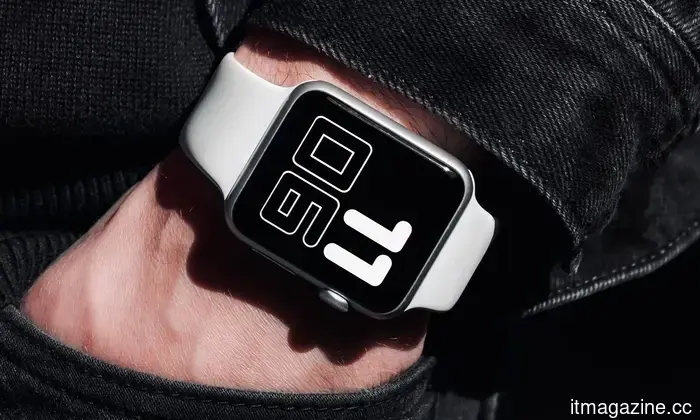
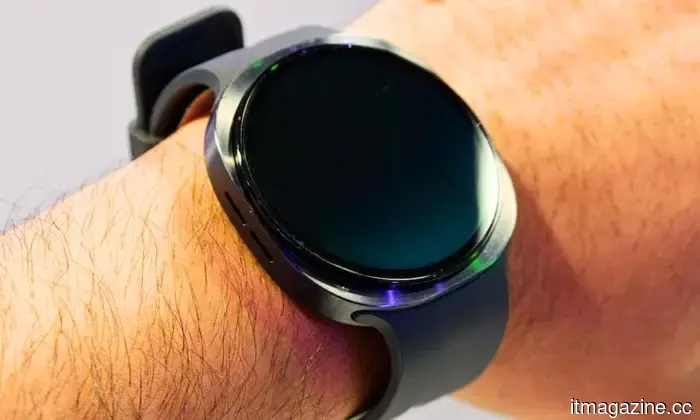
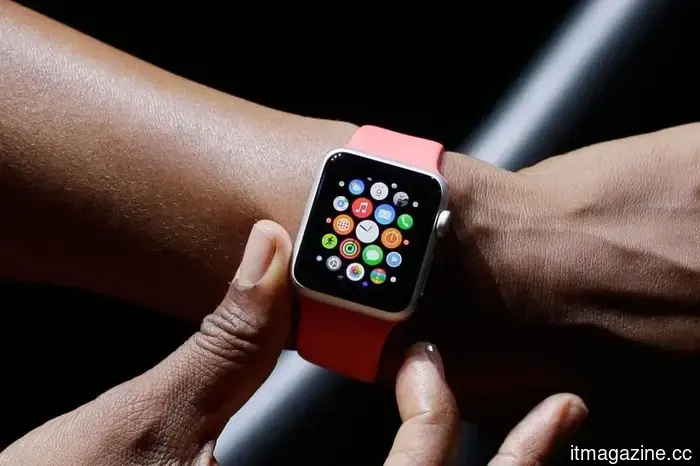
The Apple Watch's rounded-square shape is easily identifiable, but it undeniably looks like a piece of technology. A round design could allow it to blend seamlessly with formal attire, traditional ensembles, or simply appeal to users who favor the aesthetic of a classic watch. Additionally, Apple could draw interest from individuals who have shied away from the Watch due to its current appearance. Brands like Samsung, Google, Garmin, and many classic watchmakers have shown that a circular watch can appear more natural on the wrist.
Galaxy Watch 9 Nadeem Sarwar / DigitalTrends
Moreover, a circular design could alleviate the monotonous nature of Apple’s current offerings. While the company has refined the Watch over time, its fundamental shape has largely remained unchanged. A circular version would immediately distinguish a new generation from previous iterations, instead of just being another model with a thinner profile and brighter display. However, there is a drawback.
The Apple Watch is also a compact computer.
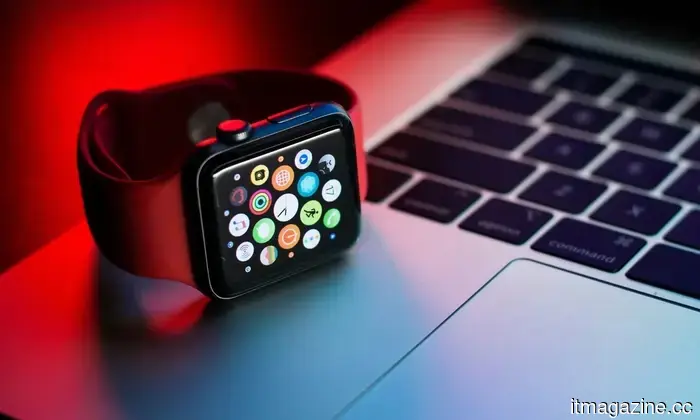
The present shape is not purely stylistic; it provides watchOS with an essential benefit: a relatively rectangular interface.
Unsplash
Arranging apps, notifications, messages, maps, fitness metrics, calendars, and settings is significantly easier within a rectangular format. A circle would eliminate usable space at the corners, making text and interface elements feel constrained. The keyboard serves as a clear example; typing on the Apple Watch demands patience as it is. Now, envision trying to fit a keyboard into a shape that narrows toward the edges.
Of course, Apple could redesign watchOS for a circular screen, and this is where things get intriguing. Since the company oversees both hardware and software, it could develop an interface that prioritizes circular designs rather than merely adapting the existing one. However, third-party developers lack this advantage. The watchOS app ecosystem is already somewhat fragile, with some developers opting out of standalone Watch apps for quicker notifications and companion experiences. Requiring developers to create and maintain a completely different interface could exacerbate this issue.
Apple
Apple might necessitate that developers support both rectangular and circular layouts, presenting additional challenges in development, testing, and maintenance for an ecosystem that isn’t bursting with developer interest. Consequently, a round Apple Watch could become a beautiful device that increasingly relies on Apple’s own applications while leaving third-party experiences sidelined.
Then, there's an unseen hardware challenge.
An additional issue lies within the attractive circular design: the internal components are not circular.
Apple
Batteries, logic boards, speakers, sensors, and the Taptic Engine are typically rectangular or otherwise designed to fit available internal spaces. Housing those components within a circular case would lead to awkward dead space in the corners. Apple could address this by redesigning nearly every internal component, adding complexity and potentially driving up manufacturing costs. Alternatively, the company could increase the thickness of the circular watch to accommodate the same battery and hardware capacity, resulting in the unwelcome "puck" effect.
This presents a tricky dilemma for Apple. The company has devoted years to making the Watch slimmer and more streamlined. Reversing some of that progress to fit a circular casing would be a tough proposition. Samsung and Google have faced similar compromises with their circular watches, which means Apple wouldn’t be venturing into completely uncharted territory. The distinction lies in Apple’s intense focus on internal design and thinness.
Perhaps Apple should create a watch that truly resembles one.
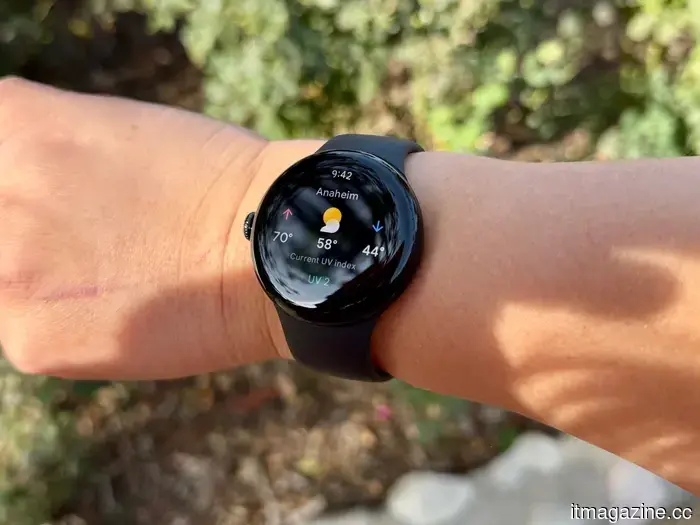
A circular Apple Watch might resonate perfectly with lifestyle users seeking health tracking and smart functionalities without donning something that appears to be a miniature computer. It could potentially exist alongside the current design, offering a more fashion-oriented option while keeping the rectangular model for those who prioritize screen real estate and informational density. The trade-off concerns brand identity: the current Apple Watch is unmistakable, whereas a round version could resemble a conventional watch while also looking more like offerings from Samsung, Google, and Garmin.
Pixel Watch 3 Christine Romero-Chan / Digital Trends
This makes a circular Watch more intriguing as a new branch of the lineup rather than a mere replacement. Apple could produce one Watch focused on information maximization and another oriented towards integrating with daily life. However, making this work would require much more than simply placing a round display in a new casing. Apple would
Other articles
 Meta is allocating $1 billion to towns with data centers, citing a tax from 1968 as its justification.
Zuckerberg is allocating $1 billion to towns with data centers. His sole successful instance, which involved $50,000 bonuses for teachers in Louisiana, originated from a sales tax enacted in 1968.
Meta is allocating $1 billion to towns with data centers, citing a tax from 1968 as its justification.
Zuckerberg is allocating $1 billion to towns with data centers. His sole successful instance, which involved $50,000 bonuses for teachers in Louisiana, originated from a sales tax enacted in 1968.
 Tech giants are enthusiastic about AI, but employees claim that the competition in AI is making their work more challenging.
AI companies claim that their tools enable employees to achieve significantly more, yet workers report demanding schedules. The growing conflict in the workplace could ultimately concern who retains the extra time that AI generates.
Tech giants are enthusiastic about AI, but employees claim that the competition in AI is making their work more challenging.
AI companies claim that their tools enable employees to achieve significantly more, yet workers report demanding schedules. The growing conflict in the workplace could ultimately concern who retains the extra time that AI generates.
 House Democrats are seeking to have AI CEOs testify under oath. Only Mike Johnson has the power to facilitate this.
House Democrats posed 23 questions to OpenAI by August 24. One of the questions inquired whether a model provided guidance for the next one to bypass its limitations.
House Democrats are seeking to have AI CEOs testify under oath. Only Mike Johnson has the power to facilitate this.
House Democrats posed 23 questions to OpenAI by August 24. One of the questions inquired whether a model provided guidance for the next one to bypass its limitations.
 A Chinese startup asserts that its brain implant can be implanted in just 10 minutes without the need for any skull surgery.
A Chinese startup claims that its brain-computer interface can be inserted through a vein in just ten minutes, bypassing the open-skull surgery that Neuralink depends on. However, it has not yet progressed to human trials.
A Chinese startup asserts that its brain implant can be implanted in just 10 minutes without the need for any skull surgery.
A Chinese startup claims that its brain-computer interface can be inserted through a vein in just ten minutes, bypassing the open-skull surgery that Neuralink depends on. However, it has not yet progressed to human trials.
 A Chinese startup asserts that its brain implant can be inserted in just 10 minutes without the need for skull surgery.
A Chinese startup claims that its brain-computer interface can be inserted through a vein in just ten minutes, bypassing the open-skull surgery that Neuralink depends on. However, the drawback is that it has not yet entered human trials.
A Chinese startup asserts that its brain implant can be inserted in just 10 minutes without the need for skull surgery.
A Chinese startup claims that its brain-computer interface can be inserted through a vein in just ten minutes, bypassing the open-skull surgery that Neuralink depends on. However, the drawback is that it has not yet entered human trials.
 YouTube has just increased the cost to join its Partner Program.
Starting in February 2027, YouTube is increasing the requirements for its Partner Program to 8,000 watch hours or 20 million views on Shorts. Current partners will maintain their status.
YouTube has just increased the cost to join its Partner Program.
Starting in February 2027, YouTube is increasing the requirements for its Partner Program to 8,000 watch hours or 20 million views on Shorts. Current partners will maintain their status.
Apple adopting a circular design could enhance the Watch's functionality as a timepiece.
Apple is said to be exploring the idea of a round display for upcoming Apple Watch models. A circular format might enhance the Watch's style and attractiveness, yet it could also pose difficulties for applications, watchOS, battery performance, and hardware configuration.