
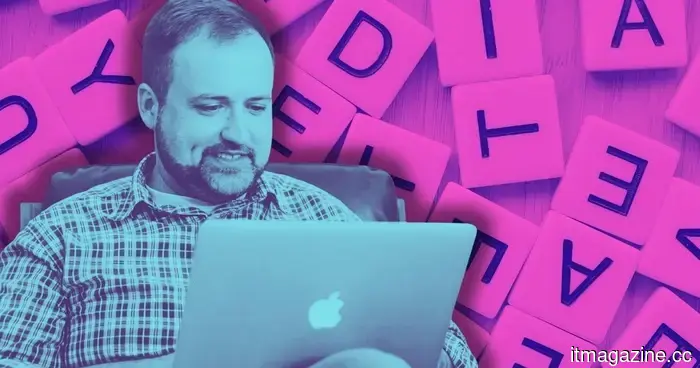
I need assistance; I'm having a conversation with my computer. It's surprisingly convenient yet completely awkward.
A decade ago, Google launched voice typing through the Gboard app on Android, and a year later, this feature became available on iPhones with a keyboard app. I had not paid much attention to it mainly because it wasn't accurate.
The promise was a novel method of interacting with our devices, but it was never precise enough for me to abandon tapping or swiping on a touchscreen keyboard. Fast forward to 2026, and I'm now dictating to my computer. In fact, this entire article was dictated and copied into WordPress.
The adjustments I had to make involved adding a few commas, splitting some sentences with periods, and transforming a handful of bullet points into cohesive sentences. To quantify it, I would estimate that only about 2% of my effort in writing this article was spent on the keyboard for these minor changes.
That's all there is to it. However, the initial excitement tends to fade quickly as social realizations kick in.
A strong beginning
Vitaly Gariev / Unsplash / Digital Trends
I began using voice dictation after trying Wispr Flow. Its accuracy is striking. And when I say striking, I mean it as someone whose first language isn’t English and who doesn’t have a pronounced American or British accent. Yet, each time I write an article, I am surprised by how precise and convenient the entire experience is.
It has also made me incredibly lazy while simultaneously boosting my productivity.
Running a newsroom requires speed, the only route to achieving high rankings and visibility on Google search. This was the very first lesson I learned when I started my journalism career in one of India’s esteemed newsrooms. “Speed is crucial,” was a common saying from my first editor, which he instilled in my workflow.
I have adhered to that principle faithfully. However, since I started utilizing Wispr Flow, I have been astonished by how quickly I can write and publish breaking news stories. Just last night, I wrote a 500-word story in under six minutes. I could have been faster if English were my first language, but six minutes is still remarkably swift by today’s standards.
That's my cue. My computer is attentive. Nadeem Sarwar / Digital Trends
This incredible convenience has also made me exceedingly lazy. Every time I have to use the keyboard for tasks that voice typing can’t handle, I feel a clear struggle. I considered that it might be my laptop’s chiclet keyboard that had lost its appeal.
To test this theory, I tried a low-profile keyboard and then switched to a mechanical one, hoping to reignite my passion for typing. I was mistaken. There was nothing wrong with the keyboards. If it were a brief typing task, I might enjoy the pleasing sound and tactile feel. I’ve simply become hopelessly reliant on narrating my articles and talking my way through my daily newsroom responsibilities.
The prophecy has come to fruition.
Is this the future of computing? It seems plausible. It's still not perfect. Voice typing is mainly suited for tasks involving either long drafts or guided interactions with AI tools like ChatGPT or Gemini. Silicon Valley has fully embraced this concept, even coining the term “voice-pilled.”
Unfortunately, I find myself among the voice-pilled converts.
Whenever I encounter this dilemma, I refer back to one of Bill Gates’ notes from 2023: “You won’t have to use different apps for different tasks. You’ll simply tell your device, in everyday language, what you want to do,” he wrote, a year after the public release of ChatGPT that sparked a new computing revolution.
In May of last year, Sam Altman, CEO of OpenAI, which developed ChatGPT, shared insights during an interview with Sequoia about voice as the new frontier for human-computer interactions. He stated:
“I think voice is extremely important. Honestly, we have not made a good enough voice product yet. That’s fine. It took us time to develop a good enough text model as well. We will ultimately solve this, and when we do, I think many people will want to engage in voice interaction much more frequently.”
This was around the same time Wispr Flow began gaining traction. I gave it a serious attempt when it became available on iPhones and later installed it on my Mac. Yes, the dictation limit for free accounts was a bit frustrating, prompting me to briefly try a paid subscription.
Eventually, I canceled the subscription and switched to the Android app, which offers unlimited voice dictation for free accounts as a limited-time offer. A few weeks ago, I transitioned to Willow Voice, which is almost as accurate and completely free. I haven't looked back since.
My humanity and the world’s unease
Typing feels tedious, and despite the occasional frustrating typos caused by my accent, I often find myself long-pressing the fn button to dictate my articles, send lengthy messages to teammates, or engage in dialogue with Claude for personal projects.
Nadeem Sar


Other articles
 A leak regarding the Sony WH-1000XM4C suggests a more affordable version of the legendary XM4 is on the way.
A recent leak indicates that Sony's WH-1000XM4C wireless headphones are set to be released in early September at a reduced price while preserving much of the original WH-1000XM4 experience.
A leak regarding the Sony WH-1000XM4C suggests a more affordable version of the legendary XM4 is on the way.
A recent leak indicates that Sony's WH-1000XM4C wireless headphones are set to be released in early September at a reduced price while preserving much of the original WH-1000XM4 experience.
 Cloudflare has developed a new browser called Kitesurf, which is intended for AI agents to navigate the web.
Cloudflare has introduced a new browser named Kitesurf, specifically crafted for AI agents to explore the web more quickly and affordably compared to current Chromium-based automation tools.
Cloudflare has developed a new browser called Kitesurf, which is intended for AI agents to navigate the web.
Cloudflare has introduced a new browser named Kitesurf, specifically crafted for AI agents to explore the web more quickly and affordably compared to current Chromium-based automation tools.
 Your preferred Edge extension might cease functioning soon as Microsoft adopts Chrome's approach.
Microsoft Edge is officially moving to Manifest V3, systematically phasing out older Manifest V2 extensions, which includes legacy ad blockers such as uBlock Origin.
Your preferred Edge extension might cease functioning soon as Microsoft adopts Chrome's approach.
Microsoft Edge is officially moving to Manifest V3, systematically phasing out older Manifest V2 extensions, which includes legacy ad blockers such as uBlock Origin.
.jpg) Three overlooked films on Hulu that you should check out this weekend (August 7-9).
This Hulu Weekend Watchlist highlights three overlooked titles: a London love story, a drama focused on self-acceptance, and a comedy involving a time loop, all of which deserve a spot on your list.
Three overlooked films on Hulu that you should check out this weekend (August 7-9).
This Hulu Weekend Watchlist highlights three overlooked titles: a London love story, a drama focused on self-acceptance, and a comedy involving a time loop, all of which deserve a spot on your list.
 ChatGPT might soon serve as your next WhatsApp sticker creator.
An APK teardown indicates that ChatGPT may soon allow users to create personalized AI stickers and easily export them to WhatsApp with just one tap.
ChatGPT might soon serve as your next WhatsApp sticker creator.
An APK teardown indicates that ChatGPT may soon allow users to create personalized AI stickers and easily export them to WhatsApp with just one tap.
I need assistance; I'm having a conversation with my computer. It's surprisingly convenient yet completely awkward.
I have been using AI-driven voice dictation tools such as Wispr Flow and Willow for several months. They are very convenient, but they can also be quite awkward.