

Cloudflare has developed a new browser called Kitesurf, which is intended for AI agents to navigate the web.
AI agents have recently gained access to a browser that enhances their internet browsing efficiency.
Cloudflare has entered the AI-browser market with a unique approach. Rather than creating another alternative to Chrome for users, the company has introduced Kitesurf, a cloud-based browser specifically designed for AI agents. As autonomous AI systems increasingly perform the actual browsing and scrolling online, Cloudflare aims to establish its presence in this area.
AI agents require tools that focus on what matters most for their operations. Kitesurf represents Cloudflare's new stateless, highly scalable, and cost-efficient web browser that operates entirely on Workers, tailored for the Agentic Cloud.
Why has Cloudflare created the Kitesurf browser exclusively for AI agents?
Conventional browsers come with features that humans use daily, such as tabs, extensions, and seamless visual rendering. AI agents, however, do not require these functions. Their priorities are speed, affordability, and efficient content processing within limited context windows.
Kitesurf eliminates unnecessary features and is built solely on Cloudflare Workers, its serverless computing platform, rather than relying on Chromium like most browsers. Cloudflare states that this method consumes significantly less computing power for common agent tasks, such as taking screenshots or extracting content from pages. This aspect is crucial since operating thousands of agent sessions on traditional browsers can incur substantial costs.
What distinguishes Kitesurf from other browsers?
Cloudflare developed Kitesurf utilizing a combination of existing open-source technologies, including a rendering engine known as Blitz and the CSS parser Stylo from Firefox. Reportedly, the project commenced only 12 weeks ago and has already successfully passed over 215,000 compatibility tests for web platforms.
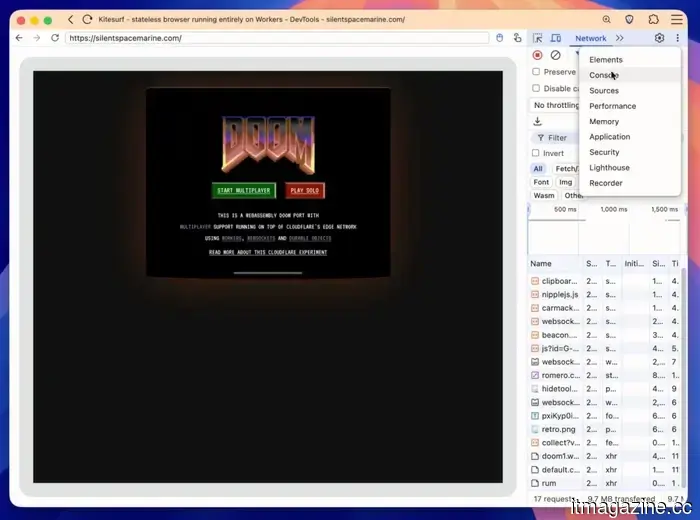
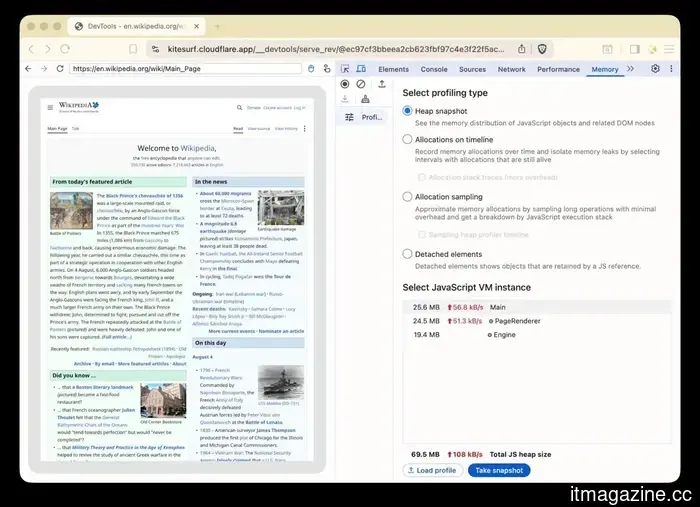
Kitesurf can accurately render sites such as Wikipedia and Hacker News, though it currently does not support video playback or extended authenticated sessions. It is available for free during its beta phase through Cloudflare's Browser Run product, allowing interested users to explore it through a public playground at kitesurf.cloudflare.app.
Cloudflare also intends to open-source Kitesurf in the future, enabling any customer to deploy and run their own version. With AI agents increasingly acquiring the ability to book flights, complete forms, and shop online for users, a platform that allows for quicker browsing has been created by Cloudflare.
---
Multiple renders of an unannounced Asus Googlebook have surfaced online, showcasing a Glow Bar, an array of ports, and a lightweight design.
The Googlebook lineup from Google is taking shape amid various leaks. Lenovo has already made appearances in several renders, while a recent benchmark leak hints that Dell might introduce the XPS brand to Google's new laptop platform. Now, Asus is the latest manufacturer to emerge ahead of the product launch.
Digital Citizen has shared several renders of the Asus Googlebook, displaying its lid, keyboard, chassis, and port selection. The laptop may officially debut at IFA next month. Googlebooks are anticipated to integrate Android apps, utilize ChromeOS technology, enhance phone integration, and incorporate Gemini features into a new generation of laptops. Acer, Asus, Dell, HP, and Lenovo are expected to be part of this initial wave.
---
Wireless peripherals have improved significantly, but I am beginning to appreciate devices that require no effort from me.
I own two pairs of wireless earbuds that I alternate during long gaming sessions. When one starts to run low on battery, I switch to the other pair and put the first one on charge. It's a somewhat ridiculous system, but it works. It seems my gaming setup now resembles a shift work schedule.
Then my mouse failed in the middle of a game.
---
Microsoft has announced a shift to Manifest V3, gradually phasing out older browser extensions.
Microsoft Edge is adopting a move that mirrors Google Chrome's controversial transition made earlier this year, which may signal the end of some of the browser's most popular ad-blocking extensions. Microsoft has confirmed that Edge is transitioning its extensions ecosystem to Manifest Version 3 (MV3), Google's updated extension platform that promises enhanced security, privacy, and performance. As part of this change, older Manifest V2 (MV2) extensions will gradually lose support in the coming months, meaning legacy extensions like the original uBlock Origin will no longer work in Edge.
What is Manifest V3, and why is Microsoft implementing it?





Other articles
 I need assistance; I'm having a conversation with my computer. It's surprisingly convenient yet completely awkward.
I have been using AI-driven voice dictation tools such as Wispr Flow and Willow for several months. They are very convenient, but they can also be quite awkward.
I need assistance; I'm having a conversation with my computer. It's surprisingly convenient yet completely awkward.
I have been using AI-driven voice dictation tools such as Wispr Flow and Willow for several months. They are very convenient, but they can also be quite awkward.
 A leak regarding the Sony WH-1000XM4C suggests a more affordable version of the legendary XM4 is on the way.
A recent leak indicates that Sony's WH-1000XM4C wireless headphones are set to be released in early September at a reduced price while preserving much of the original WH-1000XM4 experience.
A leak regarding the Sony WH-1000XM4C suggests a more affordable version of the legendary XM4 is on the way.
A recent leak indicates that Sony's WH-1000XM4C wireless headphones are set to be released in early September at a reduced price while preserving much of the original WH-1000XM4 experience.
Cloudflare has developed a new browser called Kitesurf, which is intended for AI agents to navigate the web.
Cloudflare has introduced a new browser named Kitesurf, specifically crafted for AI agents to explore the web more quickly and affordably compared to current Chromium-based automation tools.