

Disney+ and ESPN are experimenting with AI-driven search functionality that allows users to express their desires in straightforward language.
Disney is currently beta testing AI-driven search functionalities in both ESPN and Disney+, as announced on Wednesday. The ESPN Search allows a limited number of users to pose sports-related questions in natural language and receive answers, statistics, relevant content, and recommendations based on decades of ESPN's articles, videos, research data, and internal resources. In a different beta on Disney+, subscribers can express what they wish to watch in their own words, shifting from "I don't know what to watch" to receiving suggestions based on their immediate mood rather than just their viewing history.
The Disney+ feature accepts natural language, voice inputs, or suggested prompts. For instance, a subscriber who typically enjoys crime dramas but is in the mood for something more lighthearted can communicate that, prompting the system to suggest suitable content. ESPN Search functions similarly; fans can inquire, for example, "who has the most rushing yards in a single playoff game," and receive an answer with relevant supporting information instead of just a list of links. Both features are currently in limited beta in the US, with no specific launch date disclosed.
A significant addition is Personal Intelligence, which enables the AI to leverage context from a user’s Gmail and Google Calendar to customize responses. A subscriber with a flight to Vancouver in their email can ask about their landing time and receive information without leaving the app. This feature is disabled by default and also remembers past conversations, allowing for seamless trip planning. Amazon is also revamping Prime Video with AI recommendations in a project named Lighthouse, while Netflix is utilizing generative AI to address the issue of content overload within its catalog. Disney is now joining this competitive landscape.
The competitive pressure is evident, as each major streaming service confronts the same challenge: viewers often spend excessive time choosing what to watch and may eventually give up. AI search that comprehends mood, context, and intent is the approach that all three companies are pursuing. Disney's implementation is currently in the nascent stages, limited to a small group of beta users without scalability insights. Its future availability to all subscribers will depend on the outcomes of the tests. At this point, the streaming wars have introduced a new battleground: determining who can assist viewers in making decisions the quickest.
Other articles
 NavVis secured €73.7 million to develop the spatial data infrastructure that factories require prior to implementing AI.
NavVis, based in Munich, secured €73.7 million in Series D funding to expand its spatial twin platform. The company has scanned over 1 billion square meters of industrial space, with customers including BMW, VW, Toyota, Siemens, and BASF.
NavVis secured €73.7 million to develop the spatial data infrastructure that factories require prior to implementing AI.
NavVis, based in Munich, secured €73.7 million in Series D funding to expand its spatial twin platform. The company has scanned over 1 billion square meters of industrial space, with customers including BMW, VW, Toyota, Siemens, and BASF.
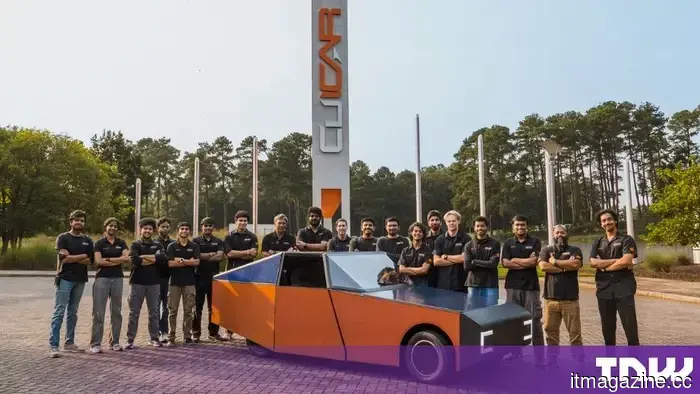 BMW tasked students with creating an electric vehicle that produces more energy than it consumes. They equipped it with 1,700 solar panels, and it functions successfully.
Students at Clemson developed the Luminetta, a solar-powered electric vehicle weighing 1,212 pounds and equipped with 1,700 photovoltaic cells, capable of producing a daily range of 31 miles using sunlight alone. The project received support from BMW.
BMW tasked students with creating an electric vehicle that produces more energy than it consumes. They equipped it with 1,700 solar panels, and it functions successfully.
Students at Clemson developed the Luminetta, a solar-powered electric vehicle weighing 1,212 pounds and equipped with 1,700 photovoltaic cells, capable of producing a daily range of 31 miles using sunlight alone. The project received support from BMW.
 Harvey is securing funding at $15.5 billion, reflecting a 40% increase over the past five months.
The legal AI startup Harvey is negotiating to secure $500 million at a valuation of $15.5 billion, reflecting a 40% increase over the past five months, based on $350 million in annualized revenue.
Harvey is securing funding at $15.5 billion, reflecting a 40% increase over the past five months.
The legal AI startup Harvey is negotiating to secure $500 million at a valuation of $15.5 billion, reflecting a 40% increase over the past five months, based on $350 million in annualized revenue.
 The surge of AI compels companies to reconsider their methods of assessing business value.
Ninety-five percent of organizations have an AI strategy in place, yet only 8% indicate that they have achieved established ROI. Jon Weberg, CEO of Profitalize, contends that the issue lies in evaluating AI as if it were a software purchase rather than recognizing it as an integrated operational framework.
The surge of AI compels companies to reconsider their methods of assessing business value.
Ninety-five percent of organizations have an AI strategy in place, yet only 8% indicate that they have achieved established ROI. Jon Weberg, CEO of Profitalize, contends that the issue lies in evaluating AI as if it were a software purchase rather than recognizing it as an integrated operational framework.
 The team that created Paddington 2 had the opportunity to make a movie about a droid from Star Wars.
After the success of Paddington 2, Paul King and Simon Farnaby proposed a Star Wars film focused on a droid. However, Lucasfilm requested additional Star Wars elements be incorporated. The concept might evolve into something different.
The team that created Paddington 2 had the opportunity to make a movie about a droid from Star Wars.
After the success of Paddington 2, Paul King and Simon Farnaby proposed a Star Wars film focused on a droid. However, Lucasfilm requested additional Star Wars elements be incorporated. The concept might evolve into something different.
 Malicious AI capabilities transformed agents into large-scale credential theft perpetrators.
Zenity Labs discovered AI agent "skills" that were booby-trapped on Vercel's skills.sh, with one particular family having 1.7 million installs, which can transform agents into credential thieves.
Malicious AI capabilities transformed agents into large-scale credential theft perpetrators.
Zenity Labs discovered AI agent "skills" that were booby-trapped on Vercel's skills.sh, with one particular family having 1.7 million installs, which can transform agents into credential thieves.
Disney+ and ESPN are experimenting with AI-driven search functionality that allows users to express their desires in straightforward language.
Disney+ and ESPN are currently in the beta phase of testing AI search. ESPN provides answers to sports queries using data accumulated over many years. Meanwhile, Disney+ suggests shows based on the viewer's mood rather than solely on their viewing history.