
Sapiom secures $35 million to reduce the operational expenses of AI agents.
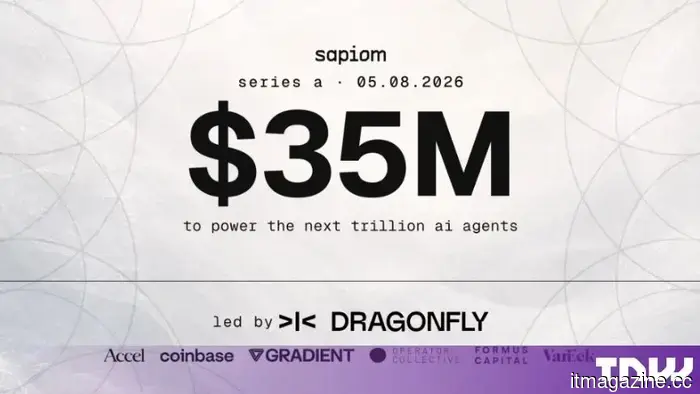
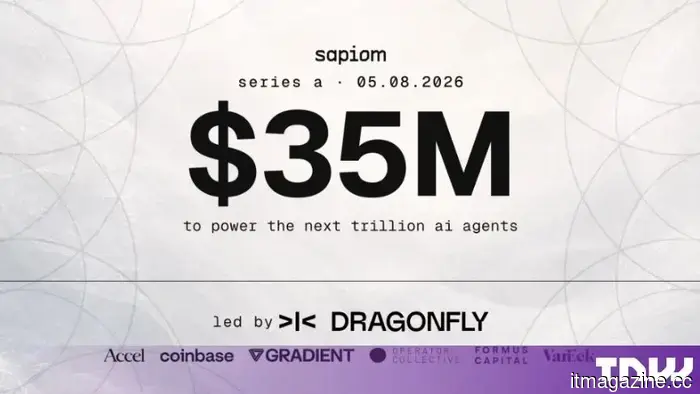
Sapiom, a startup based in San Francisco, operates at the intersection of AI agents and the models they utilize. The company has successfully secured $35 million in a Series A funding round led by Dragonfly, which comes nearly a year after its launch and six months following a $15 million seed round led by Accel. This brings its total funding to $50 million.
The company's proposition is focused and timely: reducing the cost of operating AI agents. When an agent takes action, Sapiom determines which model, tool, or service it should utilize, ensuring a budget is adhered to before any funds are spent. Its Router directs calls to the most economical capable model rather than the priciest one. Since its launch, the platform has managed over 270 million transactions in six months.
A compelling example is a client called Polsia. This AI startup does not employ any staff and operates numerous agents to assist other businesses. Its estimated revenues surged from $100,000 to $10 million within a year, as reported by Semafor. However, its token expenses simultaneously rose, reaching $1.2 million monthly on Anthropic. After Sapiom conducted a series of assessments, that expense dropped drastically to approximately $100,000.
“This is simply unsustainable,” stated founder Ilan Zerbib in an interview with Semafor. He contends that startups cannot deploy resources at the rates that leading labs demand, despite existing demand.
This situation is somewhat unusual. Anthropic, a backer of Sapiom, is participating in the Series A round, alongside Okta Ventures, Menlo Ventures, and Array Ventures. A model provider is effectively financing a startup that aims to reduce spending on model providers. Zerbib views this as a harmonious relationship rather than a conflicting one.
By reducing inference costs, companies can increase their number of agents. Zerbib suggests that some of this activity will still require the most capable models.
Cost is now a crucial limiting factor. Sapiom is capitalizing on a shift in corporate dialogue surrounding AI. Gartner predicts that by the end of 2027, over 40% of agentic AI initiatives will be abandoned, primarily due to rising expenses. Companies are undergoing their first rigorous budget audits for AI. Some organizations are already placing limits on employees' spending. Semafor referenced a KPMG survey involving 2,100 executives in June, where only 7% could identify established returns on investments.
Zerbib believes that the number of agents is set to surge. He mentioned that there could be tens of millions of software developers. In his words, “we're talking about trillions of agents that will be functioning in the economy in the next three years.” According to his data, most of this work does not require cutting-edge models. “In 95% of cases, it doesn't make sense to resort to a very costly frontier model,” he remarked. The Next Web has noted how U.S. companies are already opting for less expensive models to manage costs.
Haseeb Qureshi from Dragonfly is set to join the board, describing the existing gap as an infrastructure issue rather than a dashboard problem. “Agents are becoming like employees without managers or budgets,” he noted, “and increasingly, the CTO is taking on the CFO role, managing real money with little insight into where it is allocated.”
The Router from Sapiom positions it against OpenRouter, a prominent player in model routing. According to Semafor, Sapiom distinguishes itself through its infrastructure; it hosts open-weight models in its own data center located in San Jose. Most competitors merely act as intermediaries. Sapiom charges directly for the computing services without adding a markup. It is part of a new trend of startups offering agent infrastructure to investors this year.
However, this advantage might be short-lived. Routing is beginning to resemble a commodity, with Amazon and Microsoft bundling it into Bedrock and Azure. Free open-source routers are available, and OpenRouter alone processes around 25 trillion tokens weekly.
A market analysis has identified 80 active competitors in the routing space. Sapiom is placing its bets on what it controls beneath the surface: the inference and the related management systems. This, it hopes, will differentiate a feature from a full-fledged company.
Other articles
 Google's layoffs affected 52 positions in Washington state.
Google is eliminating 52 positions in Washington state, marking its first substantial job cut there since 2023, coinciding with the week it also lost four prominent AI researchers.
Google's layoffs affected 52 positions in Washington state.
Google is eliminating 52 positions in Washington state, marking its first substantial job cut there since 2023, coinciding with the week it also lost four prominent AI researchers.
 Anthropic created an inspection layer that enables companies to prevent sensitive data from reaching Claude.
Inference hooks enable security teams to examine each prompt and tool call prior to processing by Claude. They are compatible with Netskope, Palo Alto, and Zscaler. A single configuration applies to all Claude products.
Anthropic created an inspection layer that enables companies to prevent sensitive data from reaching Claude.
Inference hooks enable security teams to examine each prompt and tool call prior to processing by Claude. They are compatible with Netskope, Palo Alto, and Zscaler. A single configuration applies to all Claude products.
 Yann LeCun's second venture into creating a VC fund successfully raises $100 million, with Gemini's co-lead joining as a partner.
LeCun and Oriol Vinyals have joined 224 Ventures, a fresh AI fund with over $100 million in assets. The fund focuses on early-stage AI startups, providing investments ranging from $1 million to $5 million. The limited partners are primarily individuals with experience in the AI sector.
Yann LeCun's second venture into creating a VC fund successfully raises $100 million, with Gemini's co-lead joining as a partner.
LeCun and Oriol Vinyals have joined 224 Ventures, a fresh AI fund with over $100 million in assets. The fund focuses on early-stage AI startups, providing investments ranging from $1 million to $5 million. The limited partners are primarily individuals with experience in the AI sector.
 Sapiom secures $35 million to reduce the expenses associated with operating AI agents.
Sapiom secured $35 million in a Series A funding round to reduce the operational costs of AI agents, potentially by up to ten times. Among its investors is Anthropic, whose expenses the startup aims to decrease.
Sapiom secures $35 million to reduce the expenses associated with operating AI agents.
Sapiom secured $35 million in a Series A funding round to reduce the operational costs of AI agents, potentially by up to ten times. Among its investors is Anthropic, whose expenses the startup aims to decrease.
 The Pixel Tag could be Google's response to the AirTag, with a similar price point.
The speculated Pixel Tag from Google might be priced only 10 cents lower than an AirTag, with the integration for Android and the yet-to-be-confirmed tracking hardware needing to justify the almost identical cost.
The Pixel Tag could be Google's response to the AirTag, with a similar price point.
The speculated Pixel Tag from Google might be priced only 10 cents lower than an AirTag, with the integration for Android and the yet-to-be-confirmed tracking hardware needing to justify the almost identical cost.
 Europe is enjoying the advantages of an open market with an impressive $22K electric vehicle, while the US market remains unexciting.
Geely's new E2 hatchback is priced starting at only $22,490 in Europe, whereas the most affordable EVs in America are priced significantly above $28,000.
Europe is enjoying the advantages of an open market with an impressive $22K electric vehicle, while the US market remains unexciting.
Geely's new E2 hatchback is priced starting at only $22,490 in Europe, whereas the most affordable EVs in America are priced significantly above $28,000.
Sapiom secures $35 million to reduce the operational expenses of AI agents.
Sapiom secured $35 million in a Series A funding round aimed at reducing the operational expenses of AI agents, potentially by as much as ten times. One of the investors is Anthropic, which the startup is designed to help minimize expenses for.