
Google has discreetly updated the documentation for Chrome's AI, providing key information regarding on-device AI downloads.
Google has subtly provided clarification on how Chrome manages downloads for on-device AI.
I recall Chrome silently downloading a 4GB AI model to PCs, which caught many people’s attention in May 2026. The following day, a Chrome executive explained that on-device AI is integral to its “developer & security strategy” and that the model processes data locally.
Now, Chrome has revised its support documentation to clarify the download process and, more importantly, to introduce an option for users to prevent it.
So, what exactly has changed in Chrome’s documentation?
Between July 29 and August 1, Google updated Chrome’s On-device AI support page (as reported by WindowsReport). This update incorporated four entirely new sections detailing eligibility criteria, download conditions, guidance for multiple users and devices, and enterprise-specific guidelines.
In the eligibility section, it states that Chrome will not attempt to download any AI models unless the device has the appropriate hardware to run them. In simpler terms, unsupported or incompatible devices are entirely excluded.
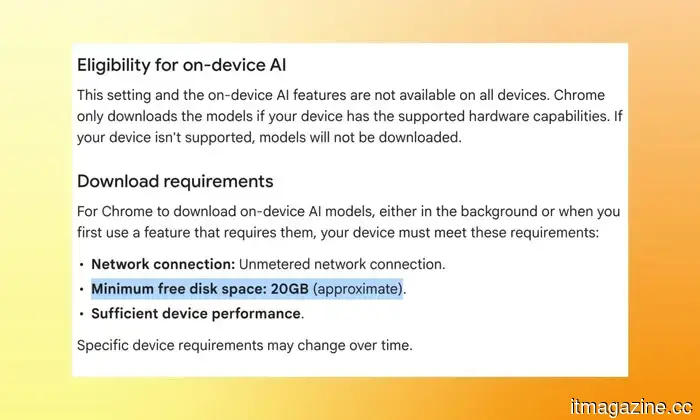
For devices that meet the requirements, Chrome now specifies that it checks for an unmetered internet connection and approximately 20GB of available disk space (including the 4GB AI model). It also evaluates whether the device has sufficient processing power before initiating any downloads.
How should you handle this situation?
Google has become clearer about user control as well.
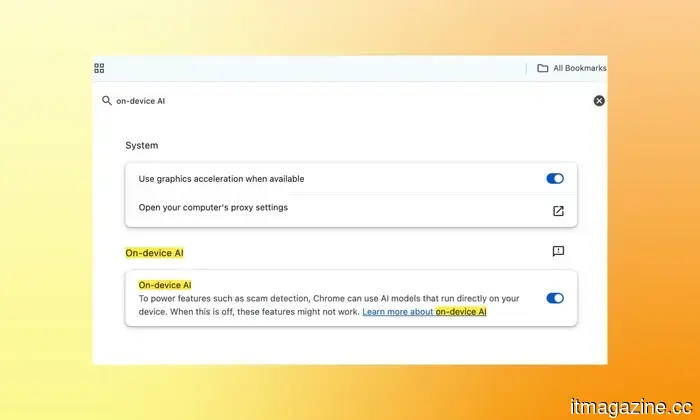
The updated documentation indicates that the “On-device AI” toggle in Chrome’s settings is the sole supported method for managing these downloads. It also cautions against manually searching for and deleting model files, as doing so will not prevent Chrome from redownloading them.
When the toggle is turned off, Chrome deletes the downloaded files and disables any related functions. It will recheck eligibility and redownload only if the toggle is turned back on; otherwise, it will not. This process operates on a per-user and per-device basis, with IT administrators having separate control via Chrome Enterprise Policy.
This update comes months after users first noticed Chrome silently downloading Gemini Nano, its approximately 4GB on-device AI model, without prior consent. While Google hasn’t explicitly linked these events, the timing appears significant.
For over five years, Shikhar has continually clarified developments in consumer technology…
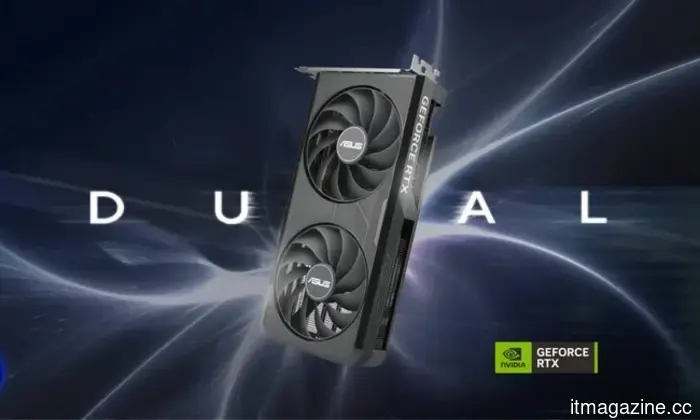
Asus and Gigabyte have just made your future RTX 50 GPU even pricier. One canceled order illustrates how harsh the current market is for buyers.
Following weeks of speculation regarding a new round of price increases, Asus and Gigabyte have confirmed that they are raising prices across their entire RTX 50 lineup and even for AMD's Radeon RX 9000 cards. It is worth noting that both companies already increased prices in January, attributing it to the ongoing DRAM and NAND memory shortages and rising costs. It seems that the situation has only deteriorated since.
Huawei has introduced an exceptionally sleek laptop that’s 35% lighter than the MacBook Air. Unfortunately, it may not meet your needs.
The MateBook Pro S weighs less than 800 grams but operates on HarmonyOS instead of Windows.
Huawei has created one of the most appealing ultralight laptops that most consumers might never think about purchasing. The new MateBook Pro S weighs just 798 grams in its lightest configuration, making it around 35% lighter than the 13-inch MacBook Air. It is slightly thicker at 11.9mm, but Huawei has successfully incorporated a larger display and a 54Wh battery within its magnesium-alloy casing. Its color options are also visually striking. The soft pastel finishes immediately reminded me of the MacBook Neo, giving the laptop much more character than the typical range of silver, gray, and black ultrabooks.
Wispr Flow has debuted Notetaker, an AI meeting assistant that operates without the need to join calls.
The new Wispr Flow tool, Notetaker, creates live transcripts, summaries, and follow-up notes. Wispr Flow has introduced Notetaker, an AI meeting assistant integrated into its existing Mac application. It can record discussions, display a live transcript, and generate notes that outline decisions, deadlines, assigned tasks, and unresolved issues. Wispr Flow is best known for its dictation feature, converting spoken ideas into edited text wherever the user is working. Notetaker expands the company’s capabilities beyond voice typing, applying its transcription technology to meetings, interviews, and in-person conversations.



Other articles
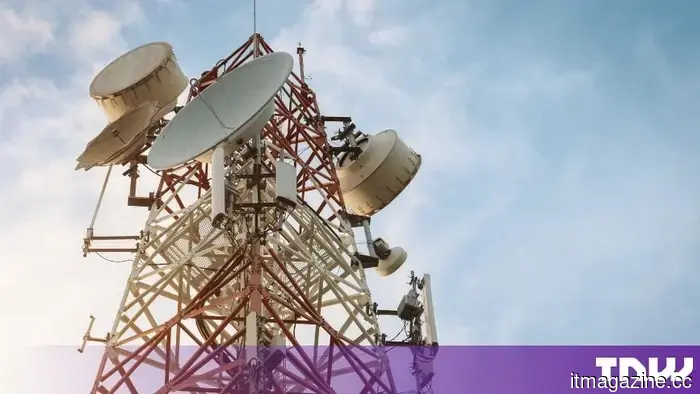 According to a House report, Chinese carriers have never exited US networks.
A bipartisan report from the House indicates that three Chinese state-owned carriers maintained equipment and network connections in the United States, links it associates with the Salt Typhoon hack.
According to a House report, Chinese carriers have never exited US networks.
A bipartisan report from the House indicates that three Chinese state-owned carriers maintained equipment and network connections in the United States, links it associates with the Salt Typhoon hack.
 Google will discontinue Assistant on phones on September 4, leaving Gemini as the sole remaining option.
Google has announced that the Assistant on Android phones will cease operation on September 4, requiring all users to transition to Gemini. Smartwatches, headphones, and Android Auto will also be impacted. However, TVs will have an extended timeline.
Google will discontinue Assistant on phones on September 4, leaving Gemini as the sole remaining option.
Google has announced that the Assistant on Android phones will cease operation on September 4, requiring all users to transition to Gemini. Smartwatches, headphones, and Android Auto will also be impacted. However, TVs will have an extended timeline.
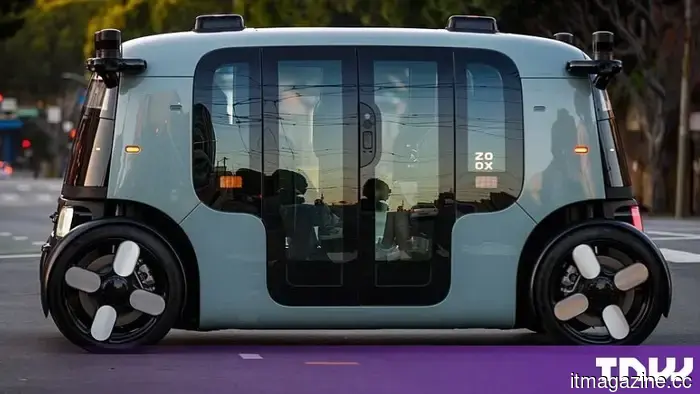 Zoox will begin charging for robotaxi services in Las Vegas starting August 10.
Amazon's Zoox has scheduled its inaugural paid robotaxi service in Las Vegas for August 10. The fares will be aligned with the pricing of "comfort" tier ride-hailing services. To date, nearly 1 million complimentary rides have been provided.
Zoox will begin charging for robotaxi services in Las Vegas starting August 10.
Amazon's Zoox has scheduled its inaugural paid robotaxi service in Las Vegas for August 10. The fares will be aligned with the pricing of "comfort" tier ride-hailing services. To date, nearly 1 million complimentary rides have been provided.
 The largest leveraged buyout in history has just transitioned EA to private ownership.
EA is now a private company following a $55 billion acquisition led by Saudi investors, marking the largest leveraged buyout in history, and it now has approximately $20 billion in new debt that analysts believe will transform the company.
The largest leveraged buyout in history has just transitioned EA to private ownership.
EA is now a private company following a $55 billion acquisition led by Saudi investors, marking the largest leveraged buyout in history, and it now has approximately $20 billion in new debt that analysts believe will transform the company.
 Counterpoint states that the FCC's optics ban would impact U.S. hyperscalers.
The FCC is in the process of drafting a prohibition on Chinese optical transceivers. Chinese companies account for two-thirds of the global supply, which could result in additional costs for US hyperscalers.
Counterpoint states that the FCC's optics ban would impact U.S. hyperscalers.
The FCC is in the process of drafting a prohibition on Chinese optical transceivers. Chinese companies account for two-thirds of the global supply, which could result in additional costs for US hyperscalers.
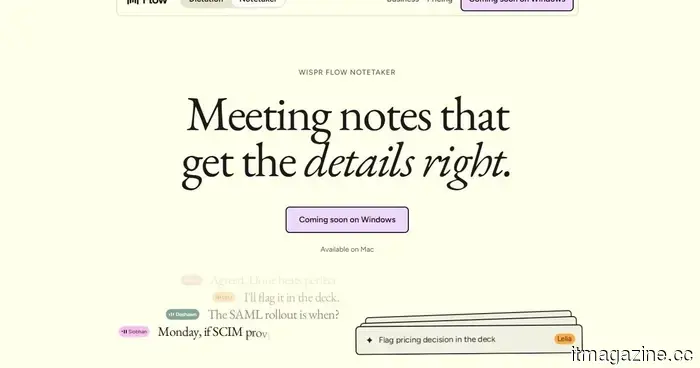 Wispr Flow has introduced an AI note-taker that operates without the need to join calls.
Wispr Flow has introduced Notetaker, an AI meeting assistant for Mac that captures calls without being a participant and converts discussions into transcripts, summaries, and follow-up notes.
Wispr Flow has introduced an AI note-taker that operates without the need to join calls.
Wispr Flow has introduced Notetaker, an AI meeting assistant for Mac that captures calls without being a participant and converts discussions into transcripts, summaries, and follow-up notes.
Google has discreetly updated the documentation for Chrome's AI, providing key information regarding on-device AI downloads.
The newly updated help page for Chrome outlines the requirements for its on-device AI download, which includes needing 20GB of available disk space.