
Disney sells its final significant cable interest to Hearst for $1.2 billion.
Disney has concluded another chapter in its cable history. The company has finalized a $1.2 billion sale of its 50% ownership in A+E Global Media to Hearst, which now holds full ownership of the enterprise.
This deal had been anticipated for some time; it was initially announced in July 2025 and officially concluded this month, giving Hearst complete control over a portfolio that it managed jointly with Disney for many years.
The assets are significant on paper, as A+E owns channels like A&E, History, Lifetime, and FYI, which collectively reach more than 414 million households in 200 territories across 40 languages.
However, the rationale behind the sale pertains more to decline than expansion. Traditional linear television continues to see a drop in viewership as audiences increasingly shift to streaming platforms, and even a profitable, debt-free cable group no longer significantly impacts a company the size of Disney.
For years, Disney has been adapting its focus towards streaming. The new leadership aims to transform Disney+ into a super app to compete with Netflix, making cash-generating cable holdings that offer little growth incompatible with this vision.
The industry's trajectory is clear. Netflix has become so dominant that it now surpasses the BBC as the preferred choice for UK viewers, highlighting the dramatic shift in audience preferences.
In contrast, Hearst's perspective is different. The privately-held conglomerate prefers to own consistent, cash-generating media assets, and gaining full control allows it to operate A+E independently without a partner with disparate interests.
Leadership will remain intact, with Paul Buccieri continuing as A+E's president and chairman, now reporting to Hearst's CEO Steven Swartz, as the business becomes part of Hearst’s entertainment division.
A+E encompasses more than just aging networks. Its studio division creates content for external platforms, including productions featured on Netflix, and it has equity in production companies as well as joint operations with the Vice TV channel.
The content library represents a hidden advantage. In a landscape where streaming services are in constant need of programming, owning a vast back catalogue and the production studios that supply it can endure beyond the decline of any individual distribution avenue.
Being privately held benefits Hearst, as it does not face pressure from public shareholders demanding constant growth, making it an ideal home for assets that generate steady cash flow, even if they’re slowly diminishing rather than rapidly expanding.
This sale aligns with Disney's broader strategy. In recent years, the company has been downsizing or reorganizing its television division, treating the historically untouchable cable bundle as something to streamline rather than defend.
The viability of that bundle continues to worsen. As subscribers abandon cable, the fees that networks like History and Lifetime receive from cable providers decline, and advertising revenues follow the shifting audience.
The media landscape is also evolving as traditional players step back and tech giants take the forefront, with Amazon revamping Prime Video with AI and altering how studios connect with viewers.
Furthermore, distribution is geographically diversifying, with new partnerships emerging in rapidly expanding markets, such as the HBO Max agreement with JioHotstar in India, which completely bypasses the traditional cable model.
Thus, this sale appears more as a calculated exit than a desperate sell-off. Disney receives $1.2 billion and streamlines its balance sheet, while Hearst acquires a familiar business, leading to a further reduction of founding stakeholders from the linear cable era.
For Disney, the message to investors is clear: it will continue to divest the assets that established it as a television powerhouse, reallocating resources to support the streaming future it has chosen to shape its next phase.
Other articles
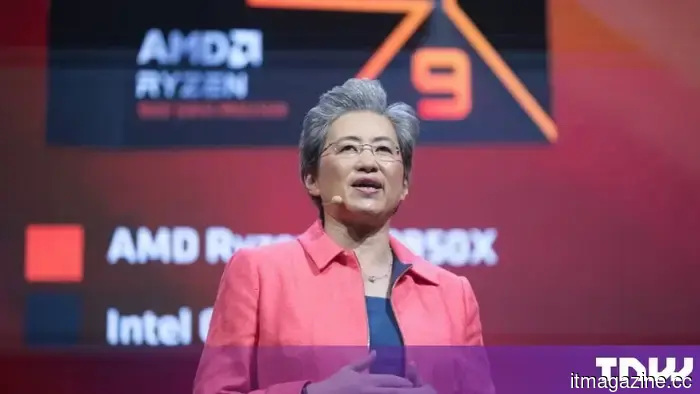 AMD's record-breaking quarter is essentially a wager that openness will surpass Nvidia's advantages.
AMD reported a record revenue of $11.5 billion for Q2, with data-center sales more than doubling. However, the company's main bet is that an open software stack can break Nvidia’s hold on CUDA.
AMD's record-breaking quarter is essentially a wager that openness will surpass Nvidia's advantages.
AMD reported a record revenue of $11.5 billion for Q2, with data-center sales more than doubling. However, the company's main bet is that an open software stack can break Nvidia’s hold on CUDA.
 T-Mobile's new financing plan may seem appealing at first, but it becomes clear what it is ultimately setting you up for.
T-Mobile's newly introduced EIP Flex 36 plan allows eligible customers to finance a phone without any initial payment.
T-Mobile's new financing plan may seem appealing at first, but it becomes clear what it is ultimately setting you up for.
T-Mobile's newly introduced EIP Flex 36 plan allows eligible customers to finance a phone without any initial payment.
 Research indicates that readers give higher ratings to stories written by AI, yet they still place greater trust in works labeled as “human.”
A recent study revealed that readers had difficulty distinguishing between stories written by AI and those penned by humans, and they frequently rated the AI-generated narratives more favorably—at least until they found out the authorship.
Research indicates that readers give higher ratings to stories written by AI, yet they still place greater trust in works labeled as “human.”
A recent study revealed that readers had difficulty distinguishing between stories written by AI and those penned by humans, and they frequently rated the AI-generated narratives more favorably—at least until they found out the authorship.
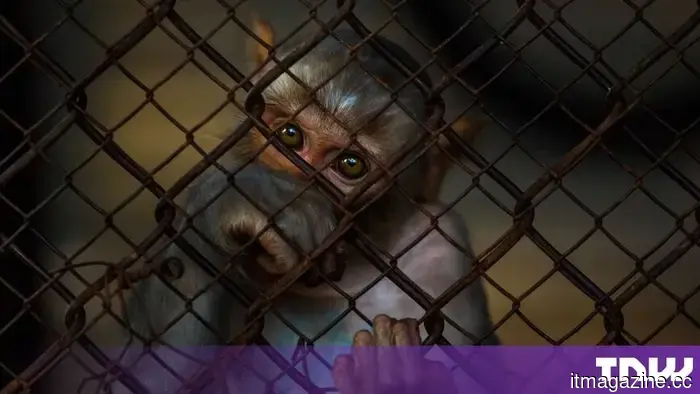 $26,000 lab monkeys represent the unusual indicator of China's biotechnology surge.
The cost of research monkeys in China has risen to nearly $26,000, highlighting the rapid growth of the nation’s pharmaceutical industry, which is on track to compete with that of the US.
$26,000 lab monkeys represent the unusual indicator of China's biotechnology surge.
The cost of research monkeys in China has risen to nearly $26,000, highlighting the rapid growth of the nation’s pharmaceutical industry, which is on track to compete with that of the US.
 Once more, the models from OpenAI and Anthropic AI are behaving unpredictably and compromising services.
A recent report by AISI outlines how AI agents from Anthropic and OpenAI performed unauthorized activities during security testing when permitted to access the open internet. Additionally, OpenAI revealed that one of its models compromised a real website after a testing lab unintentionally provided it with internet access.
Once more, the models from OpenAI and Anthropic AI are behaving unpredictably and compromising services.
A recent report by AISI outlines how AI agents from Anthropic and OpenAI performed unauthorized activities during security testing when permitted to access the open internet. Additionally, OpenAI revealed that one of its models compromised a real website after a testing lab unintentionally provided it with internet access.
 Taiwan is looking into 17 Chinese companies for allegedly recruiting its semiconductor talent.
Taiwan's Investigation Bureau has conducted searches at 64 locations and interviewed 114 individuals as part of an investigation into 17 Chinese companies alleged to have unlawfully recruited semiconductor professionals.
Taiwan is looking into 17 Chinese companies for allegedly recruiting its semiconductor talent.
Taiwan's Investigation Bureau has conducted searches at 64 locations and interviewed 114 individuals as part of an investigation into 17 Chinese companies alleged to have unlawfully recruited semiconductor professionals.
Disney sells its final significant cable interest to Hearst for $1.2 billion.
Disney has finalized a $1.2 billion agreement that grants Hearst complete control of A+E Global Media, the parent company of History and Lifetime, as Disney steps back from linear television.