
Disney has sold its final major cable interest to Hearst for $1.2 billion.
Disney has officially moved on from another segment of its cable history. The company has finalized the sale of its 50% stake in A+E Global Media to Hearst for $1.2 billion, granting Hearst complete ownership of the entity.
This transaction had been anticipated for some time. It was initially announced in July 2025 and concluded this month, allowing Hearst to fully manage a portfolio it had co-operated with Disney for many years.
On paper, the assets are significant. A+E encompasses A&E, History, Lifetime, and FYI, a collection of channels that collectively reach over 414 million households across 200 regions and 40 languages.
Nonetheless, the reasoning behind the sale revolves around decline rather than growth. Traditional television continues to lose viewers as audiences shift towards streaming services, and even a profitable, debt-free cable operation no longer significantly impacts a company of Disney's magnitude.
For years, Disney has been pivoting towards streaming. The new management aims to transform Disney+ into a super app to compete with Netflix, and cable interests that generate cash but lack growth no longer align with this vision.
The trend is clear across the industry. Netflix has become so dominant that it has now surpassed the BBC as the preferred choice for UK viewers, symbolizing the shift in viewer habits.
For Hearst, the evaluation differs. The privately-owned conglomerate values steady, cash-generating media assets, and complete ownership allows it to manage A+E independently without a partner that may have different priorities.
Leadership will continue as before. Paul Buccieri remains as A+E's president and chairman, now reporting to Hearst's CEO Steven Swartz, with the business integrated into Hearst's entertainment division.
A+E's offerings extend beyond aging channels. Its studio division produces for various platforms, including content for Netflix, and it holds shares in production companies while collaborating on the Vice TV channel.
The content library is a valuable asset. In a climate where streaming platforms seek programming, possessing a substantial back catalog and the studios that create it can endure the decline of any individual distribution channel.
Being privately held benefits Hearst in this regard. It is not required to respond to public shareholders demanding quarterly growth, making it a suitable fit for cash-rich assets that are slowly contracting rather than rapidly expanding.
This sale also aligns with a broader trend at Disney. The company has spent the past few years streamlining or restructuring its television division, viewing the historically untouchable cable bundle as something to reduce rather than protect.
The economics of that bundle continue to worsen. As subscribers cancel traditional cable, the fees that channels like History and Lifetime receive from cable providers diminish, and the advertising revenue that supports them migrates with the audience.
The landscape of media buyers is also evolving. As traditional companies pull back, technology giants are stepping in, with Amazon reinventing Prime Video using AI and transforming how studios connect with viewers.
Distribution is also experiencing geographical fragmentation. New partnerships are emerging in rapidly growing markets, such as the HBO Max agreement with JioHotstar in India, bypassing the traditional cable model altogether.
Thus, the sale represents a well-planned exit rather than a desperate liquidation. Disney secures $1.2 billion and simplifies its balance sheet, Hearst acquires a business it is familiar with, and the linear cable era sees another of its original stakeholders fade away.
For Disney, the message to investors is one of continuity. The company will continue to simplify the assets that established it as a television powerhouse to finance the streaming future it has determined will characterize its next phase.
Other articles
 T-Mobile's latest financing plan appears impressive at first glance, but it's important to understand what it may ultimately lead to.
T-Mobile's newly introduced EIP Flex 36 plan allows eligible customers to finance a phone without any initial payment.
T-Mobile's latest financing plan appears impressive at first glance, but it's important to understand what it may ultimately lead to.
T-Mobile's newly introduced EIP Flex 36 plan allows eligible customers to finance a phone without any initial payment.
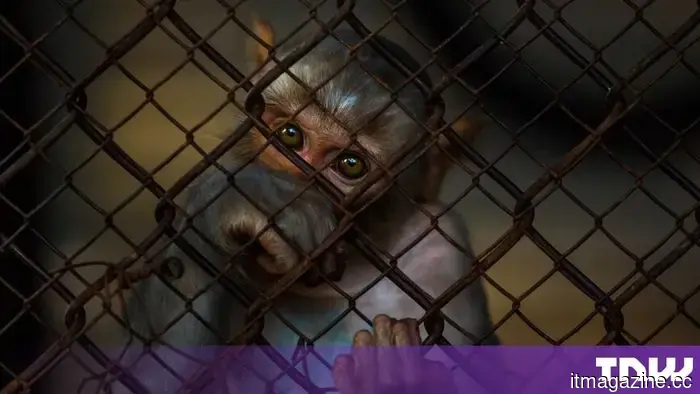 $26,000 monkeys in laboratories represent the peculiar indicator of China's biotechnology surge.
The cost of research monkeys in China has increased to nearly $26,000, highlighting the rapid growth of the country’s pharmaceutical industry as it seeks to compete with the US.
$26,000 monkeys in laboratories represent the peculiar indicator of China's biotechnology surge.
The cost of research monkeys in China has increased to nearly $26,000, highlighting the rapid growth of the country’s pharmaceutical industry as it seeks to compete with the US.
 Moove secures $250 million at a $2.1 billion valuation to operate robotaxi fleets.
Moove, a former African car-financing startup, has secured $250 million at a valuation of $2.1 billion to develop the fleet infrastructure supporting Uber and Waymo's self-driving vehicles.
Moove secures $250 million at a $2.1 billion valuation to operate robotaxi fleets.
Moove, a former African car-financing startup, has secured $250 million at a valuation of $2.1 billion to develop the fleet infrastructure supporting Uber and Waymo's self-driving vehicles.
 Moove secures $250 million at a $2.1 billion valuation to operate robotaxi fleets.
Moove, previously an African car-financing startup, has secured $250 million at a valuation of $2.1 billion to develop the fleet infrastructure for Uber and Waymo's self-driving vehicles.
Moove secures $250 million at a $2.1 billion valuation to operate robotaxi fleets.
Moove, previously an African car-financing startup, has secured $250 million at a valuation of $2.1 billion to develop the fleet infrastructure for Uber and Waymo's self-driving vehicles.
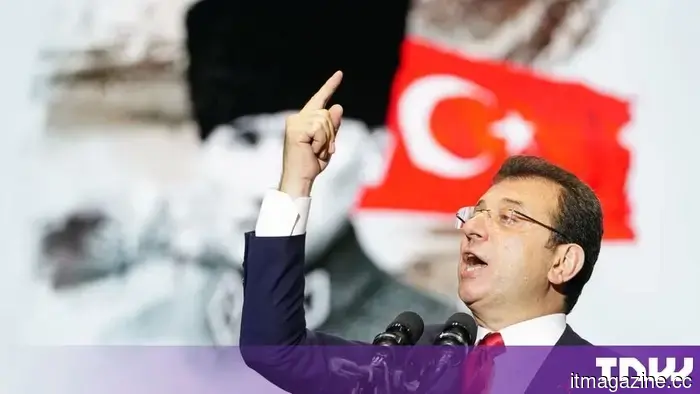 X is contesting a Turkish directive to prohibit Ekrem Imamoglu’s campaign account.
A Turkish court has directed X to limit the presidential-campaign account of Ekrem Imamoglu, the jailed mayor of Istanbul. X has stated that it is adhering to the order while also contesting it in court.
X is contesting a Turkish directive to prohibit Ekrem Imamoglu’s campaign account.
A Turkish court has directed X to limit the presidential-campaign account of Ekrem Imamoglu, the jailed mayor of Istanbul. X has stated that it is adhering to the order while also contesting it in court.
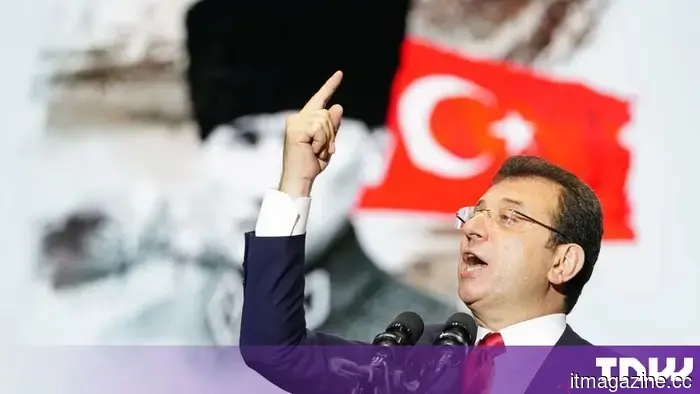 X is challenging a Turkish court's decision to freeze Ekrem Imamoglu's campaign account.
A Turkish court has instructed X to limit the presidential campaign account of Ekrem Imamoglu, the imprisoned mayor of Istanbul. X has stated that it is adhering to this order while also contesting it in court.
X is challenging a Turkish court's decision to freeze Ekrem Imamoglu's campaign account.
A Turkish court has instructed X to limit the presidential campaign account of Ekrem Imamoglu, the imprisoned mayor of Istanbul. X has stated that it is adhering to this order while also contesting it in court.
Disney has sold its final major cable interest to Hearst for $1.2 billion.
Disney has finalized a deal worth $1.2 billion, granting Hearst complete ownership of A+E Global Media, which operates History and Lifetime, as Disney steps back from linear television.