
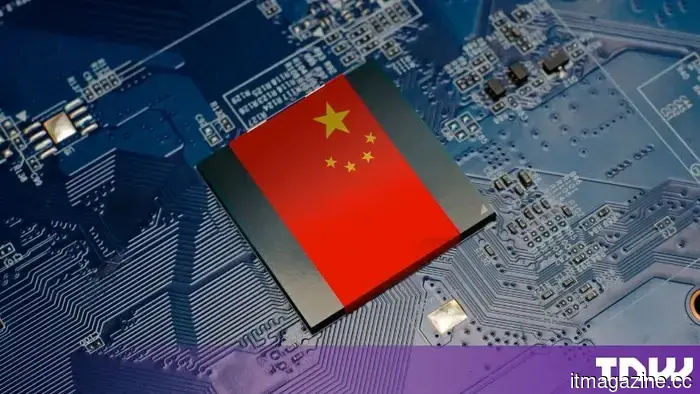
China is subtly apprehensive about Anthropic's Mythos.
Over the past year, China has been advocating for AI to be open, affordable, and shared globally. However, behind closed doors, its officials are feeling anxious about an American model that doesn't align with those principles.
According to Bloomberg, Beijing is increasingly worried that Anthropic’s Mythos could be used against it. Officials view this advanced model as a potential offensive cyber weapon and express frustration over Anthropic's refusal to grant China access, even for basic usage.
This concern is far from hypothetical. Mythos has demonstrated an exceptional ability to compromise software, discovering and exploiting vulnerabilities on a scale that surpasses human capabilities. A GovTech evaluation revealed that it successfully chained numerous vulnerabilities and wrote functioning exploit code on its initial attempt, achieving a success rate exceeding 83%. In June, Washington deemed the associated risks significant enough to completely restrict foreign access.
The irony is glaring. China champions open AI, inundating the global market with downloadable models while portraying itself as a promoter of technology democratization. Conversely, the system it fears most is a closed American one that it cannot engage with legally.
The timing of this tension is particularly sensitive, as Xi Jinping is scheduled to visit the US on September 24, and Beijing is hoping for a positive atmosphere beforehand. Officials are aiming for a "win-win" rhetoric during AI discussions leading up to the meeting. However, mutual suspicion exists, with Washington concerned about Chinese companies potentially training their models using American technology.
This concern is rooted in reality. Treasury Secretary Scott Bessent suggested last month that sanctions might be imposed on developers caught stealing intellectual property, particularly after Beijing’s Moonshot AI unveiled a system claimed to rival the best from US labs. China’s Commerce Ministry has indicated it will take "all necessary measures" in response.
Anthropic has positioned itself at the heart of this mistrust deliberately. It has become one of the most hawkish US laboratories towards China. CEO Dario Amodei aims to prevent high-end chips from being sent to China, has accused Alibaba’s Qwen team of training on Claude’s outputs, and has labeled China’s ruling party as “the most capable threat” among authoritarian regimes. Hence, Beijing's suspicions are not unfounded.
Currently, China is not taking action but is preparing responses. Officials are contemplating measures in the event Washington acts first, which could include sanctions or adding US AI companies to a restricted-entity list. Since Anthropic does not operate in China, any punitive action would be more symbolic than impactful in commercial terms.
Beijing has previously demonstrated its willingness to send strong signals. In June, it imposed export controls on two American rare-earth companies following the Pentagon's decision to blacklist Alibaba and BYD due to military associations, reflecting a broader strategy of retaliating in areas of vulnerability. AI represents the latest battleground in an ongoing rivalry that encompasses chips, robotics, and rare earth materials.
Washington finds itself grappling with its own contradictions. Trump stated he is considering tighter AI regulations, but fears these could hinder American enterprises. “We have to be careful in both ways,” he remarked last week. “We don’t want to restrict them to the point where we suddenly find ourselves second to China.”
Meanwhile, the federal government has prohibited its agencies from utilizing Anthropic’s tools, a dispute the company is challenging in court.
Thus, the two superpowers now approach frontier models as they once did missile technologies. The model that China fears the most is one it cannot access, developed by a company that is highly motivated to maintain that exclusivity. This deadlock emerges just as the two leaders sit down to engage in dialogue.
Other articles
 Stables and Access Bank South Africa are investigating a new infrastructure for cross-border payments.
Australian fintech Stables has expanded into Africa by partnering with Access Bank South Africa to investigate stablecoin-enabled cross-border payment solutions. This development comes after the company's swift growth throughout Asia, where Stables currently assists businesses in more than 160 markets.
Stables and Access Bank South Africa are investigating a new infrastructure for cross-border payments.
Australian fintech Stables has expanded into Africa by partnering with Access Bank South Africa to investigate stablecoin-enabled cross-border payment solutions. This development comes after the company's swift growth throughout Asia, where Stables currently assists businesses in more than 160 markets.
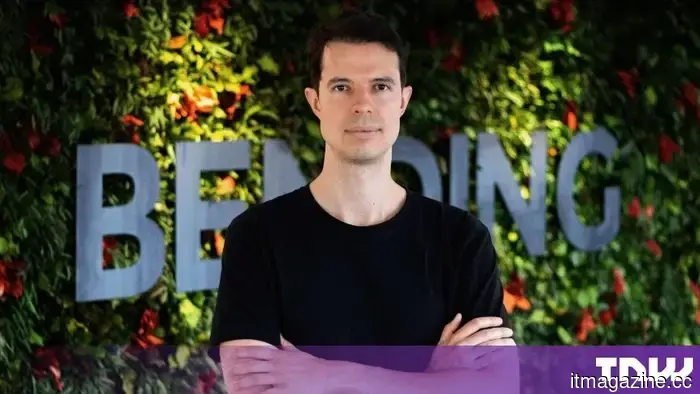 Bending Spoons acquires Airtable for $1.285 billion.
Bending Spoons is acquiring Airtable for $1.285 billion in cash. CEO Luca Ferrari has pledged long-term investment, but the history with Evernote and WeTransfer makes this commitment more complex.
Bending Spoons acquires Airtable for $1.285 billion.
Bending Spoons is acquiring Airtable for $1.285 billion in cash. CEO Luca Ferrari has pledged long-term investment, but the history with Evernote and WeTransfer makes this commitment more complex.
 Stables and Access Bank South Africa are investigating new infrastructure for cross-border payments.
Australian fintech Stables is expanding into Africa by partnering with Access Bank South Africa to develop stablecoin-based cross-border payment infrastructure. This initiative comes after Stables’ swift growth across Asia, where it currently assists businesses in more than 160 markets.
Stables and Access Bank South Africa are investigating new infrastructure for cross-border payments.
Australian fintech Stables is expanding into Africa by partnering with Access Bank South Africa to develop stablecoin-based cross-border payment infrastructure. This initiative comes after Stables’ swift growth across Asia, where it currently assists businesses in more than 160 markets.
 Former Nubank team secures $85 million for AI advisory firm Decade.
Two ex-leaders of Nubank secured $85 million, marking the largest seed round in Latin America, for Decade, an AI-driven wealth advisory service that aims to usher in "a new generation of millionaires."
Former Nubank team secures $85 million for AI advisory firm Decade.
Two ex-leaders of Nubank secured $85 million, marking the largest seed round in Latin America, for Decade, an AI-driven wealth advisory service that aims to usher in "a new generation of millionaires."
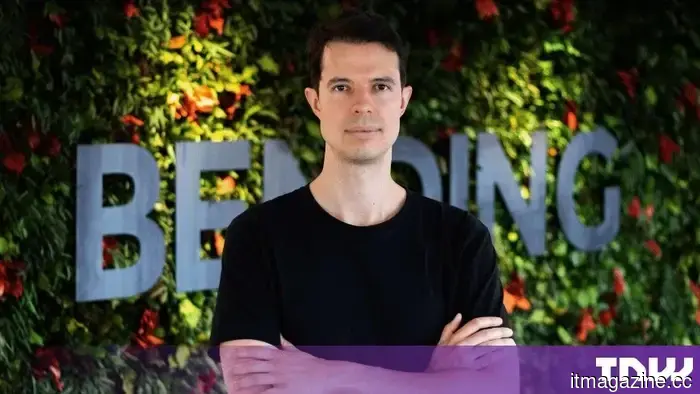 Bending Spoons acquires Airtable for $1.285 billion.
Bending Spoons is acquiring Airtable for $1.285 billion in cash. CEO Luca Ferrari has assured a long-term investment, though its history with Evernote and WeTransfer adds complexity to that promise.
Bending Spoons acquires Airtable for $1.285 billion.
Bending Spoons is acquiring Airtable for $1.285 billion in cash. CEO Luca Ferrari has assured a long-term investment, though its history with Evernote and WeTransfer adds complexity to that promise.
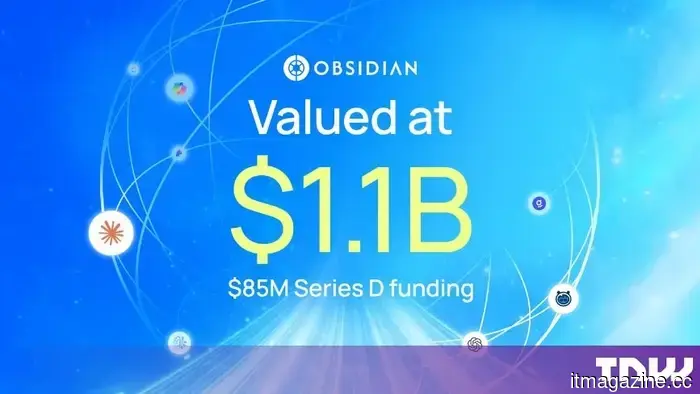 Obsidian Security reaches a $1.1 billion valuation as artificial intelligence transforms the landscape of threats.
SaaS-security company Obsidian has received new funding, achieving a valuation of $1.1 billion as the need for tools that protect AI agents within enterprise applications increases.
Obsidian Security reaches a $1.1 billion valuation as artificial intelligence transforms the landscape of threats.
SaaS-security company Obsidian has received new funding, achieving a valuation of $1.1 billion as the need for tools that protect AI agents within enterprise applications increases.
China is subtly apprehensive about Anthropic's Mythos.
China promotes open AI globally, yet harbors concerns about a specific closed American model it cannot access: Anthropic's Mythos, just weeks before Xi meets Trump.