
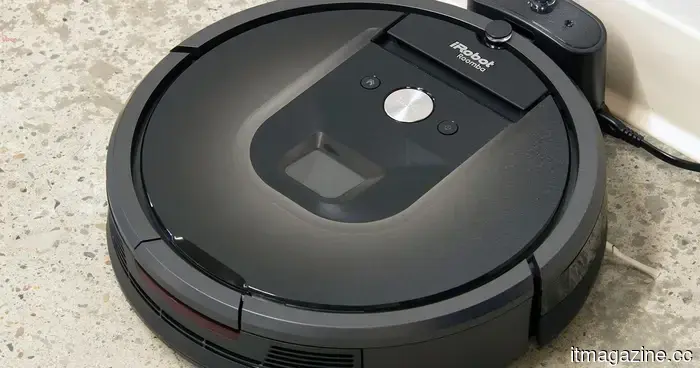
The US's clampdown on foreign-made robots will also affect future Roombas.
Future Roombas encounter new sales challenges in the US, but current models remain unaffected
The FCC has made it increasingly difficult for foreign drone manufacturers such as DJI to introduce new products into the US market. Now, a similar restriction is being applied to a device more likely to be used in your home.
The US government has recently included foreign-made advanced robotic devices on the FCC’s Covered List. Although the announcement mainly focused on humanoid robots, robot dogs, and industrial machines, an FCC representative has confirmed to The Verge that robot vacuum cleaners are also included.
As a result, future foreign-made Roombas and competing robot vacuums will not be able to obtain the FCC authorization necessary for sale in the US unless their manufacturers gain Conditional Approval. This restriction applies to products manufactured in any foreign country, not just China.
Why is your robot vacuum included in this ban?
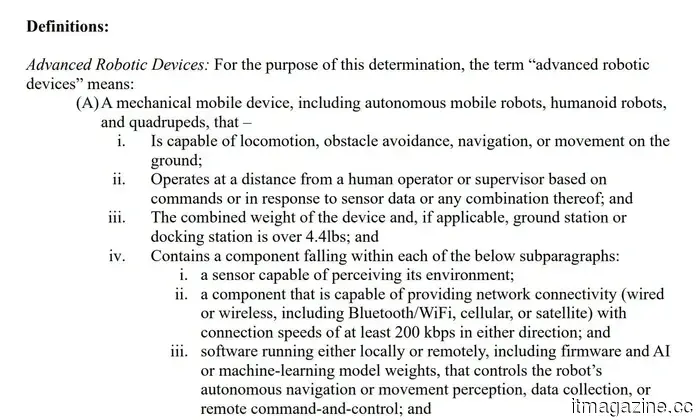
The government's definition encompasses software-controlled machines that can move across the ground without constant human oversight. The device along with its docking station must weigh over 4.4 pounds, utilize sensors to interpret their environment, connect to a network, and rely on software for movement or data collection.
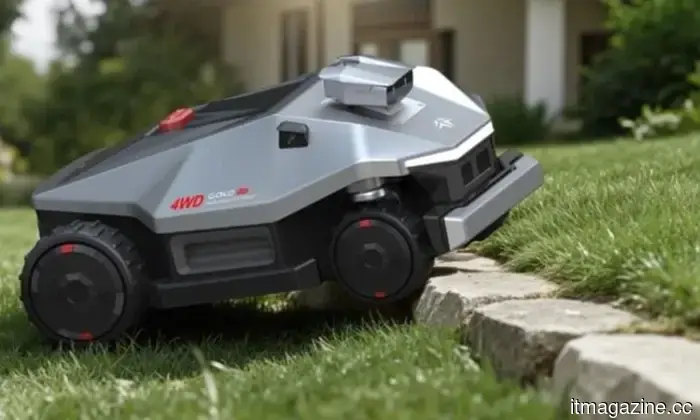
Most contemporary robot vacuums fulfill these criteria. The Verge also notes that this language could extend to connected lawnmowers, sidewalk delivery robots, and mobile machines used in warehouses.
Cybersecurity is a significant aspect of the government’s rationale. Their evaluation references a recent vulnerability that allegedly exposed around 7,000 foreign-made robots, including live camera feeds, audio from microphones, and detailed maps of individuals' homes.
Will this impact the Roomba you already have?
No. Previously approved models can still be imported, marketed, and sold, and robot vacuums that have already been purchased will not be affected. Additionally, federal agencies are exempt from these restrictions. Existing devices will continue to receive security, software, firmware, and compatibility updates until at least January 1, 2029.
Future releases will face additional challenges. Roomba is currently owned by Chinese manufacturer Picea Robotics, and Chinese companies represent a significant portion of the broader robot vacuum market. Manufacturers can apply for Conditional Approval while shifting more production to the US, but without this approval, several upcoming models may struggle to reach American retailers.

Other articles
 Highland Europe has finalized a €1.1 billion fund dedicated to continuing support for European scale-ups.
Highland Europe has completed the closing of its sixth fund, totaling €1.1 billion, to support growth-stage technology in Europe. This comes after a year marked by exits, including the sale of Nexthink for approximately $3 billion, and the promotion of two partners.
Highland Europe has finalized a €1.1 billion fund dedicated to continuing support for European scale-ups.
Highland Europe has completed the closing of its sixth fund, totaling €1.1 billion, to support growth-stage technology in Europe. This comes after a year marked by exits, including the sale of Nexthink for approximately $3 billion, and the promotion of two partners.
 Relation reveals MORGAN, a cellular model, along with a $110 million agreement with GSK.
Relation has revealed MORGAN, an AI "foundation model of the cell," along with a GSK agreement valued at up to $110 million to generate the data needed for its training.
Relation reveals MORGAN, a cellular model, along with a $110 million agreement with GSK.
Relation has revealed MORGAN, an AI "foundation model of the cell," along with a GSK agreement valued at up to $110 million to generate the data needed for its training.
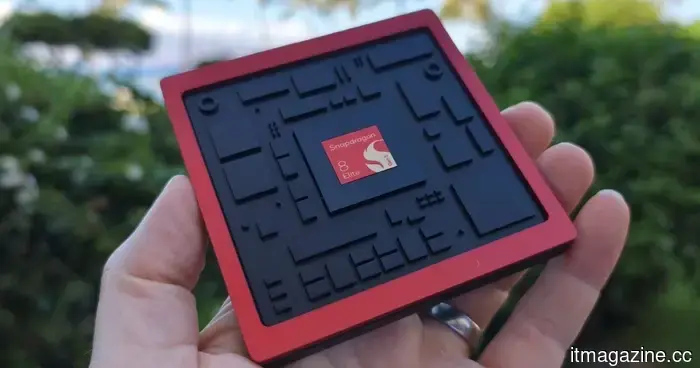 Qualcomm has announced an upcoming increase in prices, noting that the escalating cost of memory is not the sole contributing factor.
Qualcomm is increasing chip prices beginning September 1 to compensate for the rising expenses throughout its supply chain, not limited to just memory.
Procore acquires DroneDeploy for $845 million to enhance its AI capabilities.
Procore is acquiring DroneDeploy for approximately $845 million to enable its construction AI "digital coworkers" to have visual access to the job site through drones, robots, and cameras.
Qualcomm has announced an upcoming increase in prices, noting that the escalating cost of memory is not the sole contributing factor.
Qualcomm is increasing chip prices beginning September 1 to compensate for the rising expenses throughout its supply chain, not limited to just memory.
Procore acquires DroneDeploy for $845 million to enhance its AI capabilities.
Procore is acquiring DroneDeploy for approximately $845 million to enable its construction AI "digital coworkers" to have visual access to the job site through drones, robots, and cameras.
 The president of OpenAI has announced that a range of ChatGPT devices will be released soon.
OpenAI's president, Greg Brockman, has confirmed that the company is developing a series of devices for ChatGPT, but he has not disclosed any details regarding release dates, specifications, or the implications of the Apple lawsuit.
The president of OpenAI has announced that a range of ChatGPT devices will be released soon.
OpenAI's president, Greg Brockman, has confirmed that the company is developing a series of devices for ChatGPT, but he has not disclosed any details regarding release dates, specifications, or the implications of the Apple lawsuit.
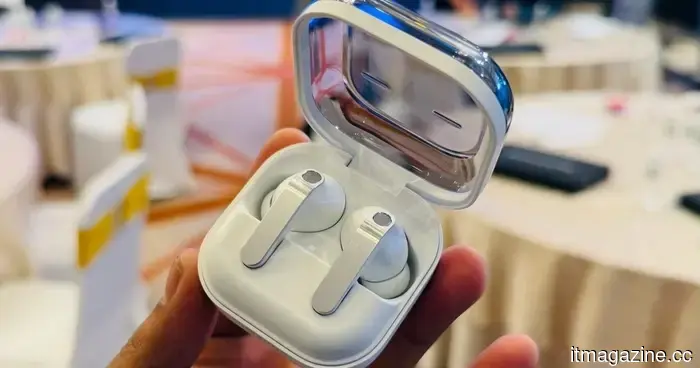 Here’s a look at what the rumored Galaxy Buds On from Samsung might resemble.
The anticipated Galaxy Buds On from Samsung missed the July Unpacked event, but recently leaked images showcase the clip-on, open-ear design that the company has been developing.
Here’s a look at what the rumored Galaxy Buds On from Samsung might resemble.
The anticipated Galaxy Buds On from Samsung missed the July Unpacked event, but recently leaked images showcase the clip-on, open-ear design that the company has been developing.
The US's clampdown on foreign-made robots will also affect future Roombas.
The US government's crackdown on foreign robots extends to foreign-produced robot vacuums, putting future Roombas and competing brands in jeopardy of being banned from sale in the US.