
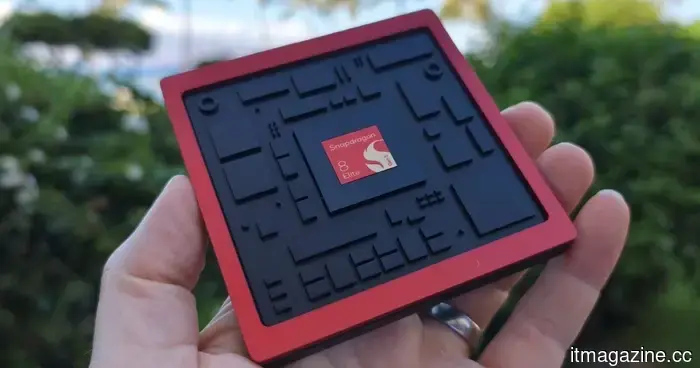
Qualcomm has announced an upcoming increase in prices, noting that the escalating cost of memory is not the sole contributing factor.
CEO Cristiano Amon announced that starting September 1, there will be an increase in chip prices to help offset the rising costs associated with the supply chain, which includes wafer fabrication, packaging, and testing.
If you were anticipating your next Android phone to be more affordable, you might need to adjust your expectations. Qualcomm has confirmed a price rise for its chips beginning September 1, with CEO Cristiano Amon straightforwardly stating the reason: “Costs have increased, and so will prices,” he mentioned in an interview with CNBC. Since Qualcomm chips are integral to a large portion of the world's Android devices, price increases at the production level will likely impact retail prices.
Rising costs are not limited to memory
Qualcomm's recent earnings report highlights a significant rise in expenditures related to wafer fabrication, assembly, testing, packaging, and memory. Amon characterized the subsequent decline in profit margins as a temporary issue that the company is addressing through price hikes, although he did not specify the margins being targeted. Last week's reports suggested that a price increase in the double digits is expected, with additional leaks indicating that Qualcomm's next flagship chip may cost smartphone manufacturers over $300.
Qualcomm
The company's smartphone chip revenue dropped by 20 percent year over year to $5.1 billion, which Qualcomm attributed to falling sales in China. Amon also pointed out broader issues of affordability that are making budget and mid-tier phones less competitive, and he noted that even within the premium segment, where Qualcomm has a dominant position, consumers are increasingly opting for older or less expensive flagship models due to the rising cost of memory.
Smartphones are shrinking as a revenue source for Qualcomm
Qualcomm's business with Apple is contracting faster than anticipated. Amon mentioned that supply constraints will reduce its share of the modem in the next iPhone to below the previously estimated 20 percent. Sales from sectors outside handsets, including chips for automobiles, data centers, and smart glasses, are expected to constitute 60 percent of Qualcomm's revenue next year, reflecting a swift transformation for a company historically recognized for its smartphone chips.
Qualcomm recently established a partnership to supply BMW with digital cockpit chips, as part of its goal to achieve $10 billion in automotive revenue by 2029. Amon also stated that the company is on track to reach $5 billion in data center revenue next year.
The increase in phone prices is already influenced by rising memory costs in the industry, and now the cost of the chips themselves is also set to escalate for reasons extending beyond just one component. Qualcomm has made it clear that it will not be absorbing these additional costs.
Samsung has announced the upcoming Galaxy Tab S12 and S26 FE but cautioned that rising component prices may affect their pricing.
While Samsung's latest foldable devices have yet to hit the market, the company has confirmed the launch of two additional Galaxy products later this year. During its Q2 2026 earnings announcement, Samsung indicated that the Galaxy Tab S12 and Galaxy S26 FE will be released soon, but they warned that increasing component costs could put upward pressure on their prices.
Runna introduces its new "Adapt for Heat" feature, making summer runs more manageable.
If you've ever cut short a summer run due to extreme heat, you're not alone. Runna, the top-rated running app, discovered that 80% of its users modify or skip their runs in response to hot weather. To address this issue, the company has launched a new feature called “Adapt for Heat,” which is the much-anticipated update for runners during the summer months.
Details about the Galaxy Z Fold 8 Ultra: Key information unveiled.
While it will include various enhancements, the memory crisis might also impact Samsung's Fold 8 Ultra. The Samsung Galaxy Z Fold 8 Ultra will not drastically change the foldable phone concept, as that role belongs to its counterpart, the wider-screen Galaxy Z Fold 8. Instead, the Ultra serves as the natural successor to the Galaxy Z Fold 7, maintaining a similar tall and narrow design along with the same book-style proportions tailored for the same user base. If you've previously used a Samsung Galaxy Z Fold and find the design ideal for your needs, the Fold 8 Ultra is likely to be a perfect match. It features a sharper inner display, a significantly larger battery, faster charging capabilities, and Samsung's updated Flex Titanium display structure to reduce the crease that has plagued the company's foldable devices over the years.





Other articles
 Relation reveals MORGAN, a cellular model, along with a $110 million agreement with GSK.
Relation has revealed MORGAN, an AI "foundation model of the cell," along with a GSK agreement valued at up to $110 million to generate the data needed for its training.
Relation reveals MORGAN, a cellular model, along with a $110 million agreement with GSK.
Relation has revealed MORGAN, an AI "foundation model of the cell," along with a GSK agreement valued at up to $110 million to generate the data needed for its training.
 Runna’s new Adapt for Heat feature may significantly improve the comfort of summer running.
Runna has just introduced Adapt for Heat, a feature that modifies your pace according to the actual temperature and humidity, ensuring that the summer heat won’t disrupt your training throughout the season.
Procore acquires DroneDeploy for $845 million to enhance its AI capabilities.
Procore is acquiring DroneDeploy for approximately $845 million to enable its construction AI "digital coworkers" to have visual access to the job site through drones, robots, and cameras.
Runna’s new Adapt for Heat feature may significantly improve the comfort of summer running.
Runna has just introduced Adapt for Heat, a feature that modifies your pace according to the actual temperature and humidity, ensuring that the summer heat won’t disrupt your training throughout the season.
Procore acquires DroneDeploy for $845 million to enhance its AI capabilities.
Procore is acquiring DroneDeploy for approximately $845 million to enable its construction AI "digital coworkers" to have visual access to the job site through drones, robots, and cameras.
 The president of OpenAI has announced that a range of ChatGPT devices will be released soon.
OpenAI's president, Greg Brockman, has confirmed that the company is developing a series of devices for ChatGPT, but he has not disclosed any details regarding release dates, specifications, or the implications of the Apple lawsuit.
The president of OpenAI has announced that a range of ChatGPT devices will be released soon.
OpenAI's president, Greg Brockman, has confirmed that the company is developing a series of devices for ChatGPT, but he has not disclosed any details regarding release dates, specifications, or the implications of the Apple lawsuit.
 Disney's new CEO aims to transform Disney+ into a 'super app' to compete with Netflix.
Disney CEO Josh D’Amaro is considering transforming Disney+ into a "super app" that integrates theme parks, ticketing, games, and merchandise in order to compete with Netflix.
Disney's new CEO aims to transform Disney+ into a 'super app' to compete with Netflix.
Disney CEO Josh D’Amaro is considering transforming Disney+ into a "super app" that integrates theme parks, ticketing, games, and merchandise in order to compete with Netflix.
 Onyx secures $113 million to ensure humans maintain control over AI agents.
Onyx Security secured a $113 million Series B funding round led by Bessemer at a valuation of approximately $640 million, just four months after emerging from stealth mode, with the aim of managing AI agents that are beginning to dominate enterprise tasks.
Onyx secures $113 million to ensure humans maintain control over AI agents.
Onyx Security secured a $113 million Series B funding round led by Bessemer at a valuation of approximately $640 million, just four months after emerging from stealth mode, with the aim of managing AI agents that are beginning to dominate enterprise tasks.
Qualcomm has announced an upcoming increase in prices, noting that the escalating cost of memory is not the sole contributing factor.
Qualcomm is increasing chip prices beginning September 1 to compensate for the rising expenses throughout its supply chain, not limited to just memory.