

What is the cost of Apple's Upgrade plan for leasing devices, and is it worth it?
Apple has introduced a new option for acquiring an iPhone, iPad, Mac, or Apple Watch without needing to make a full purchase upfront. The newly available Apple Upgrade program enables customers to lease Apple devices through Klarna, rather than paying for them in full at the beginning, and I must say, the monthly payment amounts are quite appealing.
I examined Apple's own rates for each device to determine where this approach actually results in savings and where it merely spreads out the total cost over time for items you won't own.
Who is eligible for the Apple Upgrade program?
Apple Upgrade uses Klarna as the provider for leasing. Applying for a device only initiates a soft credit check. To apply, you must be at least 18 years old, a US resident, verify your identity via SMS, and possess an eligible credit or debit card, along with your Social Security number.
In this program, iPhones and Apple Watches can be leased for 12 or 24 months, while iPads and Macs are available for leasing over 24 or 36 months.
Most current models are eligible, with the exception of the iPhone 16, iPhone 16 Plus, Apple Watch SE, MacBook Neo, Mac mini, the base iPad, and Studio Display.
iPhones also require an active plan with AT&T, T-Mobile, or Verizon, although the phone comes unlocked. AppleCare+ is now handled separately and is no longer included.
What are your options when the lease concludes?
After the lease period ends, you have three choices regarding the device: return and upgrade, pay to own, or walk away empty-handed.
Apple provides up to six months after your lease term ends for you to make a decision. If you take no action, Klarna will automatically charge you the purchase-option fee.
Option | Pros | Cons | Best For
--- | --- | --- | ---
Return & Upgrade | Access to the latest features every 1–2 years; No hassle selling old tech; Fresh battery life | Endless monthly payments; No equity built in devices; Missed carrier deals | Tech enthusiasts wanting the newest model every year.
Pay to Own | Monthly payments amount to $0; Retain valuable asset; No future financial ties; Freedom to sell/trade later | Higher total cash spent; Paying a premium to buy out | Individuals intending to keep their device for 4+ years.
Walk Away | Clean break from debts; No further obligations | No phone/computer left; Spent a lot for a rental | Those switching away from Apple ecosystems entirely.
Does leasing the iPhone actually save you money?
Let’s consider the iPhone 17e priced at $599 on a lease-and-return basis. If you lease it for 24 months paying $17.99 monthly, you will pay approximately $432 in total before returning the device. Essentially, you rented it for two years without ownership.
If you decide to keep the phone, you’ll need to pay the remaining amount of around $165 to $170. Adding that to your lease payments puts your total expenditure close to $599, the same as what you would have paid if you bought the iPhone outright.
I believe this is where the true appeal of Apple Upgrade lies. It allows you to spread out the cost, keep your cash available for other expenses, and still have the option to own the device later. However, the program seems to be more advantageous for pricier Pro models rather than entry-level iPhones, where the upfront payment can be more justifiable.
Is it worth the monthly commitment for an iPad?
Since users usually keep their iPads longer than iPhones, Apple offers longer leasing terms for them: 24 or 36 months. If you are a student or a newcomer to the workforce seeking an iPad for school or daily tasks, opting for a lease is sensible.
This arrangement allows you to avoid the immediate $599 (for the iPad mini) or $749 (for the iPad Air) upfront cost, paying instead $11.99 or $15.99 monthly over 36 months. Depending on your needs, you can either pay the remaining balance or upgrade to a newer model without additional costs.
Again, this isn’t about discounts; it’s about convenience.
Is the Mac lease a better deal or just a larger bill?
If you're lacking the upfront funds but wish to upgrade from an older Intel-based MacBook or even an M1- or M2-model MacBook Air, the Apple Upgrade program breaks the upfront price into monthly payments starting at just $24.99 over 36 months.
However, there is another consideration. The M5 series of chips provides sufficient performance to remain relevant for the next four to five years, which is why I expect these MacBooks to retain strong resale values.
That's why I’d recommend extending payments over the full 36 months, and then paying the remaining balance to keep the MacBook. Unlike an iPhone,


Other articles
 Netflix surpasses the BBC as the top choice for UK viewers.
According to Ofcom's Media Nations report, Netflix is the preferred option for 26% of viewers in the UK, slightly surpassing the BBC as traditional broadcasting falls behind streaming services and YouTube.
Netflix surpasses the BBC as the top choice for UK viewers.
According to Ofcom's Media Nations report, Netflix is the preferred option for 26% of viewers in the UK, slightly surpassing the BBC as traditional broadcasting falls behind streaming services and YouTube.
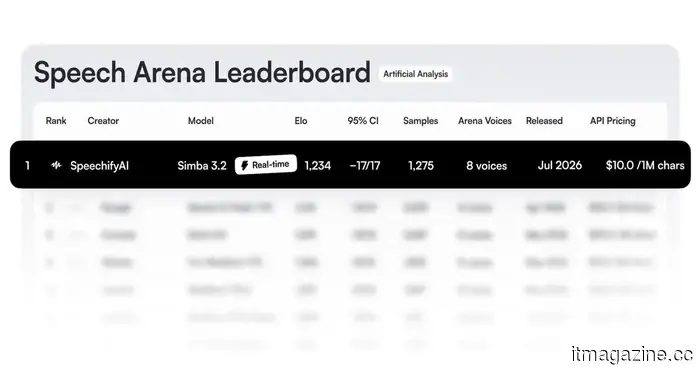 AI Voice Models Are Becoming Less Expensive
Text-to-speech has moved away from just being a feature in accessibility menus over the last few years and has now become a key element of contemporary software. The voice-first application sector is expanding daily, and these specialized digital tools play a vital role in the text-to-speech movement. This technology also drives audiobooks, meeting assistants, and customer service...
AI Voice Models Are Becoming Less Expensive
Text-to-speech has moved away from just being a feature in accessibility menus over the last few years and has now become a key element of contemporary software. The voice-first application sector is expanding daily, and these specialized digital tools play a vital role in the text-to-speech movement. This technology also drives audiobooks, meeting assistants, and customer service...
 AI voice models are becoming increasingly cost-effective.
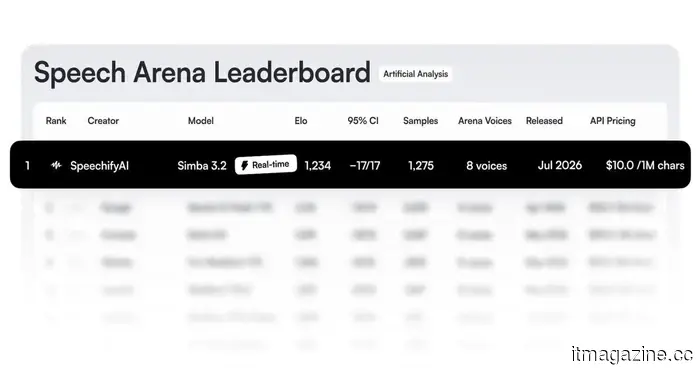
In recent years, text-to-speech has shifted from accessibility menus and now takes center stage as a key element of the contemporary software ecosystem. The category of voice-first applications continues to expand daily, and these specialized digital resources play a significant role in the text-to-speech movement. This technology also supports audiobooks, meeting assistants, and customer service...
AI voice models are becoming increasingly cost-effective.
In recent years, text-to-speech has shifted from accessibility menus and now takes center stage as a key element of the contemporary software ecosystem. The category of voice-first applications continues to expand daily, and these specialized digital resources play a significant role in the text-to-speech movement. This technology also supports audiobooks, meeting assistants, and customer service...
 While your AI business plan may appear persuasive, it's important to exercise caution in certain areas.
Starting a business is a significant endeavor. It requires extensive preparation and planning, which is frequently encapsulated in a business plan. Compiling business plans demands time and research, and it's easy to consider utilizing AI for assistance. While this can be beneficial to some extent, generative search tools can rapidly […]
While your AI business plan may appear persuasive, it's important to exercise caution in certain areas.
Starting a business is a significant endeavor. It requires extensive preparation and planning, which is frequently encapsulated in a business plan. Compiling business plans demands time and research, and it's easy to consider utilizing AI for assistance. While this can be beneficial to some extent, generative search tools can rapidly […]
 Sony is introducing two new budget-friendly headphones that come in a variety of color options.
Import filings indicate that Sony is getting ready to launch the WH-CH730N and WH-CH530, the next generation of its well-liked budget wireless headphones.
Sony is introducing two new budget-friendly headphones that come in a variety of color options.
Import filings indicate that Sony is getting ready to launch the WH-CH730N and WH-CH530, the next generation of its well-liked budget wireless headphones.
 Research indicates that depending on AI can transform uncertainty into mistaken confidence.
A recent study revealed that erroneous AI recommendations led individuals to be less accurate while simultaneously becoming significantly more confident, with participants rarely acknowledging any uncertainty.
Research indicates that depending on AI can transform uncertainty into mistaken confidence.
A recent study revealed that erroneous AI recommendations led individuals to be less accurate while simultaneously becoming significantly more confident, with participants rarely acknowledging any uncertainty.
What is the cost of Apple's Upgrade plan for leasing devices, and is it worth it?
From iPhones to MacBooks, here’s how Apple’s Upgrade Program performs and where it has limitations.