
Modus secures $10 million in seed funding led by Insight Partners as enterprise AI generates a need for a new contextual layer.
Modus has secured $10 million in a seed funding round led by Insight Partners to introduce the Context Warehouse, a core component for enterprise AI that focuses on how business information is utilized rather than merely stored. The company contends that simply linking AI with more data does not enhance its intelligence; instead, enterprises require a system that curates the pertinent context for each interaction, potentially reducing unnecessary data retrieval and token usage by up to 10 times.
The enterprise AI landscape is advancing into a new stage. As organizations transition from testing individual AI applications to implementing agents throughout their operations, the focus has shifted from simply granting models access to data to helping them discern which information is truly significant.
Modus aims to tackle this issue as it emerges from stealth with a $10 million seed investment led by Insight Partners, as first reported by Axios. The funding round also saw participation from Soma Capital, Bullet Ventures, and various tech founders and operators, including Eyal Kishon and Nadav Avrami from Wix and Dazl, co-founders of Cyera, and founders of Epsagon.
In conjunction with the funding, Modus is launching the Context Warehouse, an infrastructure layer designed to provide AI systems with a continually updated understanding of how an enterprise functions.
**The Context Problem for Enterprise AI**
The modern capabilities of AI systems already allow them to access information from various corporate storage locations, including data warehouses, business intelligence platforms, documentation, tickets, code repositories, and collaboration tools. However, merely connecting an AI system to additional data does not guarantee greater utility. Modus asserts that agents can repetitively query enterprise systems, obtain excessive information, and use more tokens than necessary due to their inability to grasp which context elements are relevant to specific tasks.
This disconnect can lead to increased costs, slower operations, and unreliable outcomes for organizations. Modus refers to this underlying issue as the "Context Gap," the disparity between what AI can access and what it truly comprehends regarding the business. The company believes enterprises need a system to bridge this gap without necessitating continuous upkeep from engineering teams for growing context layers and tailored AI infrastructure.
"Organizations are now focused not just on utilizing AI but on scaling it while maintaining accuracy, governance, and cost-effectiveness," stated Daniel Shimoni, CEO and co-founder of Modus. "Whether it's termed a company brain, context layer, or context engineering, they all seek to resolve the same challenge. We are convinced that every enterprise requires a continuously updated understanding of its operations before developing these solutions. The Context Warehouse fulfills that need."
**A Warehouse for Understanding Business Operations**
Modus is positioning its Context Warehouse as a fundamental element for enterprise AI, akin to the function of data warehouses in organizing enterprise information. The key difference is that the Context Warehouse aims to capture the actual usage of information instead of just storing it. It learns from metadata and usage patterns across various data sources, including data warehouses, BI tools, pipelines, code repositories, documentation, and collaboration systems.
Additionally, it can incorporate signals reflecting employee activities, such as frequently used queries, essential dashboards, pipelines, documentation, and decision-making threads. Modus states that these inputs allow the system to form an understanding based on real business practices, rather than depending solely on documentation or manually maintained semantic models.
The company claims it develops only the context essential for specific AI interactions, which can lead to a reduction of up to 10 times in unnecessary retrieval and token usage, enabling agents to concentrate on relevant information rather than sifting through excessive data.
**Designed to Fit Across the Enterprise Stack**
The Context Warehouse is designed to function independently from an organization's existing data warehouses, AI models, or application platforms. This architecture allows companies to adopt new AI models and tools without overhauling their context management systems.
Modus adds that the platform is compatible with existing agents used by teams, including through MCP. Rather than forcing enterprises to centralize sensitive business information, the platform learns from metadata and usage patterns while ensuring that sensitive customer data remains within the customer's environment.
Security and governance are integral to the company's strategy. Modus asserts that governance measures are applied before context reaches the model, guaranteeing that AI interactions access only the information to which the user or system is authorized.
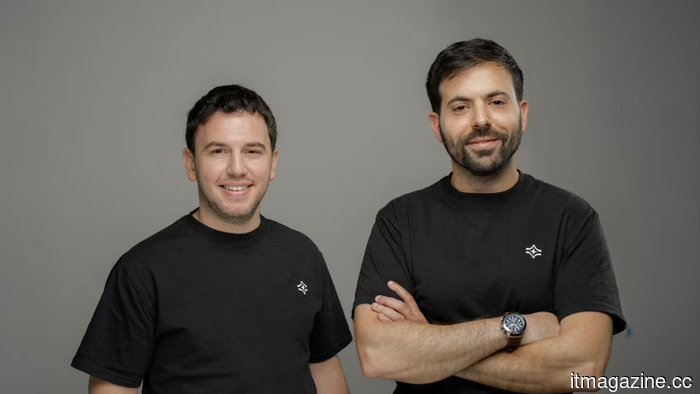
Founded by Daniel Shimoni, a former VP of Product at Lusha, and Tomer Mesika, former Head of Architecture at Cyera, Modus was born from their realization that existing enterprise systems were not originally designed for AI agents.
**The Challenge of Keeping Context Updated**
The emergence of internally developed context layers and company brains has introduced another challenge. While organizations can create systems that enhance AI's business understanding, maintaining the accuracy of these systems as businesses evolve can become a constant engineering burden.
"Creating a context layer is not the most challenging part," noted Tomer Mesika, CTO and co-founder of Modus. "The real challenge is keeping it updated. Any change in your business alters the context that AI relies on. The key decision
Other articles
 The US government has recently placed foreign-made robots and power inverters on its blacklist.
The FCC has included foreign-made humanoid robots, quadrupeds, and power inverters in its Covered List due to national security issues. Here’s what this means for changes.
The US government has recently placed foreign-made robots and power inverters on its blacklist.
The FCC has included foreign-made humanoid robots, quadrupeds, and power inverters in its Covered List due to national security issues. Here’s what this means for changes.
 Instapaper has just undergone its most significant update in years, and it’s filled with exciting features.
Instapaper has revamped its website, redesigned its iOS app with Liquid Glass, and has finally introduced AI Voices for Android. Here’s what’s new.
Instapaper has just undergone its most significant update in years, and it’s filled with exciting features.
Instapaper has revamped its website, redesigned its iOS app with Liquid Glass, and has finally introduced AI Voices for Android. Here’s what’s new.
 A report reveals that Hugging Face is the platform hosting the AI that undresses individuals.
A European regulatory body discovered that 7 out of 9 leading image generation tools on Hugging Face could create images of a woman without clothing based on a simple prompt, and merely 3% of these tools incorporated any form of moderation.
A report reveals that Hugging Face is the platform hosting the AI that undresses individuals.
A European regulatory body discovered that 7 out of 9 leading image generation tools on Hugging Face could create images of a woman without clothing based on a simple prompt, and merely 3% of these tools incorporated any form of moderation.
 The Galaxy Z Fold 8, Fold 8 Ultra, and Flip 8 allow you to get rid of your laptop's low-quality webcam.
Samsung's latest foldable devices come with USB webcam mode, a functionality that the company introduced with the Galaxy S26 series earlier this year.
The Galaxy Z Fold 8, Fold 8 Ultra, and Flip 8 allow you to get rid of your laptop's low-quality webcam.
Samsung's latest foldable devices come with USB webcam mode, a functionality that the company introduced with the Galaxy S26 series earlier this year.
 Russia has issued charges against Telegram's Durov for allegedly supporting terrorism and has placed him on a wanted list.
Russia's FSB has accused Telegram founder Pavel Durov of aiding terrorism and has begun the process to include him on an international wanted list. Telegram describes this as a pretext.
Russia has issued charges against Telegram's Durov for allegedly supporting terrorism and has placed him on a wanted list.
Russia's FSB has accused Telegram founder Pavel Durov of aiding terrorism and has begun the process to include him on an international wanted list. Telegram describes this as a pretext.
 The Galaxy Z Fold 8, Fold 8 Ultra, and Flip 8 allow you to eliminate the poor quality webcam of your laptop.
Samsung's latest foldable devices offer support for USB webcam mode, a feature that was introduced with the Galaxy S26 series earlier this year.
The Galaxy Z Fold 8, Fold 8 Ultra, and Flip 8 allow you to eliminate the poor quality webcam of your laptop.
Samsung's latest foldable devices offer support for USB webcam mode, a feature that was introduced with the Galaxy S26 series earlier this year.
Modus secures $10 million in seed funding led by Insight Partners as enterprise AI generates a need for a new contextual layer.
Modus has come out of stealth mode with a $10 million seed funding round led by Insight Partners to develop the Context Warehouse, an infrastructure component that provides AI agents with an ongoing comprehension of the actual operations within an enterprise.