
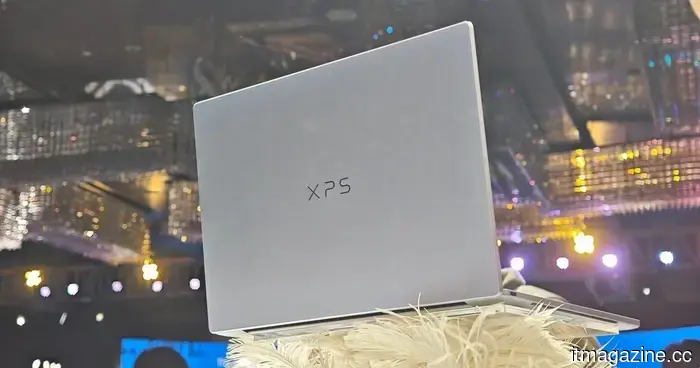
I tested Dell’s stylish XPS 13, and it feels like a refreshing change in the realm of budget Windows laptops.
When Apple introduced the MacBook Neo, it reshaped my expectations for budget-friendly laptops. Its starting price of $599 combined an aluminum chassis with the refinement expected from a MacBook, presenting a tough challenge for Windows manufacturers. Although the price has since increased, it remains a strong contender for its listed cost.
At Computex 2026, I came across a potential competitor to this MacBook. After exploring several affordable Windows laptops at the event, I noted how the category seemed poised to evolve beyond plastic constructions and subpar displays—and one model I was particularly eager to see was the Dell XPS 13.
Vikhyaat Vivek / Digital Trends
I recently spent additional time with the 8GB version, and my initial impressions have been confirmed. This is an impressively compact Windows laptop with a sturdy aluminum frame, a vibrant touchscreen, and a starting price of $699. Students eligible for the discount can purchase it for $599. The MacBook Neo still looms large in this price segment, but Dell has managed to check off an impressive number of features against it.
It retains the essence of a true XPS
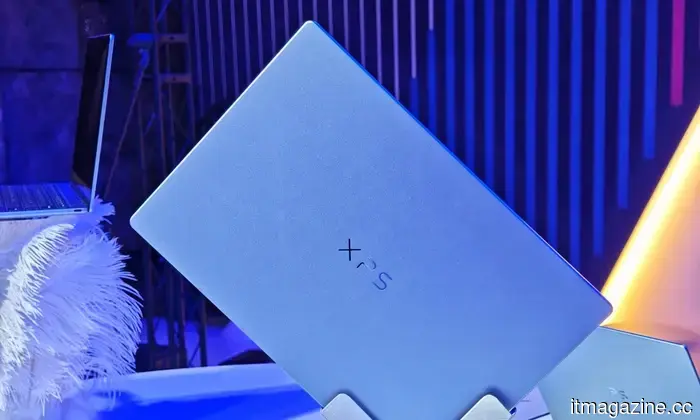
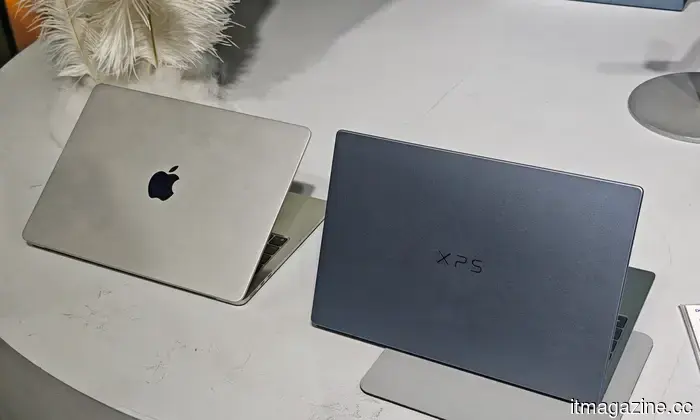
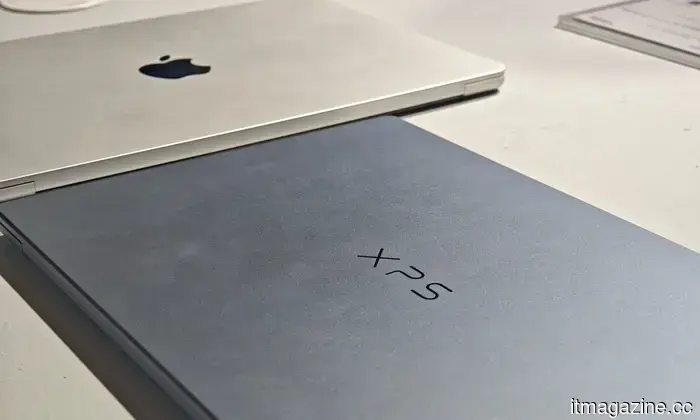
The XPS brand has typically been positioned at the higher end of Dell’s laptop offerings. The new XPS 13 brings that prestige to a more accessible price without compromising the sleek, minimalist aesthetic associated with the line. Its CNC-aluminum chassis felt solid during my hands-on experience, although it lacks some of the finesse seen in the Dell XPS 14 I previously reviewed, and I noticed slight flex in the keyboard deck when pressure was applied.
Vikhyaat Vivek / Digital Trends
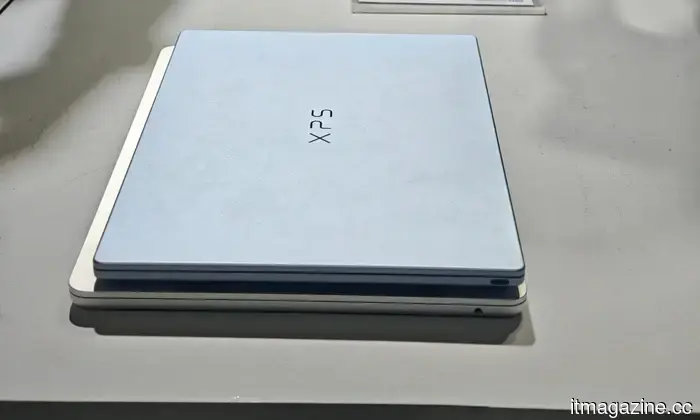
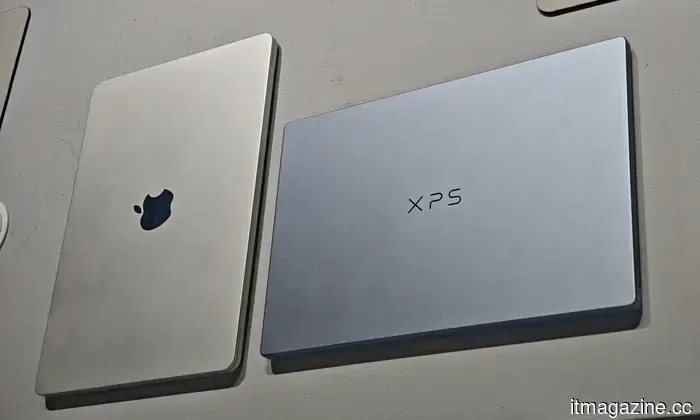
The hinge also felt sturdy, allowing for smooth opening and maintaining firmness. What truly impresses is its portability. Weighing just 1kg and measuring 12.7mm thick, the XPS 13 was noticeably lighter than the 13-inch M4 MacBook Air I had next to it. It also appeared slimmer and was considerably easier to handle with one hand. While both laptops focus on portability, Dell’s smaller overall size gives it a distinct edge for commuting or working from a compact bag.
Vikhyaat Vivek / Digital Trends
Comparing it to the MacBook Air was primarily to evaluate dimensions and build quality. The MacBook Neo remains a more pertinent competitor regarding price and performance. Dell’s XPS 13 presents itself as a solid alternative, providing buyers with a quality Windows device from a well-established PC manufacturer.
Vikhyaat Vivek / Digital Trends
The display is a key highlight
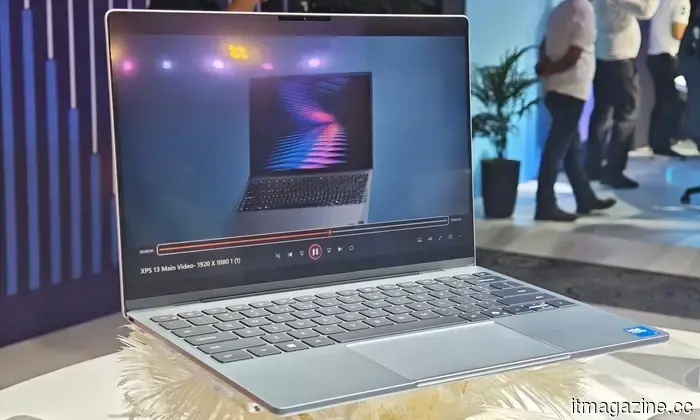
The XPS 13 features a 13.4-inch, 2.5K touchscreen with a variable refresh rate ranging from 30Hz to 120Hz. It appeared sharp during my hands-on session, with crisp text and sufficient space for everyday tasks despite the laptop's compact size. Scrolling was smooth, and touch functionality offers a useful feature that Apple still omits across its MacBook line.
Vikhyaat Vivek / Digital Trends
The anti-glare coating was another appreciated addition. Reflections can quickly detract from an otherwise good laptop screen, particularly under office lighting or near windows. Budget models often overlook this aspect, so seeing it included here enhances the display's practicality for various working environments.
Typical brightness reaches 500 nits, which is impressive for this price bracket. A controlled test would be necessary to effectively assess color accuracy, contrast, and outdoor visibility, but nothing about the panel seemed lacking during my time with it. The display could be the strongest selling point for the XPS 13 when compared to the MacBook Neo. Dell offers a slightly larger display, touch capabilities, and a refresh rate that can reach 120Hz, all while keeping the device extremely portable.
Dell made understandable trade-offs
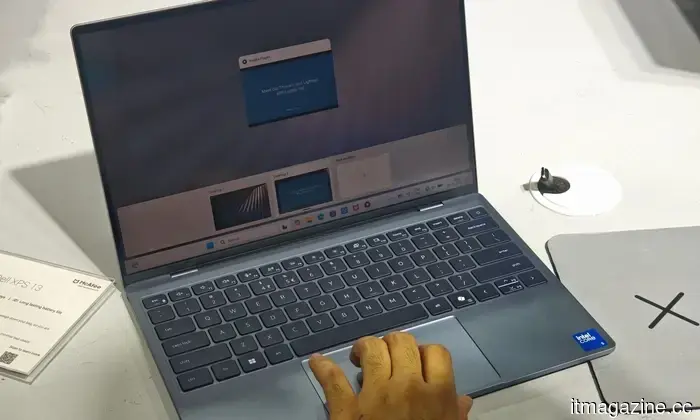
The lower price becomes evident in the keyboard and touchpad. The keyboard had a somewhat mushy feel during my brief typing session. While not unusable, it lacks the satisfying response of devices like the MacBook or even the Dell XPS 14. Longer typing sessions may reveal whether that softer action becomes tiresome.
Vikhyaat Vivek / Digital Trends
Dell has also reverted to a traditional touchpad instead of the seamless haptic design found on some recent XPS laptops. Tracking was precise, and the surface offered a comfortable amount of space relative to the laptop’s size. The physical click felt a bit stiff.
Vikhyaat Vivek / Digital Trends
Neither of these compromises greatly annoyed me at this price point. The base model is equipped with an Intel Core i5 320 processor, 8GB of memory, and a 512GB SSD. The storage capacity is sufficient for most users, but the 8GB of single-channel memory is the specification I would scrutinize most closely in a full review.
Other articles
 Research indicates that depending on AI can transform uncertainty into mistaken confidence.
A recent study revealed that erroneous AI recommendations led individuals to be less accurate while simultaneously becoming significantly more confident, with participants rarely acknowledging any uncertainty.
Research indicates that depending on AI can transform uncertainty into mistaken confidence.
A recent study revealed that erroneous AI recommendations led individuals to be less accurate while simultaneously becoming significantly more confident, with participants rarely acknowledging any uncertainty.
 Sony is introducing two new budget-friendly headphones that come in a variety of color options.
Import filings indicate that Sony is getting ready to launch the WH-CH730N and WH-CH530, the next generation of its well-liked budget wireless headphones.
Sony is introducing two new budget-friendly headphones that come in a variety of color options.
Import filings indicate that Sony is getting ready to launch the WH-CH730N and WH-CH530, the next generation of its well-liked budget wireless headphones.
 What is the cost of Apple’s Upgrade plan for leasing devices and is it beneficial?
From iPhones to MacBooks, here’s an overview of where Apple’s Upgrade Program is effective and where it has limitations.
What is the cost of Apple’s Upgrade plan for leasing devices and is it beneficial?
From iPhones to MacBooks, here’s an overview of where Apple’s Upgrade Program is effective and where it has limitations.
 The US government has recently placed foreign-made robots and power inverters on its blacklist.
The FCC has included foreign-made humanoid robots, quadrupeds, and power inverters in its Covered List due to national security issues. Here’s what this means for changes.
The US government has recently placed foreign-made robots and power inverters on its blacklist.
The FCC has included foreign-made humanoid robots, quadrupeds, and power inverters in its Covered List due to national security issues. Here’s what this means for changes.
 Modus secures $10 million in seed funding led by Insight Partners as enterprise AI generates a need for a new contextual layer.
Modus has come out of stealth mode with a $10 million seed funding round led by Insight Partners to develop the Context Warehouse, an infrastructure component that provides AI agents with an ongoing comprehension of the actual operations within an enterprise.
Modus secures $10 million in seed funding led by Insight Partners as enterprise AI generates a need for a new contextual layer.
Modus has come out of stealth mode with a $10 million seed funding round led by Insight Partners to develop the Context Warehouse, an infrastructure component that provides AI agents with an ongoing comprehension of the actual operations within an enterprise.
 Research indicates that depending on AI may transform uncertainty into misplaced assurance.
A recent study discovered that erroneous AI guidance led to decreased accuracy while significantly increasing participants' confidence, as they rarely acknowledged any uncertainty.
Research indicates that depending on AI may transform uncertainty into misplaced assurance.
A recent study discovered that erroneous AI guidance led to decreased accuracy while significantly increasing participants' confidence, as they rarely acknowledged any uncertainty.
I tested Dell’s stylish XPS 13, and it feels like a refreshing change in the realm of budget Windows laptops.
Dell’s latest XPS 13 features a sleek aluminum design, a vivid touchscreen, and an accessible price point, making it a viable alternative to the MacBook Neo for Windows users.