
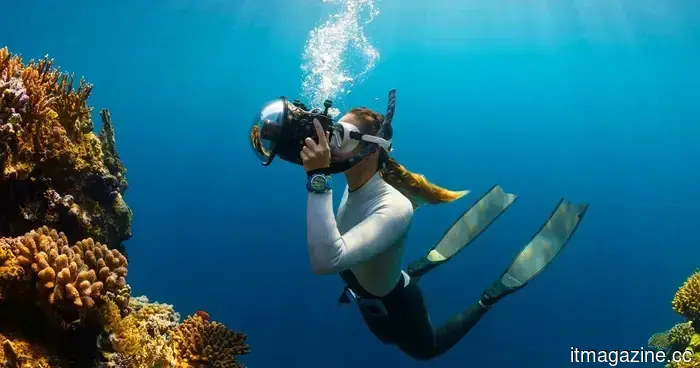
AI can transform a cluster of scuba bubbles into a preliminary alert system for divers.
An underwater robot has the capability to estimate breathing rates through video observation, but the research has not yet confirmed its ability to diagnose stress or distress.
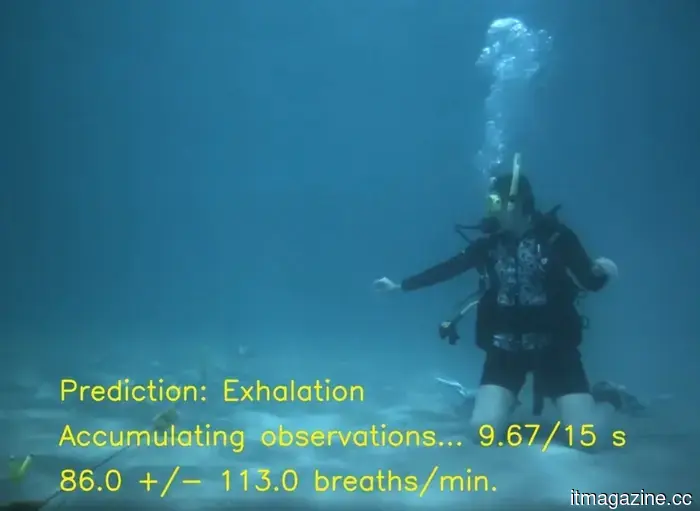
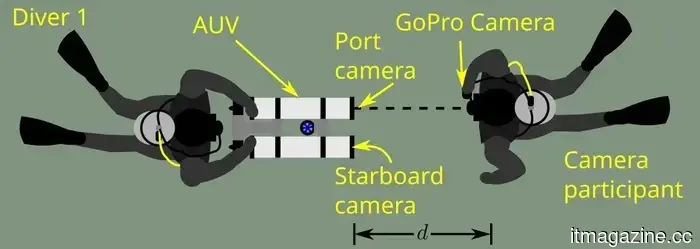
Researchers at the University of Minnesota have trained an AI-enabled underwater robot to determine a diver's breathing rate by tracking the bubbles released during exhalation.
The non-contact system, described in a peer-reviewed article published in The International Journal of Robotics Research, utilizes standard camera footage. Divers are not required to add another sensor to their already extensive equipment setup.
Variations in breathing could eventually signal robotic diving partners when something appears to be amiss. However, at this stage, the system simply quantifies respiration, leaving interpretation of the data to humans.
How the robot analyzes bubbles
The robot’s cameras detect the bubble bursts produced when a diver exhales. Its software recognizes each burst and translates the pattern into an estimated breaths-per-minute count.
Junaed Sattar
Training the system involved more than just placing a camera underwater and hoping for bubble cooperation. Researchers painstakingly labeled thousands of underwater images and aligned them with audio recordings of regulator exhalations, instructing the system on what constitutes a breath.
The research team gathered video and audio from lakes in Minnesota and locations in the Caribbean, testing their method under various temperature and visibility conditions.
What the robot indicates to divers
In field trials, the HREyes system categorized readings into three ranges. Fewer than 14 breaths per minute were classified as below normal, while more than 20 breaths were considered above normal.
Junaed Sattar
The robot can then communicate this status to the diver. It serves as a flag for unusual readings rather than a definitive emergency alert. It can detect when breathing deviates from the expected norms, but it does not explain the reasons behind it.
What still needs validation
The research compared the robot's estimates to human analyses but did not confirm whether those readings can accurately detect stress or indicate an impending emergency.
Moving forward, researchers aim to merge respiration data with an analysis of the diver's movements. This additional physical signal could provide the robot with further context. For now, it can only deliver a breathing rate without making a diagnosis.

Other articles
 Apple's latest Upgrade program allows you to lease an iPhone, Mac, Apple Watch, and iPad.
Apple has officially launched its new Apple Upgrade leasing program, allowing you to make monthly payments for an iPhone, iPad, Mac, or Apple Watch via Klarna, rather than purchasing them outright.
Apple's latest Upgrade program allows you to lease an iPhone, Mac, Apple Watch, and iPad.
Apple has officially launched its new Apple Upgrade leasing program, allowing you to make monthly payments for an iPhone, iPad, Mac, or Apple Watch via Klarna, rather than purchasing them outright.
 Amkor plans to invest as much as $3 billion, which is nearly 40% of its revenue.
Amkor announced a record revenue of $1.9 billion for Q2 and saw its net income triple. The capex forecast for 2026 is set at $3 billion, which is approximately 40% of its annualized sales.
X Money has the ability to terminate your account based on your posted content.
X Money's official support pages state that a suspension due to Child Safety or Violent and Hateful Entities results in the termination of access and the mailing of your remaining balance.
Amkor plans to invest as much as $3 billion, which is nearly 40% of its revenue.
Amkor announced a record revenue of $1.9 billion for Q2 and saw its net income triple. The capex forecast for 2026 is set at $3 billion, which is approximately 40% of its annualized sales.
X Money has the ability to terminate your account based on your posted content.
X Money's official support pages state that a suspension due to Child Safety or Violent and Hateful Entities results in the termination of access and the mailing of your remaining balance.
 Foldable phones have progressed significantly. PITAKA's newest collection of cases showcases this change.
Foldable smartphones are setting new standards for high-end mobile design. Selecting the appropriate case is equally important. PITAKA's latest range presents an innovative take on protection, featuring a series designed to enhance Samsung's latest foldable devices.
Foldable phones have progressed significantly. PITAKA's newest collection of cases showcases this change.
Foldable smartphones are setting new standards for high-end mobile design. Selecting the appropriate case is equally important. PITAKA's latest range presents an innovative take on protection, featuring a series designed to enhance Samsung's latest foldable devices.
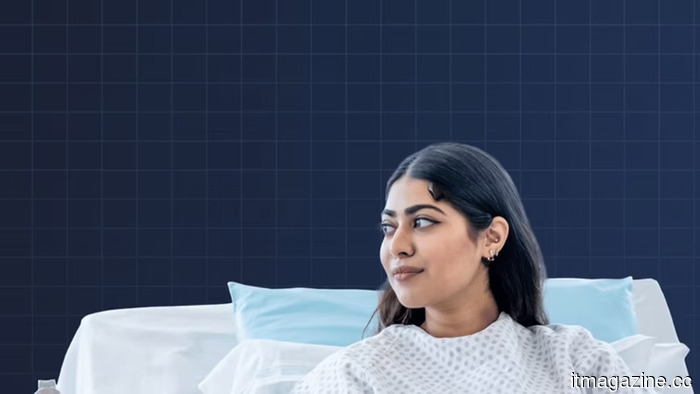 Only 27% of hospitals in the US are capable of performing an EEG. Epitel has secured $26 million in funding.
Epitel's $26 million Series B funding supports a wireless EEG that can be worn for as long as 30 days. The FDA classifications refer to it as a monitor rather than a diagnostic tool, and it operates using four sensors.
Only 27% of hospitals in the US are capable of performing an EEG. Epitel has secured $26 million in funding.
Epitel's $26 million Series B funding supports a wireless EEG that can be worn for as long as 30 days. The FDA classifications refer to it as a monitor rather than a diagnostic tool, and it operates using four sensors.
AI can transform a cluster of scuba bubbles into a preliminary alert system for divers.
Researchers at the University of Minnesota developed an underwater robot capable of estimating a diver's breathing through exhaled bubbles, leading to a contactless monitoring system that may one day alert to abnormal respiration without claiming to diagnose distress.