

Wise's shares plummet after the US regulatory authority denies its application for a trust bank charter.
Shares in Wise dropped approximately 10% on Friday following the US Office of the Comptroller of the Currency's decision to reject the money-transfer company's application for a national trust bank charter. This charter would have connected Wise directly to the Federal Reserve’s payment systems.
The London-based fintech, which went public on Nasdaq in May, had devoted over a year to pursuing this approval. The denial presently halts the most ambitious aspect of Wise’s strategy in the US. A national trust charter would have allowed it to settle dollar payments directly with the Fed, rather than having to go through partner banks—a significant advantage that competitors like Klarna have also sought in the US.
In June 2025, Wise applied to the OCC to establish Wise National Trust, a non-depository bank located in Austin, Texas. The company’s plan was to combine the charter with a master account at the Federal Reserve Bank of Dallas, enabling it to clear US dollars directly, including through real-time systems like FedNow.
This type of combination is uncommon. While an OCC charter only qualifies a firm to apply for a Fed account, the central bank subjects uninsured trust banks to its most rigorous scrutiny, a review process that can extend well beyond two years, with few applicants meeting the criteria.
Those in the most competitive tier have typically waited an average of around 823 days for a determination, and only one crypto-related firm has successfully passed this threshold. Together, the charter and master account would have expedited settlement procedures, allowing Wise to manage its own dollar assets instead of relying on third-party banks and eventually reducing the array of state money transmitter licenses that fintechs operating nationwide must uphold.
Although the regulator did not provide a detailed explanation, Law360 reported that the OCC referred to compliance deficiencies. In its statement, Wise acknowledged “historical issues” with its original application and noted a changing environment, highlighting that the Fed had been “generally pausing account access for uninsured trust banks.” The strategy it pursued, according to the company, had become “non-viable.” Additionally, Wise had been under a multi-state consent order since July 2025 due to enforcement actions related to compliance issues that impacted its application.
The firm indicated it is still collaborating with the UK’s Financial Conduct Authority and the National Bank of Belgium to enhance its risk and compliance systems. The setback is less significant than the share decline suggests, as Wise emphasized that its everyday operations remain unaffected, functioning in the US under money transmitter licenses in 48 states and four territories, part of a broader portfolio of over 80 licenses globally.
Instead of abandoning its efforts, the company plans to reapply for a national trust charter under the new framework established by the GENIUS Act, which pertains to stablecoins and other digital assets, as reported by Reuters.
The US continues to be the focal point of Wise’s growth narrative. Chair David Wells has described it as “the biggest market opportunity for our products in the world today,” with the country accounting for nearly half of the group’s cross-border volume, which totaled $243 billion in its 2026 financial year, an increase of 31% from the previous year.
Gaining direct access to the Fed would have aligned Wise with the connections it holds in the UK, EU, Singapore, and Australia, eliminating the need for intermediary banks and associated costs. However, this is the proposal that the OCC has currently put on hold.
Wise is not the only European fintech considering a US charter as a pathway to growth; such licenses have become sought-after objectives on both sides of the Atlantic. Revolut spent years obtaining its own UK banking license, underscoring that even domestically, these approvals often take significant time.
For a company focused on eliminating intermediaries from cross-border transfers, being instructed to continue routing its dollars through other banks presents a challenging position. Not all fintechs have found the US market welcoming; Monzo exited the market last year. In contrast, Wise is choosing to remain and will reapply.
Other articles
 EZVIZ Establishes a New Standard for Battery-Powered Home Security Systems
Today's homeowners demand more than just motion alerts and high-definition video. With features like AI-driven detection, solar charging, and sophisticated multi-lens surveillance, explore how EZVIZ is establishing a new standard for battery-operated home security with solutions tailored for every type of property.
EZVIZ Establishes a New Standard for Battery-Powered Home Security Systems
Today's homeowners demand more than just motion alerts and high-definition video. With features like AI-driven detection, solar charging, and sophisticated multi-lens surveillance, explore how EZVIZ is establishing a new standard for battery-operated home security with solutions tailored for every type of property.
 Vietnam intends for individuals under 16 to maintain their accounts but refrain from posting on them.
A proposed decree from Vietnam's culture ministry would allow individuals under 16 to have accounts but would prohibit them from posting, commenting, or reacting.
Vietnam intends for individuals under 16 to maintain their accounts but refrain from posting on them.
A proposed decree from Vietnam's culture ministry would allow individuals under 16 to have accounts but would prohibit them from posting, commenting, or reacting.
 LG has consented to eliminate the McAfee pop-up notifications on Windows computers following intervention from Microsoft.
LG has consented to turn off the McAfee pop-up advertisement in its Monitor App Installer following weeks of user grievances and a direct prompt from Microsoft executive Pavan Davuluri.
LG has consented to eliminate the McAfee pop-up notifications on Windows computers following intervention from Microsoft.
LG has consented to turn off the McAfee pop-up advertisement in its Monitor App Installer following weeks of user grievances and a direct prompt from Microsoft executive Pavan Davuluri.
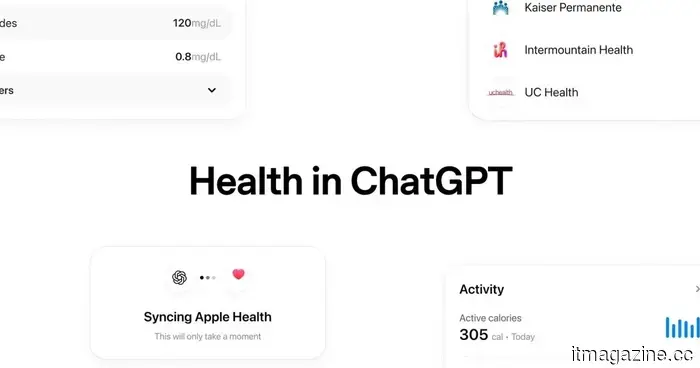 ChatGPT can now access your Apple Health data to provide more tailored health responses.
OpenAI has introduced Health in ChatGPT, enabling users in the U.S. to link Apple Health and compatible medical records for more tailored health discussions.
ChatGPT can now access your Apple Health data to provide more tailored health responses.
OpenAI has introduced Health in ChatGPT, enabling users in the U.S. to link Apple Health and compatible medical records for more tailored health discussions.
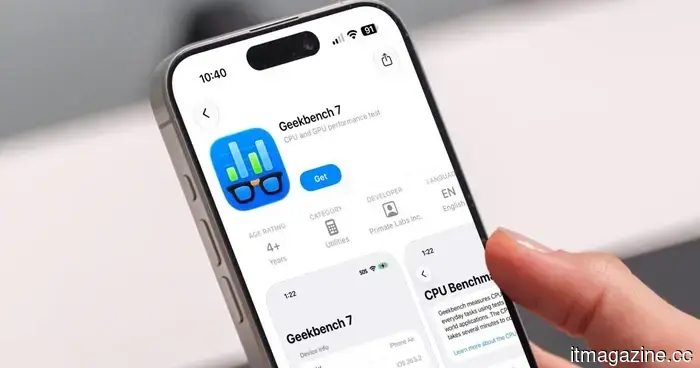 Geekbench now allows you to see how a phone will manage your mundane daily tasks.
Geekbench 7 introduces new CPU and GPU tests, an enhanced multi-core benchmark, CUDA support, and larger data sets, all available for personal use at no cost starting today.
Geekbench now allows you to see how a phone will manage your mundane daily tasks.
Geekbench 7 introduces new CPU and GPU tests, an enhanced multi-core benchmark, CUDA support, and larger data sets, all available for personal use at no cost starting today.
 TechEx Europe 2026 is set to return to Amsterdam, uniting the leaders of enterprise technology across Europe.
TechEx Europe is scheduled for October 19–20, 2026, at the RAI in Amsterdam, uniting over 8,000 professionals in technology, business leaders, and innovators.
TechEx Europe 2026 is set to return to Amsterdam, uniting the leaders of enterprise technology across Europe.
TechEx Europe is scheduled for October 19–20, 2026, at the RAI in Amsterdam, uniting over 8,000 professionals in technology, business leaders, and innovators.
Wise's shares plummet after the US regulatory authority denies its application for a trust bank charter.
The OCC rejected Wise's application for a national trust bank, preventing the fintech from gaining direct access to the Fed. As a result, shares dropped by approximately 10%. Wise intends to submit a new application.