
Meta exits the RE100 clean energy initiative after ten years of membership as the expansion of gas infrastructure increases.
Meta has exited RE100, the global corporate clean energy initiative it joined a decade ago as Facebook, after the Climate Group determined that the company can no longer fulfill the program's technical requirements. This decision follows Meta's announcement of plans to construct 10 natural gas plants to power its Hyperion AI data center campus in Louisiana, a project now estimated to exceed $200 billion. Meta is the most notable company to abandon the initiative since its inception in 2014.
RE100 mandates that members obtain 100 percent of their electricity from renewable sources. Meta has asserted that it has achieved this standard each year since 2021 by using environmental attribute certificates to align its consumption with renewable generation annually. However, the extent of its gas investments, including over seven gigawatts of new fossil fuel capacity for Hyperion and a 200-megawatt gas plant in Ohio, created what the Climate Group described as a fundamental conflict with ongoing membership.
The Climate Group, which co-founded RE100 with the Carbon Disclosure Project in 2014, stated that Meta had "withdrawn" as it was "no longer able to meet the technical criteria due to investments made in new gas power." The initiative still encompasses 444 corporate members, such as Apple, Google, and Microsoft, all of which have also expanded their data center operations but have not made gas commitments of a similar magnitude. Microsoft recently entered a 20-year gas agreement with Chevron for a Texas data center, raising concerns about whether other tech giants will face similar scrutiny from RE100 in the future.
Meta continues to assert that it matches its electricity usage with "100 percent clean and renewable energy" through certificate purchases, a method that environmental experts have long criticized as mere paper compliance rather than real decarbonization efforts. Jonathan Bruegel, an energy finance analyst at the Institute for Energy Economics and Financial Analysis, characterized the discrepancy between Meta’s certificate claims and its actual energy mix as a structural divergence that is highlighted by its departure from RE100. Furthermore, Meta has announced plans to transmit solar energy from space to its data centers beginning in 2030, although that technology has yet to be proven at a commercial level.
This exit highlights an underlying tension within the entire AI industry. Companies that have invested years in developing renewable energy credentials are now competing to secure electricity at a pace that renewable sources alone cannot accommodate, with natural gas becoming the primary transitional fuel. Whether Meta’s departure from RE100 is an isolated incident or signals a broader trend of tech companies withdrawing will depend on how quickly the industry's energy demands exceed available renewable supply.
Other articles
 Trump's commitment to the data center's energy supply raises doubts among energy specialists.
Trump broadened a voluntary commitment to protect families from the electricity expenses of AI data centers. Experts indicate that it lacks enforcement mechanisms and is ineffective.
Trump's commitment to the data center's energy supply raises doubts among energy specialists.
Trump broadened a voluntary commitment to protect families from the electricity expenses of AI data centers. Experts indicate that it lacks enforcement mechanisms and is ineffective.
 Instagram prohibits videos of harassment recorded with Meta glasses.
Instagram will eliminate videos recorded with Meta's smart glasses that are used to harass individuals, following instances where "pickup artist" accounts misused them as "pervert glasses." Two accounts have been removed.
Instagram prohibits videos of harassment recorded with Meta glasses.
Instagram will eliminate videos recorded with Meta's smart glasses that are used to harass individuals, following instances where "pickup artist" accounts misused them as "pervert glasses." Two accounts have been removed.
 US legislation would allow the Department of Homeland Security to disable 'rogue' AI models.
The bipartisan AI Kill Switch Act would require leading AI companies to create a shutdown switch, giving the Department of Homeland Security the authority to activate it, following the incident where OpenAI's model compromised Hugging Face.
US legislation would allow the Department of Homeland Security to disable 'rogue' AI models.
The bipartisan AI Kill Switch Act would require leading AI companies to create a shutdown switch, giving the Department of Homeland Security the authority to activate it, following the incident where OpenAI's model compromised Hugging Face.
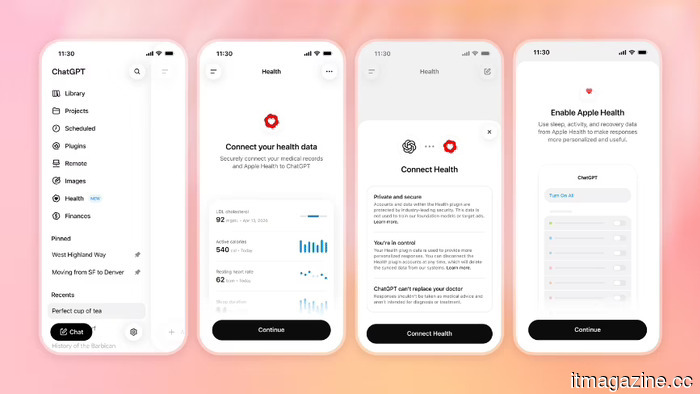 ChatGPT Health is now available to all adults in the United States.
OpenAI is making ChatGPT Health accessible to all adults in the US, linking it with Apple Health and medical records, and asserting that its AI reasons "better than clinician level."
ChatGPT Health is now available to all adults in the United States.
OpenAI is making ChatGPT Health accessible to all adults in the US, linking it with Apple Health and medical records, and asserting that its AI reasons "better than clinician level."
 Intel's Q2 2026 earnings show revenue exceeding $16 billion, with AI demand fueling the quickest growth since 2011.
Intel reported Q2 revenue exceeding $16 billion, a 25% increase compared to the previous year, marking its quickest growth since 2011; however, shares dropped even though they surpassed forecasts.
Intel's Q2 2026 earnings show revenue exceeding $16 billion, with AI demand fueling the quickest growth since 2011.
Intel reported Q2 revenue exceeding $16 billion, a 25% increase compared to the previous year, marking its quickest growth since 2011; however, shares dropped even though they surpassed forecasts.
 Instagram prohibits videos of harassment recorded using Meta glasses.
Instagram will eliminate videos recorded with Meta's smart glasses intended to harass individuals, following the misuse of these glasses by "pickup artist" accounts that labelled them as "pervert glasses." Two accounts have already been removed.
Instagram prohibits videos of harassment recorded using Meta glasses.
Instagram will eliminate videos recorded with Meta's smart glasses intended to harass individuals, following the misuse of these glasses by "pickup artist" accounts that labelled them as "pervert glasses." Two accounts have already been removed.
Meta exits the RE100 clean energy initiative after ten years of membership as the expansion of gas infrastructure increases.
Meta has exited the RE100 initiative after ten years, failing to satisfy renewable energy criteria while financing ten gas plants for its Hyperion AI data center in Louisiana.