

AMD collaborates with a foundation supported by Eric Trump to develop humanoid robots.
Throughout the year, AMD has focused on demonstrating its ability to compete with Nvidia rather than simply lag behind. Its most recent initiative shifts the competition into a new arena: humanoid robotics.
The chip manufacturer has partnered with Foundation, a startup based in San Francisco backed by Eric Trump, to provide computing power for their machines. This strategic choice highlights AMD's aim to break free from being seen as the secondary player in AI silicon.
Foundation is not a typical robotics company; its Phantom machines have already been trialed in Ukraine, and it has secured Pentagon contracts to create humanoid robots for the US military. Foundation views heavy industry and military applications as part of the same market.
The partnership, announced on July 23, specifies that Foundation’s robots will utilize AMD’s Ryzen AI Embedded X100 Series processors, which were launched in January. The financial details of the agreement remain undisclosed.
Eric Trump has been an investor in Foundation since early 2026 and serves as its chief strategy adviser. He, along with his brother Donald Trump Jr., has supported several defense and hardware companies, including the Israeli drone manufacturer XTEND, Unusual Machines, and Powerus. This connection has raised concerns about potential conflicts of interest, given that such companies frequently vie for government contracts while a family member holds office.
Despite these concerns, Foundation’s defense business has rapidly progressed, moving from battlefield trials to procurement discussions within months. The company claims its first-generation Phantom MK-1 robots contributed to the production of over 24,000 cars in 2025 and are now operational five days a week in customer deployments, a level of reliability that few humanoid manufacturers can claim.
Foundation reports its contracted annual recurring revenue—which includes signed, but not yet earned, contracts—at $100 million. Leasing an industrial unit costs approximately $100,000 annually, while a defense model designed for tasks like materials handling and reconnaissance is priced at $300,000 each.
The next iteration, the Phantom MK-2, has been designed from the outset to incorporate AMD technology, making it suitable for both factory and combat environments. Foundation states that the machine can withstand 100G of vibration, has an IP67 rating for dust and water, and offers 360-degree vision, featuring specifications that cater to both industrial and military uses.
Foundation also asserts that it is the sole manufacturer of dual-use humanoids intended for both heavy industry and defense, a claim that is difficult to verify against competitors pursuing similar goals.
A significant part of the robot’s appeal lies in its hands. AMD’s programmable FPGA chips, obtained through their acquisition of Xilinx, enable Foundation to manage 23 degrees of freedom while integrating high-frequency tactile feedback, according to Andrea Esposito of the company, all within a "single deterministic control loop."
The broader agreement incorporates AMD’s CPUs, graphics, and adaptive computing to facilitate perception, reasoning, and motor control on a unified platform. For AMD, this partnership represents an opportunity to establish a presence in a sector that Nvidia has effectively dominated with its Jetson edge modules and Isaac simulation software, already favored by numerous robotics startups.
“Advanced humanoid robots require tightly coordinated compute across perception, reasoning, and real-time control,” explained Salil Raje, an AMD senior vice-president. AMD claims its chips provide 2.5 times faster inference and 3 times faster training than Nvidia’s, although it has yet to share benchmarks, methodologies, or details about the competing components that substantiate those claims.
The strategy hinges on scaling up. Foundation aims to open a factory in October capable of producing 5,000 robots annually, with plans for a second facility next year designed to accommodate 50,000.
Neither AMD nor Foundation revealed the number of chips involved in the deal or its total value. Investment in this field is on the rise, exemplified by a $1.4 billion funding round for Germany's NEURA Robotics and a growing number of Chinese manufacturers now approaching a commercialization phase.
It remains to be seen if AMD has chosen the right partner in robotics or simply the most connected one.
Other articles
 Here are the mice I would suggest for back-to-school.
Searching for a new mouse this Back-to-School period? Here are the top choices for gaming, productivity, creative tasks, and daily usage.
Here are the mice I would suggest for back-to-school.
Searching for a new mouse this Back-to-School period? Here are the top choices for gaming, productivity, creative tasks, and daily usage.
-Samsungs-flip-phone-is-cheaper-but-is-it-better?.jpg) Galaxy Z Flip 8 vs. Motorola Razr Ultra (2026): Samsung's foldable phone is more affordable, but does it outperform the competition?
One emphasizes AI capabilities, software assistance, and value, whereas the other prioritizes high-end hardware.
Galaxy Z Flip 8 vs. Motorola Razr Ultra (2026): Samsung's foldable phone is more affordable, but does it outperform the competition?
One emphasizes AI capabilities, software assistance, and value, whereas the other prioritizes high-end hardware.
 Framework is reducing the specifications of some Laptop 13 Pro orders due to a significant increase in RAM costs.
A sudden increase in LPCAMM2 prices has compelled Framework to adjust certain preorders for the Laptop 13 Pro and Mainboard, changing some 64GB configurations to 32GB and reducing some DIY Edition and Mainboard orders from 32GB to 16GB.
Framework is reducing the specifications of some Laptop 13 Pro orders due to a significant increase in RAM costs.
A sudden increase in LPCAMM2 prices has compelled Framework to adjust certain preorders for the Laptop 13 Pro and Mainboard, changing some 64GB configurations to 32GB and reducing some DIY Edition and Mainboard orders from 32GB to 16GB.
 ChatGPT can now access your Apple Health data to provide more tailored health responses.
OpenAI has introduced Health in ChatGPT, enabling U.S. users to link Apple Health and compatible medical records for more tailored health discussions.
ChatGPT can now access your Apple Health data to provide more tailored health responses.
OpenAI has introduced Health in ChatGPT, enabling U.S. users to link Apple Health and compatible medical records for more tailored health discussions.
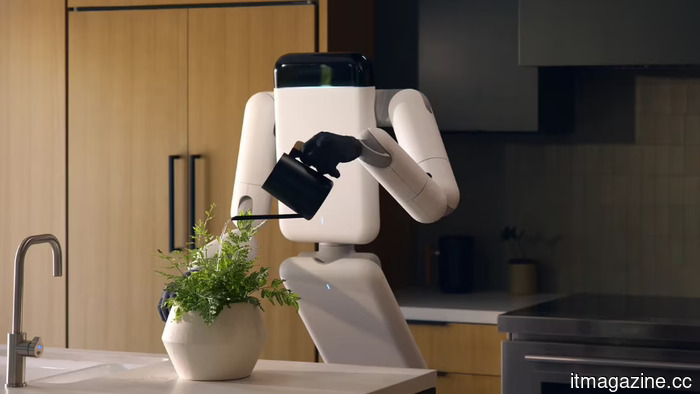 Genesis AI is in discussions to secure approximately $500 million for its intelligent robotic technology.
Genesis AI, a physical-AI startup, is said to be negotiating to secure approximately $500 million at a valuation of $3 billion, following its $105 million seed funding from a year ago.
Genesis AI is in discussions to secure approximately $500 million for its intelligent robotic technology.
Genesis AI, a physical-AI startup, is said to be negotiating to secure approximately $500 million at a valuation of $3 billion, following its $105 million seed funding from a year ago.
 The most recent leak regarding the Pixel 11 series provides the clearest glimpse of Google's upcoming flagship device.
A new leak has disclosed all the color choices for the Pixel 11 series, providing an unmistakable preview ahead of Google's launch in August.
The most recent leak regarding the Pixel 11 series provides the clearest glimpse of Google's upcoming flagship device.
A new leak has disclosed all the color choices for the Pixel 11 series, providing an unmistakable preview ahead of Google's launch in August.
AMD collaborates with a foundation supported by Eric Trump to develop humanoid robots.
AMD will provide the computing power for Foundation's Phantom humanoid robots, positioning the chip manufacturer directly in Nvidia's robotics domain.