
Genesis AI is in discussions to secure approximately $500 million for its intelligent robotic technology.
Genesis AI, the startup developing foundation models intended to operate in various robots, is reportedly negotiating to secure around $500 million, as per Bloomberg. This funding round could potentially value the company at approximately $3 billion, marking a rapid rise for a business that emerged from stealth just last summer.
Bloomberg first reported on July 23 that talks were underway, citing sources familiar with the situation. These figures, however, come with the typical caveats associated with private fundraising, where amounts may change, decrease, or even fall through before any agreements are finalized.
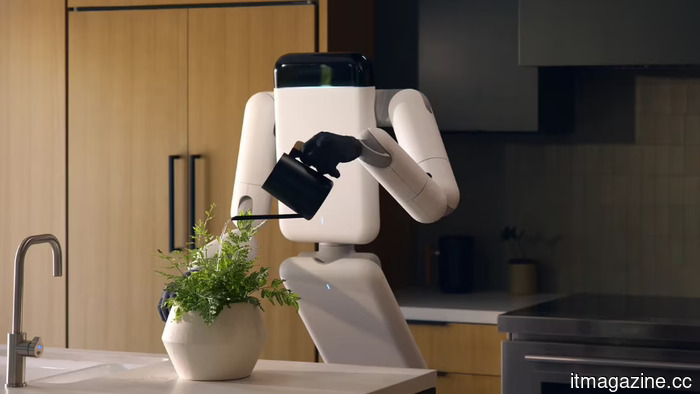
The startup revealed a wheeled robot named Eno last month as its response to the hype surrounding humanoid robots, but it had not confirmed the funding round by the time of this writing. Subsequent reporting added more detail about the potential deal. Premji Invest may lead the round, with HSG, previously Sequoia China, and Northzone considering further investment.
The $3 billion figure is characterized as a pre-money valuation. None of the involved firms have commented on the reports, and the participants may still be subject to change.
Genesis focuses on software rather than hardware. Its universal robotics model, GENE-26.5, aims to function as a collective intelligence for various machines, partly trained using synthetic data from an in-house physics engine that the company claims can run scenarios at speeds hundreds of thousands of times faster than real-time.
This pitch comes at a time when investors are significantly investing in "physical AI," a trend that has also supported NEURA Robotics in securing a round of up to $1.4 billion. Genesis is positioning itself against competitors like Skild AI and Physical Intelligence, in part due to its commitment to openness, stating it plans to open-source portions of its simulation stack.
The company adopts a comprehensive approach, designing both the model and the dexterous, human-like hands it operates, with the goal of bridging what it describes as the "embodiment gap" between data derived from human movement and the machines designed to replicate it. Central to this strategy is a sensor glove priced at around $300 that workers wear to gather training data.
If successful, the fundraising effort would place Genesis among other significant robotics funding activities. For instance, London's Humanoid raised $152 million in Series A funding, and Standard Bots achieved a $1 billion valuation on a $200 million round.
The overarching expectation is that general-purpose robots represent the next significant advancement following chatbots, with investors calibrating their bets accordingly.
Genesis transitioned out of stealth mode in July 2025, securing a $105 million seed round co-led by Eclipse Ventures and Khosla Ventures, one of the larger seed investments of that year. Its backers included former Google CEO Eric Schmidt, French billionaire Xavier Niel, Bpifrance, and HSG, which is now reportedly involved in the new round.
A follow-on investment of $500 million within a year would signal a sharp increase in valuation. The specific structure of the new round, including the breakdown of primary capital and the anticipated closure date, has not been revealed.
The company was co-founded by Zhou Xian, a PhD in robotics from Carnegie Mellon who acts as CEO, and Théophile Gervet, a former research scientist at Mistral AI. It operates offices in Paris and the San Francisco Bay Area, with a more recent expansion into London, and has approximately 60 employees evenly distributed between Europe and the US.
It's important to note that this startup should not be confused with the open-source Genesis physics-simulation initiative or the various other entities using the same name, a common issue in a crowded robotics space. Genesis aims to target the global market for physical labor, which it estimates to be around $40 trillion, suggesting that a $3 billion valuation appears modest and a $500 million funding round seems like a mere down payment.
However, whether these discussions will result in a finalized term sheet remains uncertain. For now, the figure is a report rather than a confirmed deal.
Other articles
 Samsung has officially transitioned to a silicon-carbon battery for the Galaxy Z Fold 8. What makes this notable?
Samsung's initial silicon-carbon Galaxy smartphones demonstrate how denser batteries can enhance capacity, lower weight, and make space-constrained foldable designs much more feasible.
Samsung has officially transitioned to a silicon-carbon battery for the Galaxy Z Fold 8. What makes this notable?
Samsung's initial silicon-carbon Galaxy smartphones demonstrate how denser batteries can enhance capacity, lower weight, and make space-constrained foldable designs much more feasible.
 Here are the mice I would suggest for back-to-school.
Searching for a new mouse this Back-to-School period? Here are the top choices for gaming, productivity, creative tasks, and daily usage.
Here are the mice I would suggest for back-to-school.
Searching for a new mouse this Back-to-School period? Here are the top choices for gaming, productivity, creative tasks, and daily usage.
 The most recent leak regarding the Pixel 11 series provides the clearest glimpse so far at Google’s upcoming flagship.
A new leak has disclosed all the color choices for the Pixel 11 series, providing the most detailed glimpse ahead of Google's launch in August.
The most recent leak regarding the Pixel 11 series provides the clearest glimpse so far at Google’s upcoming flagship.
A new leak has disclosed all the color choices for the Pixel 11 series, providing the most detailed glimpse ahead of Google's launch in August.
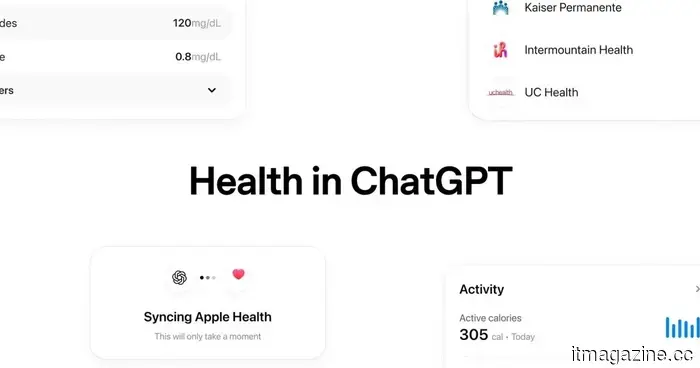 ChatGPT can now access your Apple Health data to provide more tailored health responses.
OpenAI has introduced Health in ChatGPT, enabling users in the U.S. to link Apple Health and compatible medical records for more tailored health discussions.
ChatGPT can now access your Apple Health data to provide more tailored health responses.
OpenAI has introduced Health in ChatGPT, enabling users in the U.S. to link Apple Health and compatible medical records for more tailored health discussions.
 Nvidia has pledged $1.5 billion to Amkor to enhance chip packaging in the United States.
Nvidia will provide Amkor with a $1.5 billion prepayment to enhance advanced chip packaging and testing in Arizona, addressing a crucial bottleneck in the AI supply chain within the country.
Nvidia has pledged $1.5 billion to Amkor to enhance chip packaging in the United States.
Nvidia will provide Amkor with a $1.5 billion prepayment to enhance advanced chip packaging and testing in Arizona, addressing a crucial bottleneck in the AI supply chain within the country.
-Samsungs-flip-phone-is-cheaper-but-is-it-better?.jpg) Galaxy Z Flip 8 vs. Motorola Razr Ultra (2026): Samsung's foldable phone is more affordable, but does it outperform the competition?
One emphasizes AI capabilities, software assistance, and value, whereas the other prioritizes high-end hardware.
Galaxy Z Flip 8 vs. Motorola Razr Ultra (2026): Samsung's foldable phone is more affordable, but does it outperform the competition?
One emphasizes AI capabilities, software assistance, and value, whereas the other prioritizes high-end hardware.
Genesis AI is in discussions to secure approximately $500 million for its intelligent robotic technology.
Genesis AI, a physical-AI startup, is said to be negotiating to secure approximately $500 million at a valuation of $3 billion, following its $105 million seed funding from a year ago.