

AMD introduces the Helios rack and MI455X accelerator in an effort to bridge the gap with Nvidia.
TL;DR: At the Advancing AI event, AMD introduced MI455X chips, Helios racks, and Venice Epyc CPUs, with pledges from OpenAI and Cerebras to implement the hardware extensively.
On Thursday during its Advancing AI event in San Francisco, AMD presented a range of new data center products, asserting they will surpass Nvidia's competing hardware in AI training and inference tasks. The announcements included the MI455X AI accelerator, the Helios server rack capable of housing 72 of these chips in one system, and the Venice generation of Epyc server processors manufactured using TSMC's two-nanometre process. AMD estimates that the total market it is targeting could reach $2 trillion by 2030, with AI accelerators alone projected to account for over a trillion dollars of that total.
Despite these announcements, investors reacted negatively, with AMD shares dropping approximately four percent during the presentation, even after the stock more than doubled in value this year. This skepticism highlights the disparity between AMD's aspirations and Nvidia's market leadership: Nvidia’s Vera Rubin platform is already fully operational and being supplied to clients like OpenAI, CoreWeave, and Microsoft. Although AMD CEO Lisa Su has delivered impressive growth, Wall Street's expectations were reflected in a stock that had increased about 145 percent year-to-date before the event.
Su invited executives from key AI firms to endorse AMD's hardware. OpenAI’s Sachin Katti expressed his expectations for deploying Helios "at massive scale" as the company seeks to enhance its infrastructure capacity. This event followed AMD's announcement of a potential $5 billion investment in Anthropic, alongside plans to deploy two gigawatts of MI450 series GPUs within Helios racks to support the Claude model, with the first gigawatt expected to be delivered in the first half of 2027.
Additionally, AMD revealed a partnership with Cerebras, known for its wafer-scale chips that excel in ultra-fast AI inference, to integrate Helios racks with Cerebras servers for clients requiring minimal latency. AMD's hardware will manage query interpretation while Cerebras chips will deliver quick responses. Cerebras CEO Andrew Feldman noted that this combined solution will start shipping from Cerebras-operated data centers in the fourth quarter, aiming to outpace a similar offer from Nvidia resulting from its recent Groq acquisition.
On the other hand, the Venice Epyc processor is AMD's response to Nvidia's entry into server CPUs with the Vera chip, which Nvidia claims provides a performance advantage. AMD asserted that Venice will maintain a significant lead over Vera, initiating a direct competition that independent benchmarks have yet to resolve. This rivalry encompasses accelerators, server processors, and comprehensive rack-scale systems, with both companies promoting end-to-end data center solutions rather than just individual components.
Other articles
 Reddit might restrict Google’s access to its content due to traffic generated by AI.
Reddit's shares declined by 9% following a report that suggests it might restrict Google's access to its content for AI purposes, as AI Overviews diminish the referral traffic that publishers depend on.
Reddit might restrict Google’s access to its content due to traffic generated by AI.
Reddit's shares declined by 9% following a report that suggests it might restrict Google's access to its content for AI purposes, as AI Overviews diminish the referral traffic that publishers depend on.
 Four ex-DOGE employees secured $160 million at a valuation of $1.4 billion for an AI-focused military cybersecurity startup.
Cathedral, established by four former DOGE employees, secured $160 million in funding from a16z and Sequoia at a valuation of $1.4 billion. The company develops AI-based offensive and defensive cybersecurity tools for the U.S. military.
Four ex-DOGE employees secured $160 million at a valuation of $1.4 billion for an AI-focused military cybersecurity startup.
Cathedral, established by four former DOGE employees, secured $160 million in funding from a16z and Sequoia at a valuation of $1.4 billion. The company develops AI-based offensive and defensive cybersecurity tools for the U.S. military.
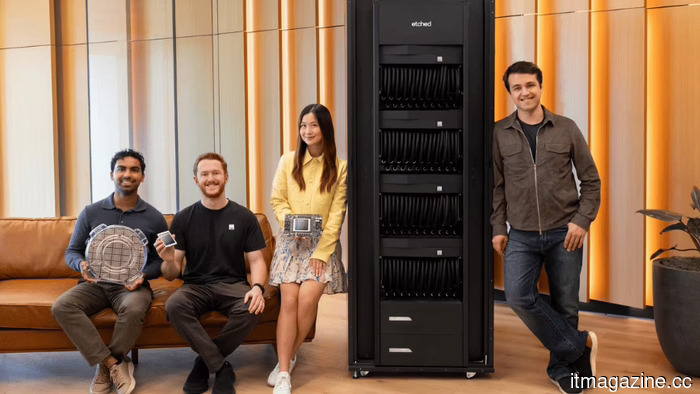 Etched secures $300M with a valuation of $10.3B, with SK Hynix participating.
Nvidia competitor Etched has secured $300 million at a valuation of $10.3 billion, which signifies a doubling of its value in just seven months, and has attracted memory giant SK Hynix as an investor.
Etched secures $300M with a valuation of $10.3B, with SK Hynix participating.
Nvidia competitor Etched has secured $300 million at a valuation of $10.3 billion, which signifies a doubling of its value in just seven months, and has attracted memory giant SK Hynix as an investor.
 Apple's privacy policy indicates that an AI shopping assistant will be introduced to the Apple Store app.
An update to the privacy policy for the Apple Store app outlines a "Virtual Shopping Assistant" that gathers chat, location, and device information. It is not currently operational.
Apple's privacy policy indicates that an AI shopping assistant will be introduced to the Apple Store app.
An update to the privacy policy for the Apple Store app outlines a "Virtual Shopping Assistant" that gathers chat, location, and device information. It is not currently operational.
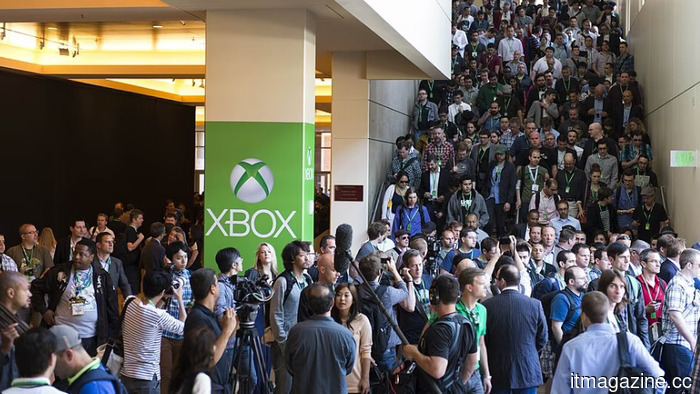 Xbox is experimenting with game streaming that includes advertisements. Amazon is integrating Luna with Prime Video. Both companies acknowledge that cloud gaming has not yet succeeded.
Microsoft will trial ad-supported cloud game streaming. Amazon is integrating Luna with Prime Video. Both companies are exploring new strategies following years of minimal adoption.
Xbox is experimenting with game streaming that includes advertisements. Amazon is integrating Luna with Prime Video. Both companies acknowledge that cloud gaming has not yet succeeded.
Microsoft will trial ad-supported cloud game streaming. Amazon is integrating Luna with Prime Video. Both companies are exploring new strategies following years of minimal adoption.
 AMD is committing $5 billion to Anthropic and is supplying 2 gigawatts of Helios GPUs for running Claude.
AMD plans to invest as much as $5 billion in Anthropic and will deploy 2GW of MI450 GPUs within Helios racks. Claude will be utilized to enhance ROCm development. The initial gigawatt is set to ship in the first half of 2027.
AMD is committing $5 billion to Anthropic and is supplying 2 gigawatts of Helios GPUs for running Claude.
AMD plans to invest as much as $5 billion in Anthropic and will deploy 2GW of MI450 GPUs within Helios racks. Claude will be utilized to enhance ROCm development. The initial gigawatt is set to ship in the first half of 2027.
AMD introduces the Helios rack and MI455X accelerator in an effort to bridge the gap with Nvidia.
AMD introduced the MI455X accelerator, Helios server rack, and Venice Epyc processor at its Advancing AI event, forecasting a $2 trillion market by 2030.