
Moonshot pursues a $50 billion valuation with a dual fundraising effort.
China’s Moonshot AI is securing funds at a speed that would leave many startups astonished. According to Bloomberg, the lab is expected to finalize a funding round that will value it at $31.5 billion in the next few days, with plans for another round shortly after, aiming for a valuation of up to $50 billion.
Two rounds, one summer
The second fundraising round could start as soon as August, serving as the final private funding before an initial public offering (IPO) in Hong Kong, which may occur within this year. The South China Morning Post reported on the same August timeline, citing it as Moonshot’s last private raise prior to going public.
The company is also dismantling its offshore "red-chip" structure by the end of this month. This will facilitate domestic fundraising and support the larger IPO effort.
The Kimi K3 effect
The urgency is driven by a single model. Moonshot launched Kimi K3 last week, a 2.8-trillion-parameter open-weight system claimed to be the largest of its kind. In independent benchmarks reported by Bloomberg, it only lagged behind Anthropic’s Claude Fable 5 and OpenAI’s GPT-5.6.
The introduction of K3 has unsettled US markets and rekindled discussions of a “DeepSeek moment.” Additionally, it has positively impacted key metrics for investors, with annual recurring revenue reaching $300 million in June, up from $200 million in April. Daily sales have surged at least sixfold since the K3 launch.
The reclusive founder
At the helm is Yang Zhilin, a 33-year-old Carnegie Mellon alumnus who has worked at Meta and Google. He assembled the 300-person team from Tsinghua University specialists and named the company after Pink Floyd's “Dark Side of the Moon.” On Weibo, fans now refer to him as a “millennial genius,” as reported by Business Insider. Current investors include Tencent, Meituan, and state-linked funds.
The catch nobody is pricing in
However, there is a challenging aspect to consider. Open-weight AI has proven to be a difficult business model. Business Insider highlights that competitor Zhipu lost nearly $500 million last year with only about $107 million in revenue. Its stock has since decreased more than 40% in a month. Similarly, peer MiniMax incurred a loss of $250 million with $79 million in revenue.
The underlying issue is structural. Once a lab shares its model weights, other companies can operate the model and charge fees. Moonshot faced the downside of its success as well; shortly after the launch, it had to halt new sign-ups due to a lack of computing power to handle demand.
Why raise so fast, then
Quick fundraising is the strategy. Chinese labs tend to raise funds rapidly in a booming market, and Moonshot is the leading name in the sector right now. The funding enables the purchase of computing resources and additional time. It also ensures that they secure financing before any potential obstacles arise. Senior US AI executives are openly expressing concerns about Chinese models, while Washington is contemplating restrictions on their usage.
Ultimately, whether the $50 billion valuation can withstand economic realities is the true challenge. For now, investors are eager to proceed without delay.
Other articles
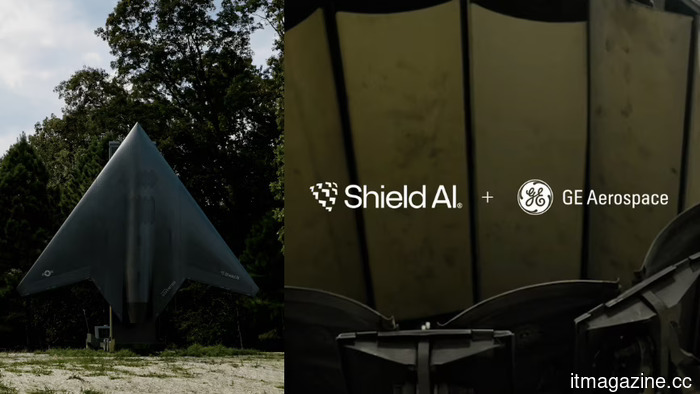 Shield AI's X-BAT: the AI fighter jet that doesn't require a runway.
Shield AI and GE Aerospace have activated the engine of the X-BAT, an AI-operated jet that can take off vertically without the need for a runway. Flight tests are scheduled to occur later this year.
Shield AI's X-BAT: the AI fighter jet that doesn't require a runway.
Shield AI and GE Aerospace have activated the engine of the X-BAT, an AI-operated jet that can take off vertically without the need for a runway. Flight tests are scheduled to occur later this year.
 Apple has resolved an issue with the Hide My Email feature that revealed users' actual email addresses.
A vulnerability in Hide My Email revealed actual addresses through returned spam messages for more than a year before Apple fixed it, just days after it became public knowledge.
Apple has resolved an issue with the Hide My Email feature that revealed users' actual email addresses.
A vulnerability in Hide My Email revealed actual addresses through returned spam messages for more than a year before Apple fixed it, just days after it became public knowledge.
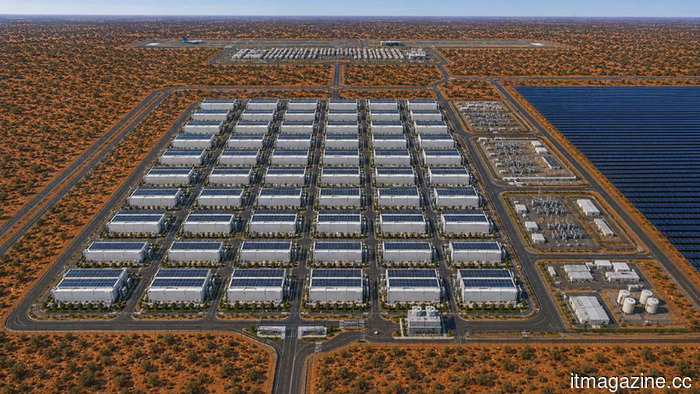 A gas-rich outback station may accommodate a $28 billion off-grid AI data center.
Energy North plans to construct a 1GW off-grid AI data center at Murranji Station in Australia’s gas-abundant Barkly region, with the total project estimated to cost approximately $28 billion.
A gas-rich outback station may accommodate a $28 billion off-grid AI data center.
Energy North plans to construct a 1GW off-grid AI data center at Murranji Station in Australia’s gas-abundant Barkly region, with the total project estimated to cost approximately $28 billion.
 Samsung's offer of doubling free storage for preorders has ended in Austria, and the new promotion isn't as appealing.
Samsung's traditional pre-order benefit of offering double storage at no extra cost has been removed for Austria, now substituted with discounted upgrades for the Galaxy Z Fold 8 and Z Flip 8.
Samsung's offer of doubling free storage for preorders has ended in Austria, and the new promotion isn't as appealing.
Samsung's traditional pre-order benefit of offering double storage at no extra cost has been removed for Austria, now substituted with discounted upgrades for the Galaxy Z Fold 8 and Z Flip 8.
 US computer science enrollment declines for the first time in two decades.
A Stanford study reveals that enrolment in computer science programs in the US has declined for the first time in 20 years, attributed to AI's capability to write code, although economists are not yet placing blame on AI.
US computer science enrollment declines for the first time in two decades.
A Stanford study reveals that enrolment in computer science programs in the US has declined for the first time in 20 years, attributed to AI's capability to write code, although economists are not yet placing blame on AI.
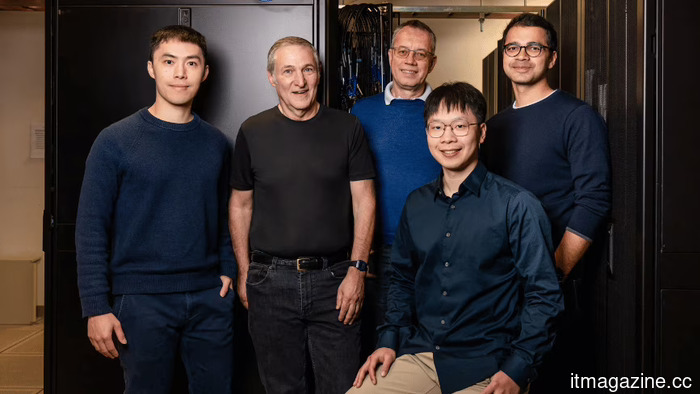 SkyPilot secures $20 million to position itself as the neutral hub for AI computing.
Ion Stoica's team at Berkeley has secured $20 million for SkyPilot, a provider-agnostic control plane that consolidates dispersed AI computing resources from over 20 cloud platforms into a single entity.
SkyPilot secures $20 million to position itself as the neutral hub for AI computing.
Ion Stoica's team at Berkeley has secured $20 million for SkyPilot, a provider-agnostic control plane that consolidates dispersed AI computing resources from over 20 cloud platforms into a single entity.
Moonshot pursues a $50 billion valuation with a dual fundraising effort.
Moonshot AI is finalizing a $31.5 billion funding round and preparing for another one that could reach $50 billion ahead of a Hong Kong IPO, capitalizing on Kimi K3, despite open-weight AI operating at a loss.