
Clothing designed to counteract surveillance is becoming more affordable, but don’t anticipate an invisibility cloak.
Affordable shirts now purport to confuse facial recognition systems, although their effectiveness largely relies on the camera and software observing you.
Anti-surveillance apparel is beginning to appear less like an art project and more like wearable clothing. Shirts engineered to confuse facial recognition technology are now priced similarly to typical streetwear, but purchasing one won’t make you invisible.
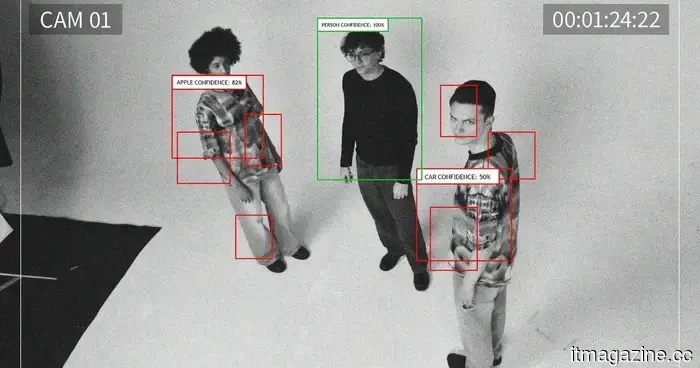
According to The Guardian, designers are employing face-like patterns, unique cuts, and infrared lights to disrupt computer vision. These methods exploit specific vulnerabilities, meaning their effectiveness varies depending on the observing technology.
How can clothing baffle a camera?
Adversarial clothing takes advantage of the shortcuts that software utilizes to recognize people and objects. Urban Privacy’s Faception designs scatter artificial faces across the fabric, creating additional visual noise for the algorithm to process.
Cap_able
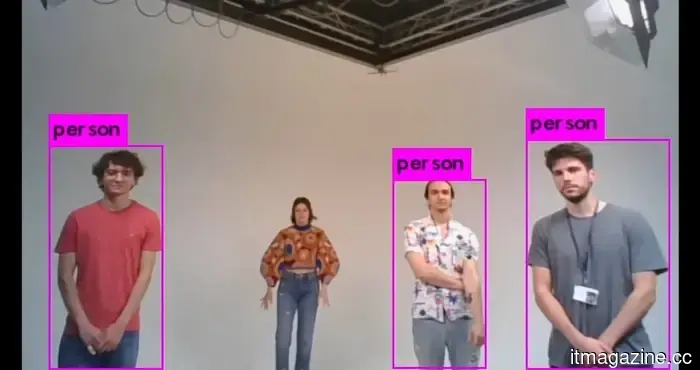
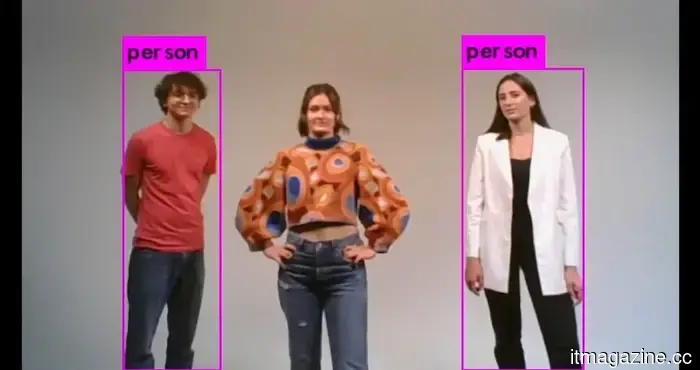
Cap_able uses AI-generated knitted patterns. The company reports that versions of the YOLO object-detection system have confused its designs with animals or small figures, rather than identifying the wearer as a human. While amusing, tricking one model doesn’t ensure the same will work universally.
Urban Privacy’s experimental Urban Ghost coat employs a different tactic. It features infrared LEDs around the hood, aiming to overwhelm compatible night-vision cameras. Conventional cameras and other surveillance systems might not be affected at all.
How affordable is privacy fashion?
Urban Privacy offers Faception Reloaded T-shirts starting at €35, sweatshirts at €59, and hoodies at €65. At these prices, anti-surveillance clothing is not limited to affluent privacy advocates or gallery models.
In contrast, Cap_able is significantly pricier, with its knitted crop tops beginning at €560 and hoodies at €620. This places the collection firmly in the realm of wearable art, though the more affordable Urban Privacy items indicate a rapid trend toward accessibility. You can now experiment with an adversarial pattern without straining your finances.
Cap_able
Why shouldn’t you trust it entirely?
Testing against a single object-detection model does not guarantee that a garment will thwart facial recognition in real-world settings. Changes in lighting and camera angles can affect outcomes, and newer software may adapt to ignore previously disruptive patterns. Researcher Jennifer Bell informed The Guardian that these products have not undergone independent real-world assessments.
Thus, adversarial clothing seems more effective as a statement against surveillance than as actual protection. Wearing such attire boldly addresses privacy issues and might hinder certain systems, but don’t consider a patterned hoodie a surefire way to achieve anonymity. Until these garments undergo wider independent testing, assume that cameras can still detect you.
Paulo Vargas is an English major turned reporter turned technical writer, with a career that has consistently revolved around...
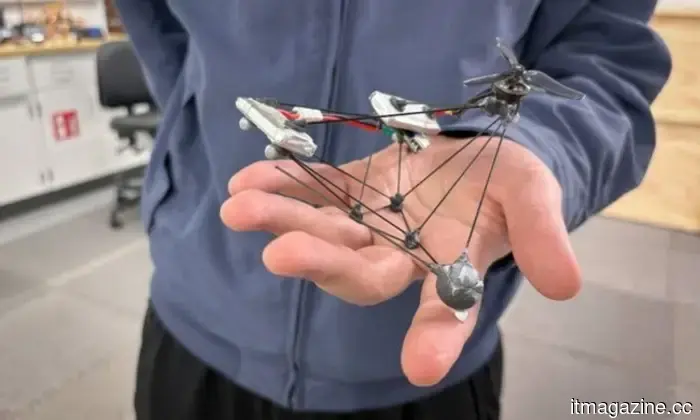
This spinning drone conceals itself in plain sight by employing a visual deception.
This drone isn’t invisible. It tricks the brain into perceiving it as such.
Engineers have pursued the dream of an invisible drone for decades, traditionally utilizing transparent materials, camouflage coatings, or intricate optical systems that bend light around an object. Researchers at Northwestern University opted for a different strategy: they decided to deceive the human eye rather than the drone itself.
The outcome is Phantom Twist, an experimental drone that spins at such a rate that it almost blends into its surroundings. While it is not literally invisible, to an observer, it appears more as a faint blur than a flying object.
Read more
This intelligent knitted fabric can operate switches, track your steps, and even reshape itself.
Grandma's knitting has now entered a new technological age.
Most people associate knitting with sweaters, scarves, and perhaps a determined grandmother looking to enhance winter style. However, researchers at Harvard University envision a much more advanced future. They have transformed standard knitted fabric into programmable material capable of altering shape, functioning as an electrical switch, detecting movement, and potentially laying the groundwork for future wearable technology.
The research, published in Advanced Functional Materials by scientists from the Harvard John A. Paulson School of Engineering and Applied Sciences (SEAS), shows how machine-knitted textiles can "snap" into various stable shapes without the need for motors or rigid mechanical components.
Starlink V5 is now available, boasting a lighter, more intelligent, and considerably more efficient design.
The next-generation satellite internet kit promises enhanced efficiency while maintaining high-speed connectivity.
Not every hardware upgrade has to prioritize speed. With Starlink V5, SpaceX is betting that a lighter design and reduced power consumption are equally important. The company has officially launched its next-generation Starlink V5 kit, featuring a smaller, lighter build with marked improvements in power efficiency.
Smaller, lighter, and much more efficient.



Other articles
 Apple is currently engaged in preliminary settlement discussions with the DOJ regarding its iPhone antitrust case.
Apple has presented several proposals to settle the DOJ antitrust lawsuit for 2024. The antitrust head from the Trump administration is advocating for a swift resolution of the cases they inherited.
Apple is currently engaged in preliminary settlement discussions with the DOJ regarding its iPhone antitrust case.
Apple has presented several proposals to settle the DOJ antitrust lawsuit for 2024. The antitrust head from the Trump administration is advocating for a swift resolution of the cases they inherited.
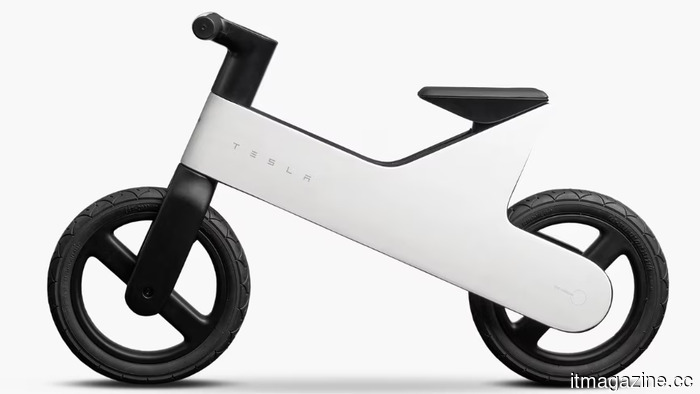 Tesla produced a $225 balance bike designed for toddlers. It features no motor or pedals and is already out of stock.
Tesla's Balance Bike designed for children is a pedal-free, motor-free toy made of magnesium, suitable for kids aged 2 to 5. It sold out immediately. Musk has yet to produce an e-bike for adults.
Tesla produced a $225 balance bike designed for toddlers. It features no motor or pedals and is already out of stock.
Tesla's Balance Bike designed for children is a pedal-free, motor-free toy made of magnesium, suitable for kids aged 2 to 5. It sold out immediately. Musk has yet to produce an e-bike for adults.
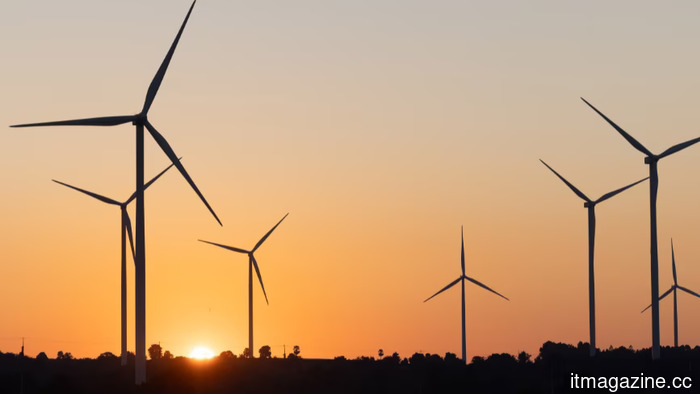 The Pentagon has halted 155 wind projects across 24 states, stating that drones could conceal themselves within wind farms.
The year-long halt impacts 44GW of capacity and has resulted in $2 billion in losses for developers. The wind industry claims it is driven by political motives. A lawsuit is currently in progress.
The Pentagon has halted 155 wind projects across 24 states, stating that drones could conceal themselves within wind farms.
The year-long halt impacts 44GW of capacity and has resulted in $2 billion in losses for developers. The wind industry claims it is driven by political motives. A lawsuit is currently in progress.
 Apple is engaged in preliminary settlement discussions with the DOJ regarding its iPhone antitrust case.
Apple has extended several proposals to settle the DOJ antitrust lawsuit for 2024. The antitrust head from the Trump administration is advocating for a swift resolution of inherited cases.
Apple is engaged in preliminary settlement discussions with the DOJ regarding its iPhone antitrust case.
Apple has extended several proposals to settle the DOJ antitrust lawsuit for 2024. The antitrust head from the Trump administration is advocating for a swift resolution of inherited cases.
 Netflix claims it has employed AI in more than 300 titles, and there's no turning back now.
Netflix reports that generative AI was involved in approximately 300 productions in 2026, assisting creators in rapidly and affordably developing crowds, battles, environments, and various sequences.
Netflix claims it has employed AI in more than 300 titles, and there's no turning back now.
Netflix reports that generative AI was involved in approximately 300 productions in 2026, assisting creators in rapidly and affordably developing crowds, battles, environments, and various sequences.
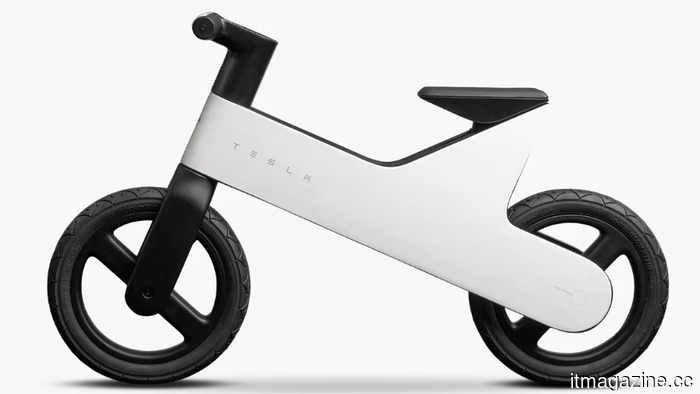 Tesla produced a balance bike for toddlers priced at $225. It features no motor and no pedals, and is already out of stock.
Tesla's Balance Bike for Kids is a toy designed for children aged 2 to 5, featuring a magnesium frame and no pedals or motors. It sold out immediately. Musk continues to refrain from producing an electric bike for adults.
Tesla produced a balance bike for toddlers priced at $225. It features no motor and no pedals, and is already out of stock.
Tesla's Balance Bike for Kids is a toy designed for children aged 2 to 5, featuring a magnesium frame and no pedals or motors. It sold out immediately. Musk continues to refrain from producing an electric bike for adults.
Clothing designed to counteract surveillance is becoming more affordable, but don’t anticipate an invisibility cloak.
Anti-surveillance clothing is becoming accessible enough for everyday wardrobes, but its designs only deceive specific computer vision systems. At this moment, it serves more effectively as a statement for privacy rather than as dependable protection.