
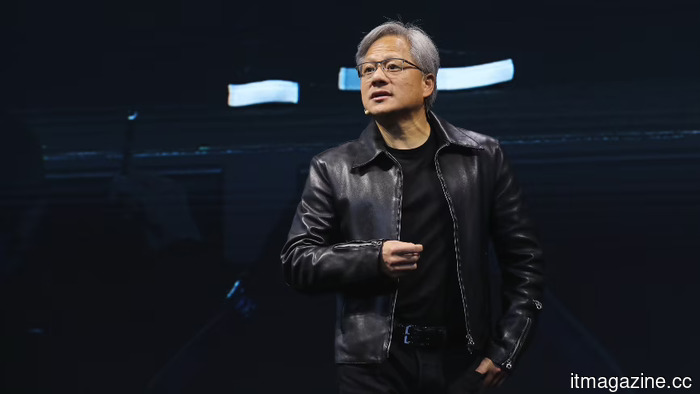
Nokia and Nvidia unveil the inaugural commercial AI-RAN.
The companies driving the AI revolution are now aiming to enter the mobile network space. Nokia claims to have developed the first commercial AI-RAN platform in partnership with Nvidia, describing it as the most significant advancement in radio technology in decades.
RAN, or radio access network, refers to the equipment that connects mobile phones to the broader network. An AI-RAN operates using AI chips rather than fixed hardware. Nokia asserts that this method could enhance spectral efficiency by over 100% by 2028, as stated in their announcement.
In simpler terms, this means transmitting a significantly larger amount of data over the same frequency. Given the limited and expensive nature of spectrum, doubling its capacity is a substantial assertion and a valuable opportunity.
Nokia reports that the platform has already achieved spectral improvements exceeding 20%. The company anticipates a 50% increase by 2027, with projections of surpassing 100% by 2028. Pilot programs will commence by the end of this year, leading to a commercial launch in 2027.
Nokia’s anyRAN software will work in conjunction with Nvidia’s Aerial computing platform. Network operators won’t need to replace their existing infrastructure; they can either attach an AI unit to current base stations or utilize cloud-based solutions.
The real transformation lies in the business model. Nokia plans to provide upgrades through software subscriptions rather than expensive hardware replacements. Chief Executive Justin Hotard indicated that this approach is expected to be the primary driver of their RAN business, according to Bloomberg. He also noted that the hardware costs would not differ significantly from current levels.
This collaboration is backed by financial investment. Last October, Nvidia acquired a $1 billion stake in Nokia, making this the first major product from their partnership, which has pleased investors—Nokia's shares have risen by approximately 90% this year.
Nvidia’s Jensen Huang characterized the radio network as “the next AI infrastructure,” aiming to transform the RAN into “a planet-scale AI computer.” The overarching goal is to facilitate data processing nearer to the user to reduce lag, which benefits applications like robotics and autonomous vehicles, while also increasing the presence of Nvidia chips in these networks.
Nvidia is expanding its efforts beyond Nokia. At Mobile World Congress, the company engaged Ericsson, Deutsche Telekom, T-Mobile, SK Telecom, and SoftBank to develop 6G technology using AI-driven systems.
In contrast, Nokia’s competitor, Ericsson, is also advancing but has opted for a different strategy, choosing to remain a pure mobile-network supplier and avoiding data centers, as stated by their outgoing chief.
This initiative aligns with a broader trend, as Nvidia continues to establish its presence in various domains associated with AI, ranging from Japan’s robotics industry to mobile infrastructure, even as it has had to reduce its list of Asian buyers due to U.S. regulations.
For network operators, the appeal is straightforward: transmit more data without the necessity of acquiring additional spectrum. The real challenge, however, will be determining whether AI-RAN can deliver on these promises when testing begins in 2027.
Other articles
 A NeuroAI startup founded by a pioneer of Face ID has successfully raised $52 million.
Hemispheric, a NeuroAI startup co-founded by a pioneer in Face ID technology, has secured $52 million for Descartes, a model with 6 billion parameters that interprets brain activity non-invasively.
A NeuroAI startup founded by a pioneer of Face ID has successfully raised $52 million.
Hemispheric, a NeuroAI startup co-founded by a pioneer in Face ID technology, has secured $52 million for Descartes, a model with 6 billion parameters that interprets brain activity non-invasively.
 This Game of the Year, exclusive to PS5, is now available on PC... in a way.
Astro Bot has entered an initial boot phase via the experimental SharpEmu PS5 emulator, indicating encouraging advancements, even though it currently does not provide any form of playable gameplay.
This Game of the Year, exclusive to PS5, is now available on PC... in a way.
Astro Bot has entered an initial boot phase via the experimental SharpEmu PS5 emulator, indicating encouraging advancements, even though it currently does not provide any form of playable gameplay.
 This intelligent ring offers a blood pressure claim that neither Apple nor Oura has yet provided.
The $399 Signal Ring claims to provide cuff-free systolic and diastolic measurements without the need for calibration. However, the absence of FDA approval and the lack of published clinical data suggest that retaining the traditional arm cuff is the more prudent choice.
This intelligent ring offers a blood pressure claim that neither Apple nor Oura has yet provided.
The $399 Signal Ring claims to provide cuff-free systolic and diastolic measurements without the need for calibration. However, the absence of FDA approval and the lack of published clinical data suggest that retaining the traditional arm cuff is the more prudent choice.
 The UK abandons its proposal to impose restrictions on VPNs.
The UK has abandoned its plan to impose VPN restrictions after discovering through its own research that children utilize VPNs primarily for privacy reasons, rather than to evade age verification. Responsibility now falls on the platforms.
The UK abandons its proposal to impose restrictions on VPNs.
The UK has abandoned its plan to impose VPN restrictions after discovering through its own research that children utilize VPNs primarily for privacy reasons, rather than to evade age verification. Responsibility now falls on the platforms.
 Oracle is at the forefront of efforts to establish an air-gapped cloud for Japan.
Oracle is leading the effort to create an air-gapped cloud for Japan, isolated from the internet, as the U.S. urges Tokyo to strengthen its defenses against Chinese cyberattacks.
Oracle is at the forefront of efforts to establish an air-gapped cloud for Japan.
Oracle is leading the effort to create an air-gapped cloud for Japan, isolated from the internet, as the U.S. urges Tokyo to strengthen its defenses against Chinese cyberattacks.
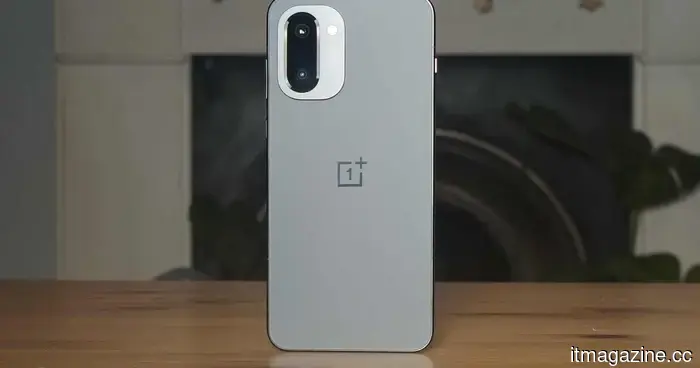 The North America and Europe division of OnePlus has officially concluded.
OnePlus has acknowledged what it had been denying for months. The company is withdrawing from North America and Europe, but existing customers will continue to receive software updates and warranty support.
The North America and Europe division of OnePlus has officially concluded.
OnePlus has acknowledged what it had been denying for months. The company is withdrawing from North America and Europe, but existing customers will continue to receive software updates and warranty support.
Nokia and Nvidia unveil the inaugural commercial AI-RAN.
Nokia and Nvidia have developed the inaugural commercial AI-RAN platform, which aims to double network capacity using the current spectrum, with a launch planned for 2027.