

This intelligent knitted material can operate switches, track your steps, and even alter its shape.
For many people, knitting evokes images of sweaters, scarves, and perhaps a determined grandmother trying to enhance winter fashion. However, researchers at Harvard University envision a much more advanced future. They have converted standard knitted fabric into a programmable material that can change shape, function as an electrical switch, detect movement, and potentially serve as the basis for future wearable technology.
The research, published in Advanced Functional Materials by experts at the Harvard John A. Paulson School of Engineering and Applied Sciences (SEAS), illustrates how machine-knitted textiles can “snap” between several stable shapes without the need for motors or rigid mechanical components.
In essence, these fabrics function more like soft robots than traditional clothing.
A knitted fabric with memory for its shape
The key innovation centers on a principle known as multistability, where an object can naturally adopt multiple stable configurations. Consider a light switch: it doesn’t remain midway between its on and off positions; rather, it clicks clearly into one of those two states.
The Harvard team successfully replicated that behavior using solely specially chosen elastic yarns and industrial knitting techniques. Under the leadership of Kausalya Mahadevan, now a postdoctoral researcher in Professor Katia Bertoldi’s lab, the project merges textile engineering principles with nonlinear mechanics, a branch of physics that investigates how materials bend, buckle, and snap under stress.
The textile includes a reconfigurable lampshade with multistable switches associated with different light colors.
Rather than shaping plastics or creating intricate polymers, the researchers utilized weft knitting, the same technique employed to make everyday items such as hats, gloves, and sweaters. By meticulously arranging various elastic yarns through a method known as plating, they engineered dense knitted structures that naturally curl into three-dimensional forms.
The outcome is a fabric that can consistently alter its shape while reliably reverting to predetermined positions.
From smart garments to programmable interiors
The team extended its efforts beyond just developing shape-shifting fabric. To showcase practical uses, researchers incorporated conductive yarns into the textile, enabling it to operate as a soft electrical switch. One prototype activated an LED by simply transitioning between two stable positions.
Another version transformed the fabric into a wearable motion sensor. Placed over a person's knee or elbow, the textile detected each snap and transmitted movement to an Arduino controller capable of counting steps. Perhaps the most striking demonstration was a customizable lampshade. By adjusting different areas of the knitted structure, users could activate distinct switches that altered the lamp’s color, all without conventional buttons or electronics dominating the design.
One of the significant benefits is scalability. The researchers created these textiles with equipment already present in commercial garment factories, meaning the technology does not depend on specialized manufacturing methods for production. Beyond apparel, this work bridges programmable textiles closer to the fast-evolving domain of mechanical metamaterials, where structures gain their unique properties from their geometry rather than from complex electronics.
The long-term vision is even more ambitious. The researchers foresee fabrics that quietly track body movements, offer tactile feedback, react to environmental shifts, or physically change into entirely new shapes on demand. Although smart textiles have been around for years, they often rely on rigid sensors and bulky electronics integrated into the fabric. Harvard’s approach proposes that the fabric itself could ultimately embody the technology, representing a subtle yet potentially transformative change for everything from wearable health devices to adaptive furniture and responsive environments.


Other articles
 Volkswagen joins the robotaxi competition by launching a shared shuttle service in Hamburg.
Moia is currently providing complimentary autonomous rides in Hamburg using VW ID Buzz vans staffed with safety operators, and plans to launch in the US through Uber and Beep are set for later in 2026.
Volkswagen joins the robotaxi competition by launching a shared shuttle service in Hamburg.
Moia is currently providing complimentary autonomous rides in Hamburg using VW ID Buzz vans staffed with safety operators, and plans to launch in the US through Uber and Beep are set for later in 2026.
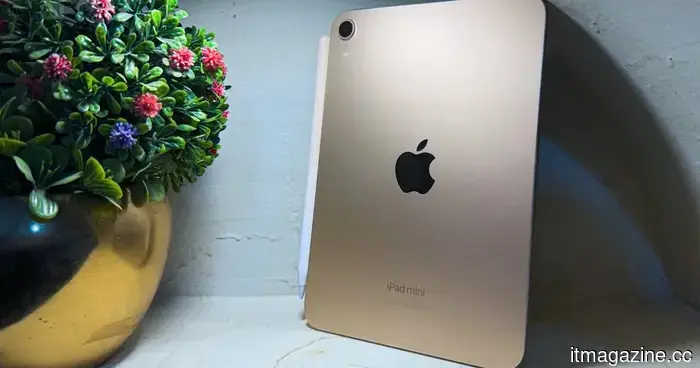 Apple is said to be updating its complete iPad lineup, with the first new model expected to arrive this fall.
Reports indicate that Apple is gearing up for a major overhaul of its iPad range, with the initial new model expected to launch this fall.
Apple is said to be updating its complete iPad lineup, with the first new model expected to arrive this fall.
Reports indicate that Apple is gearing up for a major overhaul of its iPad range, with the initial new model expected to launch this fall.
 Oracle is now rated just above junk status following a downgrade by S&P, as expenditures on AI data centers consume cash rapidly.
S&P lowered Oracle's rating to BBB-, just one level above junk status, as $250 billion in AI data center expenditures depletes cash reserves and bond investors assess the debt as nearing junk levels.
Verizon eliminates 3,000 retail positions as artificial intelligence takes over customer service functions and stores transition to franchising.
Verizon plans to cut approximately 3,000 store positions and shift 274 corporate-owned stores to independent operators as CEO Dan Schulman advances the use of AI.
1Password allows Claude to log you into websites without having to view your passwords.
1Password for Claude employs a zero-exposure design, allowing Anthropic's AI agent to access your logins without the credentials ever being exposed to the model.
Oracle is now rated just above junk status following a downgrade by S&P, as expenditures on AI data centers consume cash rapidly.
S&P lowered Oracle's rating to BBB-, just one level above junk status, as $250 billion in AI data center expenditures depletes cash reserves and bond investors assess the debt as nearing junk levels.
Verizon eliminates 3,000 retail positions as artificial intelligence takes over customer service functions and stores transition to franchising.
Verizon plans to cut approximately 3,000 store positions and shift 274 corporate-owned stores to independent operators as CEO Dan Schulman advances the use of AI.
1Password allows Claude to log you into websites without having to view your passwords.
1Password for Claude employs a zero-exposure design, allowing Anthropic's AI agent to access your logins without the credentials ever being exposed to the model.
 WarpSpeed aims to be the AI assistant that truly helps you get your life in order.
The majority of AI tools are designed to respond to inquiries or create content. However, WarpSpeed is adopting a different strategy by integrating email, calendars, tasks, and messaging into a single AI-driven workspace. In a discussion with founder Martin Warner, we delve into the reasons why the upcoming phase of AI could focus less on chatbots and more on assisting individuals in managing their daily activities.
WarpSpeed aims to be the AI assistant that truly helps you get your life in order.
The majority of AI tools are designed to respond to inquiries or create content. However, WarpSpeed is adopting a different strategy by integrating email, calendars, tasks, and messaging into a single AI-driven workspace. In a discussion with founder Martin Warner, we delve into the reasons why the upcoming phase of AI could focus less on chatbots and more on assisting individuals in managing their daily activities.
This intelligent knitted material can operate switches, track your steps, and even alter its shape.
Researchers at Harvard developed a programmable knitted fabric that can alter its shape, function as electronic switches, and has the potential to power the next wave of wearable technology.