

Thinking Machines Inkling: Murati's initial model with open weight.
“We believe in preserving the weirdness.” This statement is derived from a manifesto published last week by Mira Murati’s lab. It also embodies the philosophy behind the lab's inaugural model.
The Thinking Machines Lab, established by the former chief technology officer of OpenAI, has launched Inkling. It has open weights, allowing any developer or company to download and modify the model. This feature distinguishes it from the flagship offerings of OpenAI, Anthropic, and Google.
Inkling is substantial, functioning as a mixture-of-experts system with a total of 975 billion parameters, though it utilizes around 41 billion parameters for individual tasks. It can manage a context window of up to 1 million tokens and was trained on 45 trillion tokens encompassing text, images, audio, and video. While it can reason across text, images, and audio, it currently only outputs text, including code and structured data.
A model that acknowledges its limitations
Here’s the twist: Thinking Machines does not assert that Inkling is the best available model. According to its own documentation, it is “not the strongest model available today, whether closed or open.”
The focus of the lab is on range and adaptability. Thinking Machines’ Inkling aims to serve as a broad, versatile foundation that organizations can tailor for their specific needs, rather than functioning as a complete chatbot. Users can adjust its “thinking effort” to exchange accuracy for speed. In one coding evaluation, the company claims Inkling matched Nvidia's Nemotron 3 Ultra while utilizing a third of the tokens.
Additionally, the lab introduced a lighter version, Inkling-Small, featuring 12 billion active parameters, ideal for tasks where cost and speed are critical.
The gamble: customize it yourself
The entire release hinges on a single bet. The lab argues that AI trained in a fixed environment and subsequently frozen is less effective than AI that each organization can shape according to its own expertise. Customers can fine-tune Inkling via Tinker, Thinking Machines’ customization platform, and they retain ownership of the outcomes. However, they also assume the safety risks associated with their creations.
The lab cites a collaboration with the hedge fund Bridgewater as evidence of its approach. The two jointly trained an open model using Bridgewater’s financial expertise, achieving an 84.7% score on financial reasoning tests, surpassing leading proprietary models at a significantly lower cost. This statistic comes from the evaluation conducted by the two firms, not an independent assessment.
The argument is gaining traction. Microsoft’s Satya Nadella recently cautioned that companies using closed models incur costs twice—once in fees and again by relinquishing the knowledge embedded in their prompts. Affordable open-weight models, many from China, share the same appeal.
Nine months, with some external assistance
Thinking Machines emphasizes its rapid development timeline. While OpenAI took approximately five years to launch and monetize its model, and Anthropic around three, Murati's lab claims it achieved this in about nine months.
To expedite this process, the lab employed certain shortcuts, including leveraging other open models like Moonshot’s Kimi K2.5 in a practice known as distillation to kickstart Inkling’s training. It asserts that its next model will train entirely independently. Inkling operated on Nvidia’s GB300 systems, part of a March agreement for a gigawatt of Nvidia computing power.
Financially and operationally, the journey has been more challenging. The lab secured $2 billion at a $12 billion valuation last year, with a reported $50 billion funding round that has since stalled. Two co-founders departed earlier this year, although the staff count is now back to around 200. For the time being, Thinking Machines will not charge for Inkling at all. Its revenue will come from Tinker, with its success depending on the sustainability of the weirdness.
Other articles
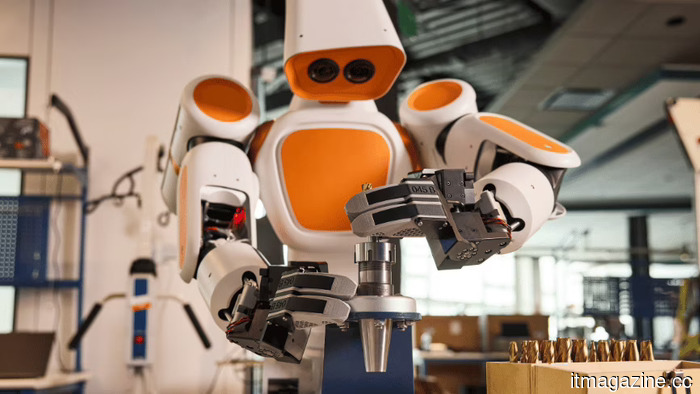 Walden Robotics debuts with $300 million in funding and legs not included.
Walden Robotics, a spin-off from Toyota, emerged from stealth mode with $300 million in funding at a valuation of $1.1 billion. Its factory humanoid robots operate on wheels instead of legs.
Walden Robotics debuts with $300 million in funding and legs not included.
Walden Robotics, a spin-off from Toyota, emerged from stealth mode with $300 million in funding at a valuation of $1.1 billion. Its factory humanoid robots operate on wheels instead of legs.
 What are the simplest methods for accepting payments online and in person?
This post is presented in collaboration with QuickBooks. Customers now anticipate that businesses will accommodate payments in the manner that is most convenient for them, whether that involves tapping a card at the register, settling an invoice via phone, or making an online purchase. For small businesses, fulfilling these expectations is crucial; however, handling various payment systems [...]
YouTube challenges the ruling regarding its social media addiction.
YouTube has contested the significant ruling on social media addiction, aligning itself with Meta, and claims that it is not a social media platform akin to Instagram or TikTok.
What are the simplest methods for accepting payments online and in person?
This post is presented in collaboration with QuickBooks. Customers now anticipate that businesses will accommodate payments in the manner that is most convenient for them, whether that involves tapping a card at the register, settling an invoice via phone, or making an online purchase. For small businesses, fulfilling these expectations is crucial; however, handling various payment systems [...]
YouTube challenges the ruling regarding its social media addiction.
YouTube has contested the significant ruling on social media addiction, aligning itself with Meta, and claims that it is not a social media platform akin to Instagram or TikTok.
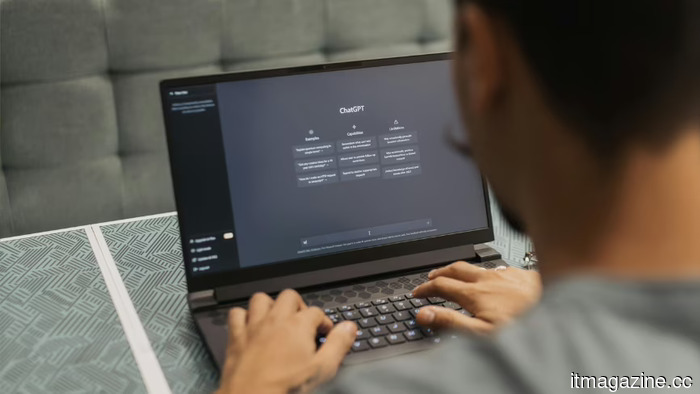 OpenAI is displaying Kalshi's World Cup betting odds within ChatGPT, marking its initial partnership with a prediction market.
ChatGPT now shows Kalshi prediction market odds for the 2026 World Cup games, representing OpenAI's initial collaboration with a regulated betting exchange.
OpenAI is displaying Kalshi's World Cup betting odds within ChatGPT, marking its initial partnership with a prediction market.
ChatGPT now shows Kalshi prediction market odds for the 2026 World Cup games, representing OpenAI's initial collaboration with a regulated betting exchange.
 Apple seeks to acquire AI chip companies to enhance its servers.
Apple is seeking to acquire AI chip companies following the underperformance of its own M2 Ultra servers, marking an unusual move in mergers and acquisitions while Nvidia continues to drive the Gemini-based Siri.
Apple seeks to acquire AI chip companies to enhance its servers.
Apple is seeking to acquire AI chip companies following the underperformance of its own M2 Ultra servers, marking an unusual move in mergers and acquisitions while Nvidia continues to drive the Gemini-based Siri.
 Apple increases AppleCare+ rates as the memory shortage expands from hardware to services.
Apple has increased monthly AppleCare+ subscription prices by 50 cents for Macs and iPads, following a series of price hikes influenced by the worldwide shortage of memory chips.
Apple increases AppleCare+ rates as the memory shortage expands from hardware to services.
Apple has increased monthly AppleCare+ subscription prices by 50 cents for Macs and iPads, following a series of price hikes influenced by the worldwide shortage of memory chips.
Thinking Machines Inkling: Murati's initial model with open weight.
Mira Murati's initial model, Thinking Machines Inkling, is an open-weight 975B system that the lab acknowledges is not the top performer, designed for companies to make enhancements.