

Europe is considering a comprehensive ban on social media for minors.
The proposed plan would completely prevent children under 13 from accessing social media, while allowing more lenient rules for teenagers up to 18.
Europe is making significant strides towards restricting children's access to social media entirely. A group of experts has submitted a report to the European Commission recommending extensive new age limitations, as noted in a New York Times article. Commission president Ursula von der Leyen is anticipated to formally present these recommendations as a law proposal in September.
What the proposal intends to limit
The report outlines three categories for social media access based on age. It suggests that children under 3 should not be exposed to screens at all and recommends prohibiting social media access for children under 13 unless they are under the supervision of a parent or teacher. For teens aged 13 to 18, access would still be granted, but only on platforms that implement measures against compulsive use, such as limits on infinite scrolling to create a natural stopping point in feeds.
The report was authored by child psychiatrist Jörg Fegert and epidemiologist Maria Melchior, both appointed to the panel by von der Leyen. According to Reuters, von der Leyen emphasized the matter personally, stating, “Our children need time in the real world. Time to play, time to build friendships, time to make mistakes. Time to shape their own identity, their own personality, before an algorithm shapes them instead.”
She also highlighted the magnitude of the issue. European children are spending four to six hours daily on social media, she mentioned, with nearly 60 percent reporting emotional or psychological issues linked to their online time. Her remarks reflect a broader global trend, as over 20 countries are now considering or implementing their own age restrictions. Even in the U.S., where no federal ban is currently in place, public support for such a measure is growing.
Ensuring enforcement will be the true challenge
Even if the EU enacts a law, preventing children from accessing social media apps will be difficult. Australia's ban on usage by those under 16, often cited as a benchmark for other nations, has faced similar obstacles. Age verification methods can be easily manipulated, and many teens affected by restrictions have found ways around them within months.
The EU is not solely relying on new laws to limit social media use. Regulators are also urging companies to modify what they term the “addictive design” of their platforms. It remains uncertain whether this approach will yield more effective outcomes than an outright ban.
If you use Instagram, WhatsApp, or iMessage, it is important to be aware of the current issues on these platforms. Australia’s online safety regulator, eSafety, has released a new transparency report, which reveals troubling findings regarding how major tech companies manage online sexual extortion and child sexual exploitation, despite the ongoing increase in reports.
The era of unrestricted social media access for children may soon be over.
Social media practices for younger users could drastically change. What began as a policy trial in Australia has rapidly evolved into a global trend. Worldwide, governments are increasingly questioning whether children should have unrestricted social media access, with over 20 countries either enforcing, proposing, or actively discussing age-based restrictions. According to an AFP tally, at least five countries have already established nationwide restrictions, while many others, including several European nations, are preparing to do the same. This shift is driven by escalating concerns regarding social media's effects on children's mental health, online safety, sleep patterns, and exposure to harmful content. Policymakers face pressure to tackle addictive recommendation algorithms, cyberbullying, and the increasing presence of AI-generated content that complicates navigation for young users.
Recently, Meta has discontinued its most controversial AI image generation feature just days after launching it.
Meta has described this action as “hearing feedback” rather than addressing a consent issue. A few days earlier, I reported on Meta’s introduction of the Muse Image, an AI tool enabling users to create images based on another user’s Instagram profile without obtaining the account owner’s permission. I also noted the associated risks and provided guidance for opting out. Just three days later, the feature has been withdrawn.






Other articles
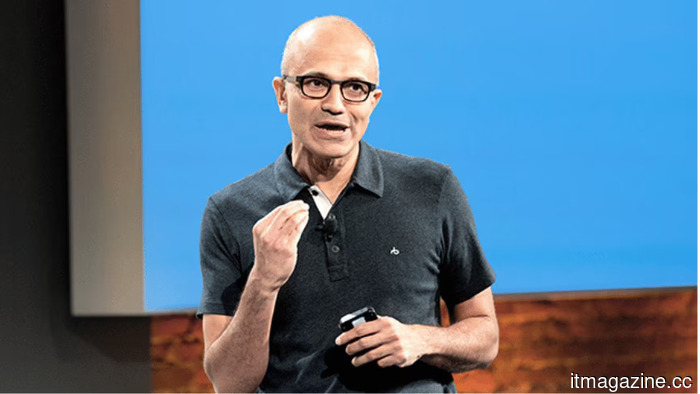 Nadella's Inverse Information Paradox: The concealed expense of AI
Satya Nadella states that companies employing AI incur costs in both monetary terms and in confidential expertise. He refers to this as the Reverse Information Paradox, which Microsoft contributed to developing.
Nadella's Inverse Information Paradox: The concealed expense of AI
Satya Nadella states that companies employing AI incur costs in both monetary terms and in confidential expertise. He refers to this as the Reverse Information Paradox, which Microsoft contributed to developing.
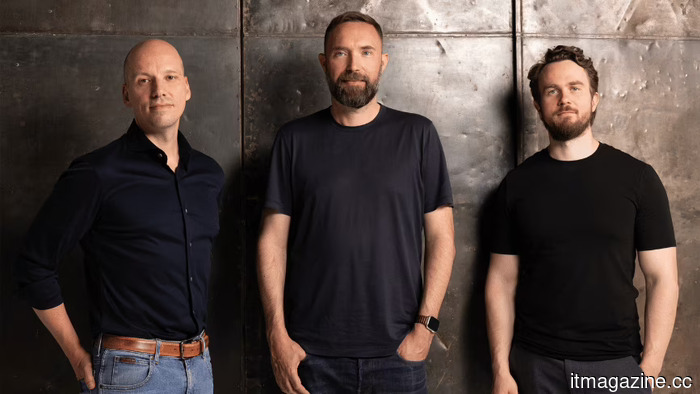 Helsing secures $1.8 billion at a valuation of $18 billion.
Helsing has secured $1.8 billion at a valuation of $18 billion, establishing itself as Europe's largest defense startup, even as U.S. investment supports its sovereign-AI funding round.
Helsing secures $1.8 billion at a valuation of $18 billion.
Helsing has secured $1.8 billion at a valuation of $18 billion, establishing itself as Europe's largest defense startup, even as U.S. investment supports its sovereign-AI funding round.
 The EU and UK have imposed sanctions on the entirety of Russia's cyber ecosystem.
Brussels and London targeted Russian spies, criminals, hacktivists, and a front organization that recruits hackers from universities in their initial joint initiative.
The EU and UK have imposed sanctions on the entirety of Russia's cyber ecosystem.
Brussels and London targeted Russian spies, criminals, hacktivists, and a front organization that recruits hackers from universities in their initial joint initiative.
 AMD is discreetly developing a frame generation mode that surpasses Nvidia in its own territory.
AMD's newest Radeon drivers feature a Multi-Frame Generation mode that reaches up to 8x, surpassing NVIDIA's 6x. Here's how this could impact your frame rate.
AMD is discreetly developing a frame generation mode that surpasses Nvidia in its own territory.
AMD's newest Radeon drivers feature a Multi-Frame Generation mode that reaches up to 8x, surpassing NVIDIA's 6x. Here's how this could impact your frame rate.
 Meta’s Hyperion data center reaches $50 billion and divides a town.
Meta's Hyperion data center in Louisiana has grown from $10 billion to more than $50 billion in less than two years, resulting in both teacher bonuses and evictions.
Meta’s Hyperion data center reaches $50 billion and divides a town.
Meta's Hyperion data center in Louisiana has grown from $10 billion to more than $50 billion in less than two years, resulting in both teacher bonuses and evictions.
 A study reveals that AI is shortening the careers of older workers.
Individuals over 55 in jobs affected by AI are leaving the workforce more frequently since the introduction of ChatGPT, resulting in unemployment rather than retirement. Programmers and accountants are experiencing the most significant impact.
A study reveals that AI is shortening the careers of older workers.
Individuals over 55 in jobs affected by AI are leaving the workforce more frequently since the introduction of ChatGPT, resulting in unemployment rather than retirement. Programmers and accountants are experiencing the most significant impact.
Europe is considering a comprehensive ban on social media for minors.
An expert panel has advised that the European Union should prohibit children under the age of 13 from accessing social media, while suggesting more flexible regulations for teenagers up to 18.