
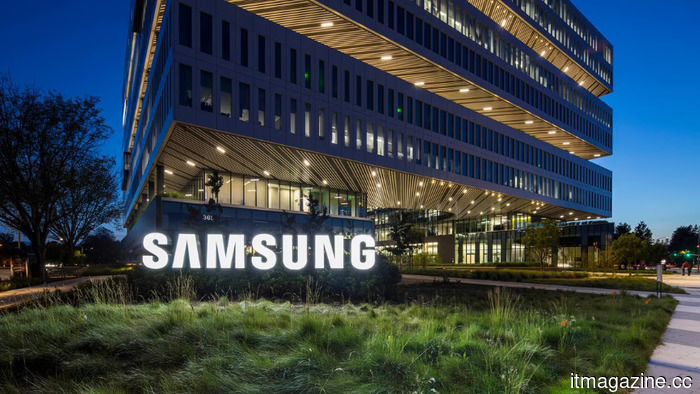
Samsung has moved up the timeline for its first Yongin chip plant to 2029.
Samsung Electronics plans to start operations at its first chip plant in the Yongin cluster in 2029, one to two years sooner than initially scheduled, according to industry sources cited by Yonhap. This acceleration is part of a national initiative that already involves an $880 billion investment in chips, data centers, and robotics, following a year in which all Korean memory manufacturers have sought to regain lost time.
The facility in question is located in the Yongin National Industrial Complex, just south of Seoul, which is designated as a strategic national project intended to function as Samsung's hub for next-generation manufacturing. A total of six fabs are planned for this site, with the first originally set to begin operations in 2030 or 2031.
The expedited timeline reflects the government's decision to hasten the development of the complex. Issues related to land, power, and water provision have been the main challenges for Yongin since the announcement of the cluster, and these are not challenges a chipmaker can resolve independently.
“Starting operations at the first plant earlier will allow Samsung to react more swiftly to the rapidly increasing global demand for artificial intelligence chips,” an industry official informed Yonhap. However, neither Samsung nor the Ministry of Trade, Industry and Energy has officially confirmed the 2029 timeline; the information is based on unnamed industry sources.
The motivation behind the urgency is clear. Samsung’s semiconductor division has been heavily reliant on high-bandwidth memory sold for AI servers, leading the company to achieve a market valuation of over $1 trillion due to that specific product line.
Competitors are also racing to capitalize on this opportunity. SK Hynix is investing $51 billion in a new NAND plant in Cheongju, with production expected to start in the first half of 2029, meaning that two of the world's three largest memory manufacturers aim to activate significant new capacity in the same year.
Last month, Samsung announced that as part of South Korea's “mega project” initiative, it would invest 2,030 trillion won (approximately $1.35 trillion) across its semiconductor clusters in Pyeongtaek and Yongin. An additional 400 trillion won is allocated for two new chip plants in Gwangju, located 270 kilometers south of Seoul, as reported by Yonhap.
These figures are part of a broader domestic investment plan unveiled on June 29 at a national reporting meeting led by President Lee Jae Myung, covering long-term horizons, indicating that annual spending is more critical than the overall total. The Gwangju aspect marks Samsung’s entry into the chip-deficient southwestern region of the country, which has witnessed the formation of the semiconductor belt elsewhere over the past two decades.
Samsung has not yet disclosed which products will be manufactured at the first Yongin fab, whether it will focus on logic, memory, or both, nor how the accelerated schedule will impact the subsequent five plants. There is also no published construction timeline, and reports thus far refer to a single date rather than a comprehensive plan.
The overall situation is characterized by simultaneous expansion by all major players. Samsung, SK Hynix, and Micron, the three largest memory manufacturers globally, are all increasing capacity in response to the same demand trends, and Korea's mega-project framework largely aims to prevent these schedules from colliding.
However, the issue of power infrastructure remains unresolved. Historically, Korea's chip clusters have faced delays due to transmission line limitations rather than lithography challenges, and there has yet to be an announcement confirming that the power provision at Yongin can be expedited by the same one to two years as the buildings.
Samsung will provide an update on its capacity during its second-quarter earnings call. Until then, the only aspect that has formally changed is the timeline, which is often one of the most challenging elements to adjust in this industry.
Other articles
 South Korea unveils a historic $530 billion budget, funded by the surge in the AI chip industry.
Seoul plans to create a historic budget of over 800 trillion won for 2027, which will be supported by chip tax revenues and a spending reorganization of 50 trillion won.
South Korea unveils a historic $530 billion budget, funded by the surge in the AI chip industry.
Seoul plans to create a historic budget of over 800 trillion won for 2027, which will be supported by chip tax revenues and a spending reorganization of 50 trillion won.
 Microsoft aims to strengthen the relationship between Windows 11 and your phone.
For a long time, Phone Link has seemed like an app that everyone is aware of but seldom thinks to use. Microsoft apparently aims to alter this perception. As reported by Windows Central, the company is reportedly revamping the integration of smartphones with Windows 11, so that phones feel like an integral aspect of the […]
Microsoft aims to strengthen the relationship between Windows 11 and your phone.
For a long time, Phone Link has seemed like an app that everyone is aware of but seldom thinks to use. Microsoft apparently aims to alter this perception. As reported by Windows Central, the company is reportedly revamping the integration of smartphones with Windows 11, so that phones feel like an integral aspect of the […]
 TCS is investing in 8,900 AI deployment engineers to safeguard India's IT services model.
India's largest IT services company aims to transform 1% to 1.5% of its workforce into forward-deployed AI engineers and is actively seeking opportunities in AI and cybersecurity.
TCS is investing in 8,900 AI deployment engineers to safeguard India's IT services model.
India's largest IT services company aims to transform 1% to 1.5% of its workforce into forward-deployed AI engineers and is actively seeking opportunities in AI and cybersecurity.
 Anthropic is offering Claude Fable 5 for free for a limited period.
Anthropic is providing paid subscribers of Claude free access to Claude Fable 5 until July 19, after which further use will necessitate additional usage credits.
Anthropic is offering Claude Fable 5 for free for a limited period.
Anthropic is providing paid subscribers of Claude free access to Claude Fable 5 until July 19, after which further use will necessitate additional usage credits.
 This hovering AI robot appears to have emerged from a Studio Ghibli movie, and that’s precisely the intention.
Researchers have introduced a floating AI robot influenced by Studio Ghibli that moves quietly through the air, presenting a safer and more welcoming concept for future AI companions.
This hovering AI robot appears to have emerged from a Studio Ghibli movie, and that’s precisely the intention.
Researchers have introduced a floating AI robot influenced by Studio Ghibli that moves quietly through the air, presenting a safer and more welcoming concept for future AI companions.
 The era of unrestricted social media access for children might be nearing its conclusion.
Countries around the globe are implementing or contemplating restrictions on social media for children, driven by growing worries about mental health, online safety, and addictive algorithms that are transforming digital policy.
The era of unrestricted social media access for children might be nearing its conclusion.
Countries around the globe are implementing or contemplating restrictions on social media for children, driven by growing worries about mental health, online safety, and addictive algorithms that are transforming digital policy.
Samsung has moved up the timeline for its first Yongin chip plant to 2029.
Samsung is advancing the opening of its first fab at the Yongin cluster to 2029, ahead of schedule by one to two years, in response to the changing demand for AI chips in Korea.