
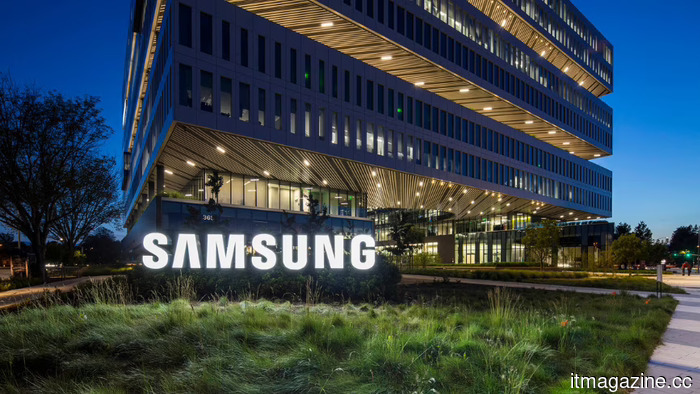
Samsung advances the timeline for its first Yongin chip facility to 2029.
Samsung Electronics plans to commence operations at the first chip plant in its Yongin cluster by 2029, one to two years ahead of schedule, according to industry sources cited by Yonhap. This acceleration is part of a national initiative that already involves an $880 billion investment in chips, data centers, and robots, following a year in which every Korean memory manufacturer has sought to regain lost time.
The plant will be situated in the Yongin National Industrial Complex, located just south of Seoul, and is considered a national strategic project intended to become Samsung’s next-generation manufacturing center. In total, six fabs are planned for this site, with the first initially expected to be operational in 2030 or 2031.
The expedited timeline is a result of the government’s decision to accelerate the development of the complex. Issues related to land, power, and water resources have been the critical factors at Yongin since the cluster was announced, none of which can be resolved solely by a chip manufacturer.
“Starting operations at the first plant earlier will allow Samsung to quickly address the rapidly increasing global demand for artificial intelligence chips,” an industry official mentioned to Yonhap. Both Samsung and the Ministry of Trade, Industry and Energy have not officially confirmed the 2029 date, as the information is based on unnamed industry sources.
The urgency is clear. Samsung’s semiconductor division has predominantly relied on high-bandwidth memory for AI servers, and the company’s market value reached $1 trillion based on this single product line.
Competitors are also entering the same timeframe. SK Hynix is investing $51 billion in a new NAND plant in Cheongju, aiming for production in the first half of 2029, which means that two of the three largest memory manufacturers in the world are planning to activate significant new capacity in the same year.
Last month, Samsung announced its intention to invest 2,030 trillion won (approximately $1.35 trillion) in its Pyeongtaek and Yongin semiconductor clusters under South Korea’s “mega project” framework. Additionally, 400 trillion won has been allocated for two new chip factories in Gwangju, located 270 km south of Seoul, according to Yonhap.
These figures are part of a broader domestic investment revealed on June 29 at a national meeting led by President Lee Jae-Myung. They indicate long-term plans where annual expenses are more significant than the overall total. The Gwangju expansion positions Samsung into a region that has spent two decades observing semiconductor development occur elsewhere.
Samsung has not disclosed which products the initial Yongin fab will manufacture, whether it will focus on logic, memory, or both, nor how the accelerated timeline will impact the subsequent five plants. There is also no public construction schedule available, and reports thus far address a singular date rather than a comprehensive plan.
The overall scenario shows that multiple companies are expanding simultaneously. Samsung, SK Hynix, and Micron, the three largest memory producers globally, are all increasing capacity in response to the same demand curve, with Korea’s mega-project framework primarily aimed at preventing scheduling conflicts.
However, the grid issue remains unresolved. Historically, Korea’s chip clusters have been stalled by transmission line limitations rather than lithography challenges, and no announcements have confirmed whether power provision at Yongin can be expedited in the same manner as the building timeline.
Samsung will provide an update on its capacity during the second-quarter earnings call. Until that time, the only change that has officially occurred is the date—a detail that is typically the most challenging to adjust in this industry.
Other articles
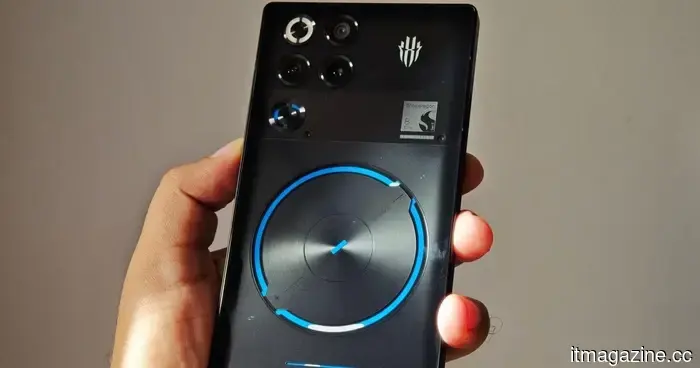 I used to own a liquid-cooled gaming phone, and it hardly ever disappointed me in my daily routine.
The Red Magic 11S Pro is capable of handling resource-intensive PC games, but its battery life, display quality, charging speed, and overall daily dependability are equally important beyond gaming.
I used to own a liquid-cooled gaming phone, and it hardly ever disappointed me in my daily routine.
The Red Magic 11S Pro is capable of handling resource-intensive PC games, but its battery life, display quality, charging speed, and overall daily dependability are equally important beyond gaming.
 Fraudsters are currently replicating reputable news websites to con you out of your money.
Cybercriminals are replicating reputable news websites with AI-generated material to advance fraudulent investment schemes, complicating the task of telling real journalism apart from scams.
Fraudsters are currently replicating reputable news websites to con you out of your money.
Cybercriminals are replicating reputable news websites with AI-generated material to advance fraudulent investment schemes, complicating the task of telling real journalism apart from scams.
 This hovering AI robot appears to have emerged from a Studio Ghibli movie, and that’s precisely the intention.
Researchers have introduced a floating AI robot influenced by Studio Ghibli that moves quietly through the air, presenting a safer and more welcoming concept for future AI companions.
This hovering AI robot appears to have emerged from a Studio Ghibli movie, and that’s precisely the intention.
Researchers have introduced a floating AI robot influenced by Studio Ghibli that moves quietly through the air, presenting a safer and more welcoming concept for future AI companions.
 Fraudsters are currently replicating reputable news websites to swindle your money.
Cybercriminals are replicating reliable news websites by utilizing AI-generated content to advertise fraudulent investment schemes, which is increasingly making it difficult to differentiate between genuine journalism and scams.
Fraudsters are currently replicating reputable news websites to swindle your money.
Cybercriminals are replicating reliable news websites by utilizing AI-generated content to advertise fraudulent investment schemes, which is increasingly making it difficult to differentiate between genuine journalism and scams.
 Anthropic is offering Claude Fable 5 for free for a limited period.
Anthropic is providing paid subscribers of Claude free access to Claude Fable 5 until July 19, after which further use will necessitate additional usage credits.
Anthropic is offering Claude Fable 5 for free for a limited period.
Anthropic is providing paid subscribers of Claude free access to Claude Fable 5 until July 19, after which further use will necessitate additional usage credits.
 What are Copilot+ PCs? Here’s everything you need to understand.
Copilot+ PCs offer enhanced Windows search capabilities, local AI utilities, and extended battery performance. However, the label comes with specific hardware requirements and several critical stipulations.
What are Copilot+ PCs? Here’s everything you need to understand.
Copilot+ PCs offer enhanced Windows search capabilities, local AI utilities, and extended battery performance. However, the label comes with specific hardware requirements and several critical stipulations.
Samsung advances the timeline for its first Yongin chip facility to 2029.
Samsung is accelerating the opening of its first fab in the Yongin cluster to 2029, which is one to two years ahead of schedule, due to the growing demand for AI chips influencing Korea's construction timeline.