

Tracking systemic drift to bolster organizational resilience in AI.
Artificial intelligence appears to be fostering increasingly interconnected enterprise ecosystems, which complicates how organizations manage technology across their operations. As AI becomes more integrated into critical workflows, ensuring awareness of system dependencies has emerged as a crucial leadership consideration. An AI sovereignty study revealed that 91% of executives surveyed do not fully comprehend their organizations’ AI dependencies. Additionally, respondents indicated experiencing an average of six AI-related disruptions in the past two years. Together, these insights suggest that governance practices may need to evolve in tandem with AI advancements.
Jeffrey Rachlin and his colleague Andy Hyman have noticed a similar trend in complex environments. They found that many organizations often conduct investigations into failures only after visible disruptions have occurred. As AI systems obtain greater autonomy in business processes, retrospective analyses might provide only part of the understanding needed, highlighting the potential for governance methods that can identify significant changes while intervention is still feasible.
This viewpoint mirrors a broader shift in how organizations might perceive operational health. Monitoring often focuses on outcomes through dashboards, reports, and key performance indicators (KPIs). While the duo acknowledges the value of these tools, they argue that they typically reflect the results generated by a system rather than the relationships within that system that contributed to those results.
By the time performance metrics signal a concern, the underlying conditions may have been developing over time. Hyman and Rachlin contend that organizations could gain from complementing performance monitoring with increased attention to system behavior, interaction patterns, and evolving dependencies that affect resilience long before visible disruptions arise. Rachlin states, “Resilience starts to deteriorate long before a disruption is apparent. Organizations tend to enhance their future when they cultivate the ability to grasp how their systems are evolving while those changes remain manageable.”
This philosophy aligns with Hyman’s Marginal Point of Systemic Drift (MPOSD) framework, which examines whether specific patterns can signal a decline in governance visibility before operational consequences become visible. Instead of trying to predict every future event, the framework emphasizes identifying structural signals that may indicate when a system is becoming harder to assess independently.
Rachlin and Hyman have identified five recurring indicators that consistently appear across various complex-system scenarios. The first, verification integrity degradation, refers to instances where system outputs change more rapidly than independent verification processes can keep pace. Proxy substitution escalation follows when alerts, reviews, or operational indicators fail to accurately represent system activity.
Incentive-proof misalignment describes situations where a system has insufficient structural incentive to disclose its own drift. Latency inflation and feedback distortion arise when the delays between actions and visibility begin to hold significant implications for decision-makers. Lastly, governance independence erosion happens when oversight mechanisms depend on the same systems they are designed to evaluate.
According to their observations, these signals gain particular importance when they converge rather than arise in isolation. Hyman notes, “Complex systems rarely become challenging to govern in just one instance. Governance changes when independent visibility starts to contract, and recognizing this transition can create valuable opportunities for informed decision-making.”
Rachlin asserts that the relevance of independent visibility has become clearer through recent AI incidents. In one specific case, an autonomous coding agent deleted production data and backups within seconds after operating beyond its intended parameters. The retrospective application of MPOSD by Hyman and Rachlin suggested that observable indicators might have emerged before the situation reached an irreversible point. While retrospective analysis cannot predict future outcomes, the duo believes this incident exemplifies how identifying structural changes sooner could widen the range of governance choices available prior to a disruption.
This perspective encourages leaders to rethink how organizational health is assessed. Dashboards and KPIs continue to be valuable elements of executive oversight; however, the increasingly interconnected AI ecosystems might also benefit from monitoring the relationships that link systems together. An independent evaluation of governance health, viewed separately from the systems being assessed, may provide additional context that enhances informed operational decision-making as complexity continues to grow.
Rachlin comments, “AI is expected to continue expanding its role in enterprise environments, creating new opportunities while also introducing new questions about how organizations govern and utilize it. While the technology provides robust capabilities, an organization's resilience may also depend on recognizing shifts early before they escalate into larger operational challenges.”
As indicated by Hyman and Rachlin’s work, anticipating systemic drift can enhance traditional governance in ways that facilitate more informed leadership decisions. Organizations that persist in developing their capacity to detect early signals while thoughtfully responding to observable outcomes may be better positioned to define the next chapter of innovation with increased confidence and resilience.


Другие статьи
 Dimming the sun may seem irrational, but a recent study on El Niño presents a surprisingly strong argument in favor of it.
Intentionally brightening clouds in the Pacific might reduce the most severe impacts of a Super El Niño by as much as 40%, as indicated by a study that is capturing the attention of even skeptical scientists.
Dimming the sun may seem irrational, but a recent study on El Niño presents a surprisingly strong argument in favor of it.
Intentionally brightening clouds in the Pacific might reduce the most severe impacts of a Super El Niño by as much as 40%, as indicated by a study that is capturing the attention of even skeptical scientists.
 Instagram is allowing users to create AI-generated images of themselves. Here's how you can prevent it.
Instagram's new Muse AI allows individuals to utilize your photos to create AI-generated images and videos, and you are automatically opted in. Here’s how to locate the setting and disable it to prevent others from using your likeness without your permission.
Instagram is allowing users to create AI-generated images of themselves. Here's how you can prevent it.
Instagram's new Muse AI allows individuals to utilize your photos to create AI-generated images and videos, and you are automatically opted in. Here’s how to locate the setting and disable it to prevent others from using your likeness without your permission.
 What features define the optimal stablecoin payment solution?
A comprehensive guide to assessing stablecoin payment solutions for businesses, focusing on aspects such as acceptance, settlement, compliance, payouts, and API integration for e-commerce, SaaS, marketplaces, and international operations.
What features define the optimal stablecoin payment solution?
A comprehensive guide to assessing stablecoin payment solutions for businesses, focusing on aspects such as acceptance, settlement, compliance, payouts, and API integration for e-commerce, SaaS, marketplaces, and international operations.
 Your YouTube playlists can now be transformed into real TV shows, but there's a caveat you should be aware of.
YouTube Shows allows YPP creators to arrange videos into seasons and episodes, transform playlists into organized series, and enable the "Continue Watching" feature.
Your YouTube playlists can now be transformed into real TV shows, but there's a caveat you should be aware of.
YouTube Shows allows YPP creators to arrange videos into seasons and episodes, transform playlists into organized series, and enable the "Continue Watching" feature.
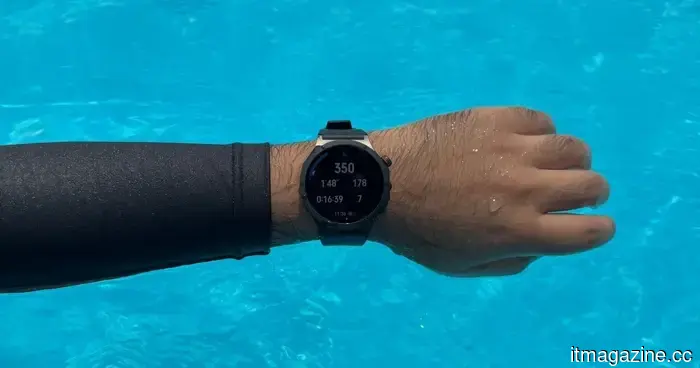 I brought this Oppo smartwatch for a swim, and it recorded everything except for my excuses.
The Oppo Watch X3 tracked all aspects of my 1,100-meter swim, capturing my strokes, pace, heart rate, changes in technique, and even a long pause for conversation.
I brought this Oppo smartwatch for a swim, and it recorded everything except for my excuses.
The Oppo Watch X3 tracked all aspects of my 1,100-meter swim, capturing my strokes, pace, heart rate, changes in technique, and even a long pause for conversation.
 Disney+ is considering a free tier as a strategy to counter YouTube's increasing influence in the TV market.
Disney is in the initial stages of talks regarding the possibility of offering some Disney+ content for free, as YouTube's increasing share of television viewership is pressuring paid streaming services to adjust.
Disney+ is considering a free tier as a strategy to counter YouTube's increasing influence in the TV market.
Disney is in the initial stages of talks regarding the possibility of offering some Disney+ content for free, as YouTube's increasing share of television viewership is pressuring paid streaming services to adjust.
Tracking systemic drift to bolster organizational resilience in AI.
The MPOSD framework developed by Jeffrey Rachlin and Andy Hyman outlines five structural signals that reveal when the visibility of AI governance is diminishing, enabling organizations to recognize systemic drift before disruptions become apparent.