
A damaged Galaxy Fold 5 has now turned into the Pixel desktop future I hope Google adopts.
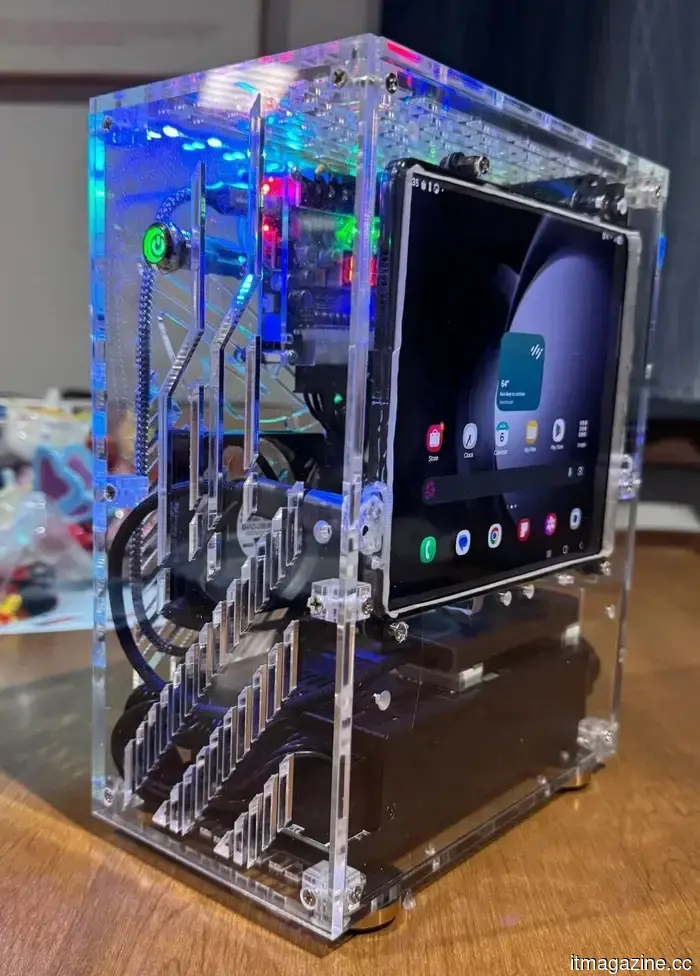
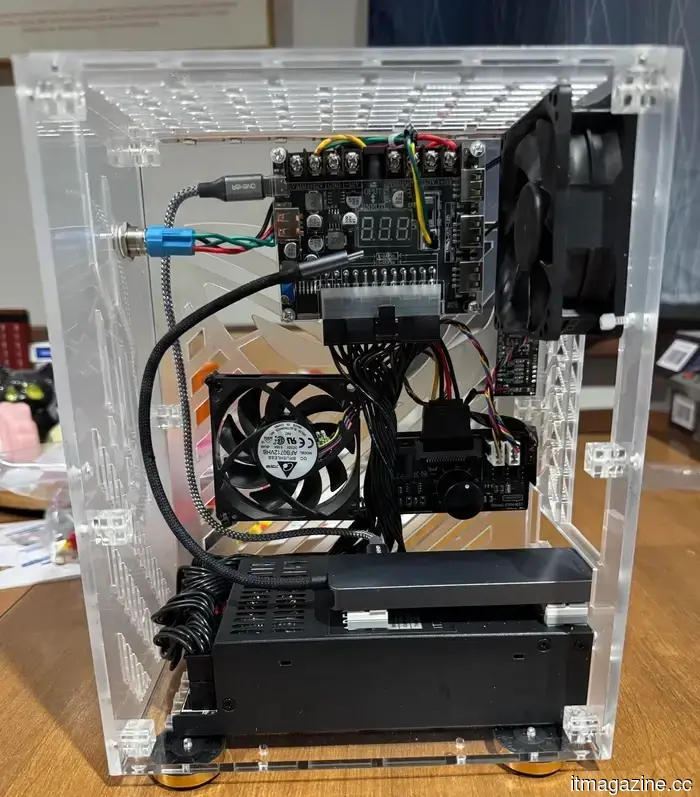
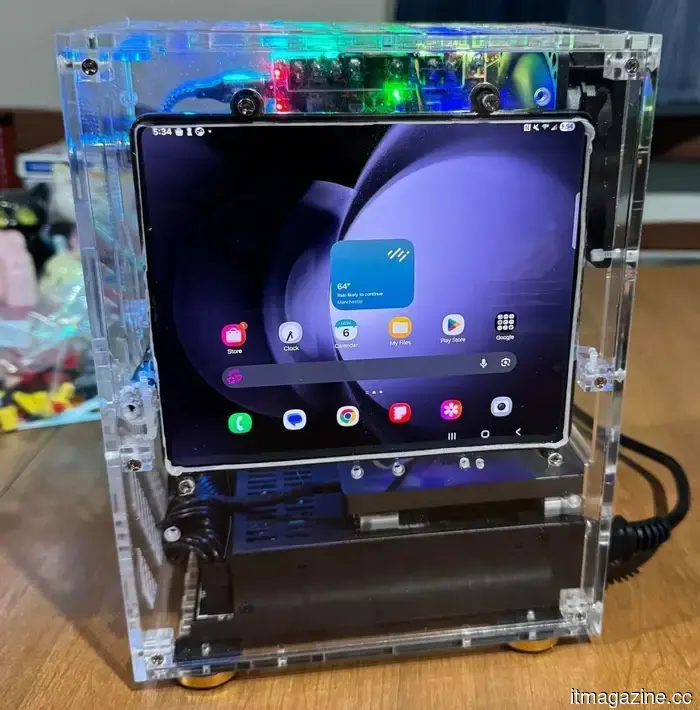
A damaged Galaxy Fold 5 should serve as a poignant reminder of contemporary gadget economics. One broken outer screen, an unwelcome repair cost, and this once-mighty foldable rapidly finds itself abandoned in a drawer. However, a Reddit user transformed one into a luminous acrylic DeX station using spare components, fans, a USB hub, and LED lights that lend a slightly illicit touch to any DIY computer setup.
It's chaotic in the most delightful way. More frustratingly for Google, it also illustrates how the phone-as-PC concept can feel like a legitimate device rather than just a prototype awaiting recognition.
Why this absurd box actually works
The construction isn’t performing feats of magic. It builds on principles Samsung established years ago. DeX provides the Fold 5 with a legitimate desktop interface, windowed applications, support for external monitors, keyboard and mouse functionality, and enough refined system features to resemble a quirky mini PC. The case gives it a cyberpunk lunchbox aesthetic, while the software ensures it doesn’t fall apart as a concept.
That’s what allows the project to succeed. A phone with a shattered display can still possess a robust processor, storage, wireless capabilities, and access to applications. With DeX, those components don’t lose their value simply because the device no longer functions as a typical foldable. They are repurposed. The Fold takes on the role of the brain, while the box serves as the body.
Why Pixel still feels trapped in demo mode
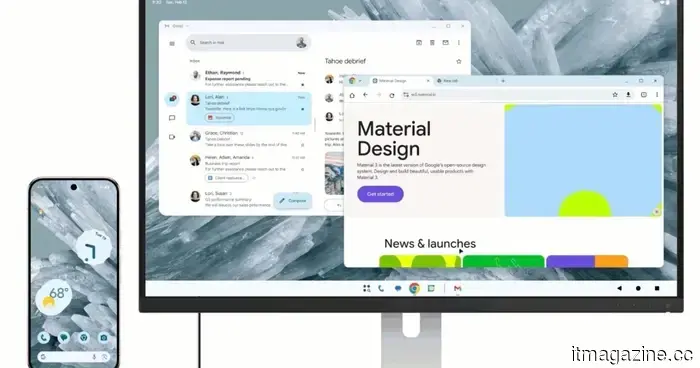
Google’s interpretation of this future encounters some awkwardness. Pixel phones already boast the necessary power, applications, cloud services, and the evident potential to be more functional when connected to a larger display. However, stock Android's desktop mode has yet to feel like a reliable workspace rather than a feature that’s trying to validate its existence.
DeX has taken years to refine its less appealing elements. It knows how to handle the connection of a monitor, keyboard, and mouse. In contrast, stock Android gives off the impression of a prototype that was unearthed in a settings menu and released without much thought. This disparity is what makes the imaginative Fold 5 box feel unexpectedly credible. The hardware innovation captures interest, while the software’s maturity lends believability.
Why old phones deserve unconventional second chances
Smartphones are too powerful, costly, and prevalent to be dismissed due to a single malfunction. A foldable with a cracked screen is still a computer. For many web-related tasks, that device may remain sufficient, particularly when the alternative is to let it languish as another forlorn rectangle in a drawer.
Google should embrace the confidence of the concept—not the LEDs, not the acrylic structure, and likely not even the chaotic cable management. Pixel desktop mode doesn’t need to evolve into a gaming system or a complete laptop replacement overnight. It should strive to be useful enough that an old phone can take on a second role.
The DeX box appears incomplete, which seems fitting. Working prototypes often appear this way before their ideas crystallize. Google continues to refine the notion of desktop Android, while this Fold 5 is already operational, fans whirring, fulfilling its purpose.
Other articles
 This week, you'll have the chance to experience OpenAI's GPT-5.6 models: Sol, Terra, and Luna.
Following nearly two weeks of restricted preview access, OpenAI is set to launch GPT-5.6 Sol, Terra, and Luna to the public on July 9.
This week, you'll have the chance to experience OpenAI's GPT-5.6 models: Sol, Terra, and Luna.
Following nearly two weeks of restricted preview access, OpenAI is set to launch GPT-5.6 Sol, Terra, and Luna to the public on July 9.
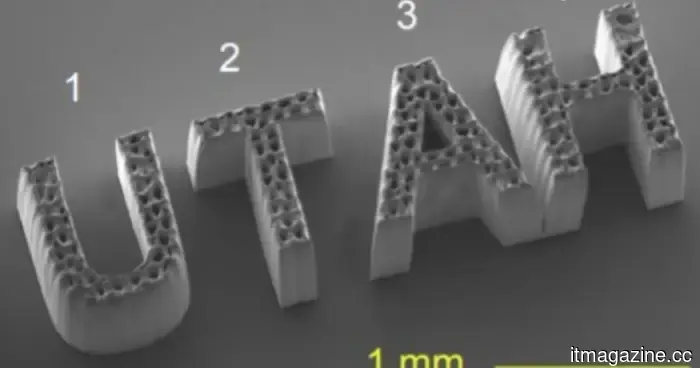 A 20-second advancement in 3D printing presents precisely the type of intriguing caveat that captivates the scientific community.
Researchers at the University of Utah have demonstrated a holographic 3D printing technique that can create small structures in approximately 20 seconds; however, its most significant drawback restricts this innovation to laboratory settings.
A 20-second advancement in 3D printing presents precisely the type of intriguing caveat that captivates the scientific community.
Researchers at the University of Utah have demonstrated a holographic 3D printing technique that can create small structures in approximately 20 seconds; however, its most significant drawback restricts this innovation to laboratory settings.
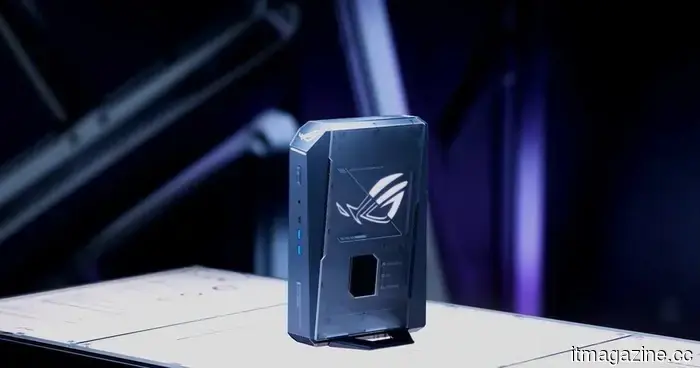 Asus created a compact AMD gaming powerhouse, and the price is the most intimidating aspect.
Asus has managed to fit an AMD Ryzen 9 processor and RTX 5070 graphics card into a three-liter gaming PC, but its small size comes with a significant price increase.
Asus created a compact AMD gaming powerhouse, and the price is the most intimidating aspect.
Asus has managed to fit an AMD Ryzen 9 processor and RTX 5070 graphics card into a three-liter gaming PC, but its small size comes with a significant price increase.
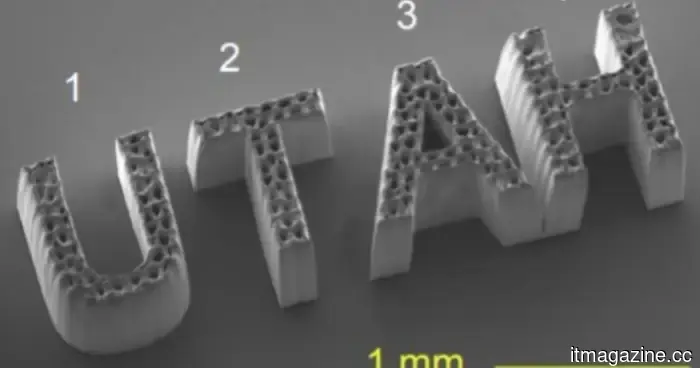 A breakthrough in 3D printing lasting just 20 seconds carries the exact type of complication that science enjoys.
Researchers at the University of Utah have demonstrated a holographic 3D printing technique that creates small structures in approximately 20 seconds; however, its primary drawback restricts this innovation to the laboratory setting.
A breakthrough in 3D printing lasting just 20 seconds carries the exact type of complication that science enjoys.
Researchers at the University of Utah have demonstrated a holographic 3D printing technique that creates small structures in approximately 20 seconds; however, its primary drawback restricts this innovation to the laboratory setting.
 Here’s all that you can look forward to at Samsung's Galaxy Unpacked event on July 22.
Samsung has announced the date and venue for its upcoming Galaxy Unpacked event. Although the company has not yet revealed any specific devices, leaks suggest there will be two Fold models, a new Flip, refreshed smartwatches, and potentially Samsung's first pair of smart glasses.
Here’s all that you can look forward to at Samsung's Galaxy Unpacked event on July 22.
Samsung has announced the date and venue for its upcoming Galaxy Unpacked event. Although the company has not yet revealed any specific devices, leaks suggest there will be two Fold models, a new Flip, refreshed smartwatches, and potentially Samsung's first pair of smart glasses.
 A recent study reveals that gaming does not damage your brain, but compulsive behaviors can have negative effects.
A study involving 3,854 adolescents linked symptoms of compulsive gaming to reduced cognitive performance, whereas extended gaming sessions revealed minor positive correlations with various assessed skills.
A recent study reveals that gaming does not damage your brain, but compulsive behaviors can have negative effects.
A study involving 3,854 adolescents linked symptoms of compulsive gaming to reduced cognitive performance, whereas extended gaming sessions revealed minor positive correlations with various assessed skills.
A damaged Galaxy Fold 5 has now turned into the Pixel desktop future I hope Google adopts.
A DIY DeX box created from a damaged Galaxy Fold 5 makes Google's Pixel desktop aspirations seem timid, incomplete, and oddly late.